
There are more herbs that grow in shade than most gardening advice lets on. A north-facing balcony, or one boxed in by taller buildings, won’t grow you basil the size of a shrub, but it will happily grow mint, parsley, chives, and a dozen others that actually prefer a break from harsh sun. Some of them, like cilantro and chervil, last noticeably longer in shade because heat is what makes them bolt and turn bitter.
So if you’ve written off your dim balcony as a dead zone, don’t. Here’s what “shade” actually means for herbs, the 12 best picks, and the few adjustments that make shade growing work.
First, Figure Out What Kind of Shade You Have
“Shade” covers a big range, and it changes what you can grow:
- Partial shade: 3 to 4 hours of direct sun, often morning light. Almost everything on this list thrives here.
- Dappled or bright shade: no direct sun, but plenty of open sky and reflected light. Most of the list still works, just slower.
- Deep shade: a dark corner under an overhang with no open sky. Honestly, only mint and a couple of others will tolerate this, and even they’ll be leggy.
Spend one day glancing at your balcony every couple of hours before you buy plants. Bright shade with open sky above is far better than it feels when you’re standing in it.
The 12 Herbs
1. Mint
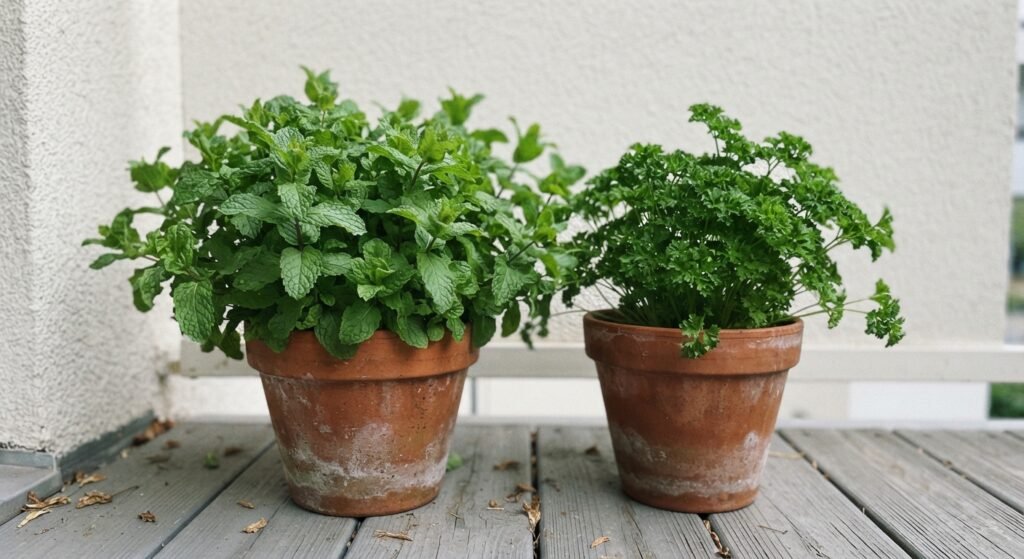
The undisputed champion of shady balconies. Mint grows in conditions that kill almost everything else, and in shade it stays lush instead of scorching. One warning: always give mint its own pot. Its roots take over any container it shares, and it wins every time.
2. Parsley
Both flat-leaf and curly parsley do well with 3 to 4 hours of sun or good bright shade. It grows a bit slower than in full sun, but the leaves stay tender longer. Pick outer stems and it keeps producing for months.
3. Chives
Chives are close to indestructible. They handle shade, wind, cold, and neglect, and they come back year after year in the same pot. Snip them with scissors like you’re giving the pot a haircut, and they regrow.
4. Cilantro (Coriander)
Here’s one where shade is a genuine advantage. In full sun and heat, cilantro bolts to seed within weeks. In partial shade it stays leafy much longer. Sow a small pinch of seeds every few weeks and you’ll have a steady supply.
5. Lemon Balm
A mint relative with a soft lemon scent, and just as tough. It’s happy in partial shade and makes a lovely tea. Like mint, it’s enthusiastic, so give it its own container.
6. Chervil
Barely sold in shops, which is exactly why it’s worth growing. This delicate, faintly anise-flavored herb actively dislikes hot sun and does its best work in cool shade. Great in eggs and on potatoes.
7. Sorrel
Technically a leafy green, but used like a herb. The sharp, lemony leaves grow well in partial shade and the plant is perennial, so it returns each spring. A little goes a long way in soups and sauces.
8. Tarragon
French tarragon manages fine with morning sun and afternoon shade. It won’t be as intensely flavored as a sun-baked plant, but it’s still miles better than a dusty jar of the dried stuff.
9. Oregano
Oregano prefers sun, but it tolerates partial shade better than its Mediterranean reputation suggests. Expect a slightly milder flavor and a looser plant. Golden oregano varieties actually prefer some shade, since full sun scorches their leaves.
10. Thyme
Similar deal to oregano. In partial shade thyme grows slower and softer, but it survives and still tastes like thyme. Let its soil dry out properly between waterings, because shade plus soggy soil is the one combination it hates.
11. Shiso (Perilla)
An underrated pick for shade. This Japanese herb, with leaves somewhere between mint and basil, grows naturally as an understory plant and handles low light gracefully. If you like sushi or Vietnamese food, you’ll find uses for it constantly.
12. Wild Garlic (Ramsons)
A woodland plant, so shade is its natural habitat. Grow it in a deep pot, harvest the garlicky leaves in spring, and let it die back over summer. It’s a slow starter from bulbs, but once established it returns every year with zero effort.
What About Basil and Rosemary?
The honest answer: they’ll survive in partial shade but they won’t be happy. Basil gets leggy and thin-flavored below about 4 hours of sun, and rosemary slowly sulks itself to death in dim, damp conditions. If your heart is set on them, put them in the single brightest spot you have and treat anything you harvest as a bonus.
Growing Tips That Matter More in Shade
Shade growing isn’t harder, it’s just different. A few adjustments cover it:
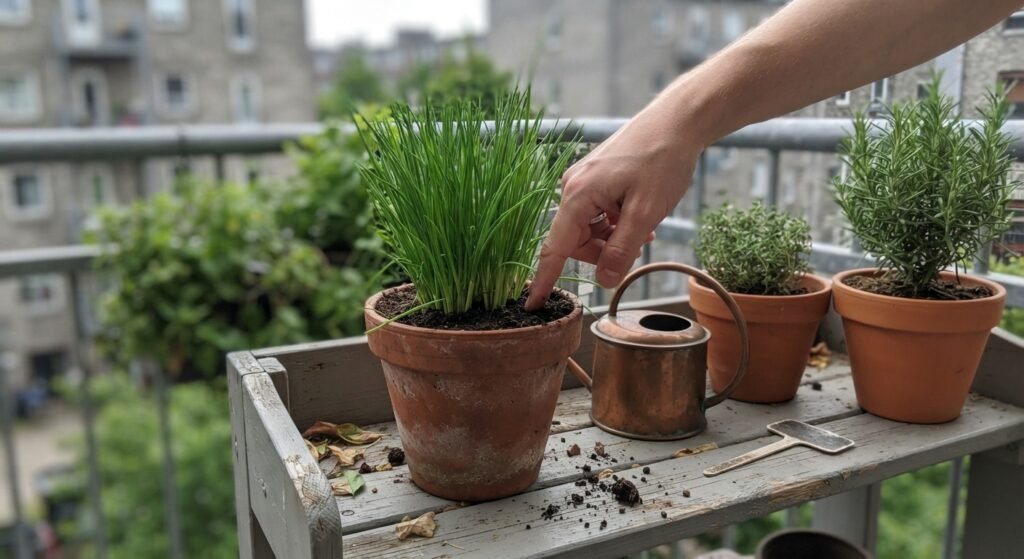
- Water less than you think. Shaded pots can take two or three times longer to dry out. The finger test (dry 3 cm down means water) matters even more here, because overwatering is the number one killer of shade herbs. Push a finger in before every watering, no exceptions.
- Don’t overfeed. Slow growth in shade is normal. Extra fertilizer won’t speed it up, it just produces weak, floppy stems. Half-strength liquid feed once a month is plenty.
- Chase the light a little. Pots are portable. If one end of the balcony gets an hour more sun, put the oregano and thyme there and let mint hold down the dark corner.
- Use light-colored walls to your advantage. A pale wall bounces a surprising amount of light. Shelving or a railing planter that lifts pots higher often gains them an extra hour of brightness. If you’re mounting anything on a wall, our guide on how to hang heavy things without drilling covers renter-safe ways to do it, since a pot of wet soil is heavier than it looks.
- Space plants out. Air moves less in enclosed shady balconies, and crowded damp foliage invites mildew. Give each pot a little breathing room.
If you’re building out a whole edible balcony rather than just a herb corner, start with our apartment balcony vegetable garden guide for beginners, which covers containers, soil, and easy first crops in more depth.
Harvesting: The Part People Get Wrong
Shade herbs grow slower, so it’s tempting to leave them alone until they look “full.” Do the opposite. Regular light picking, a few stems here, a pinch there, tells the plant to branch and thicken. Just never strip more than about a third of the plant at once, because in shade it takes longer to bounce back.
Pick in the morning where you can. The flavor oils are strongest before the day warms up, and yes, that’s true even without direct sun on the plant.
FAQs
Can herbs really grow with no direct sunlight at all?
Some can, if there’s decent indirect light. Mint, parsley, chives, and chervil will all grow in bright shade with open sky above them. What no herb handles is a genuinely dark corner under a solid overhang. If you can’t comfortably read a book out there at midday, it’s too dark.
Why are my shade herbs tall and floppy?
That’s called getting leggy, and it means the plant is stretching for light. Move the pot to the brightest spot you have, pinch it back by a third to encourage bushiness, and ease off any fertilizer. Some legginess in shade is normal, but a plant that flops over needs more light.
How often should I water herbs in the shade?
Whenever the top 3 cm of soil is dry, and in shade that might mean only once or twice a week even in summer. Skip fixed schedules. A shaded pot on a cool week can stay damp for days, and watering it anyway is how root rot starts.
Do shade-grown herbs taste weaker?
A bit, for the Mediterranean ones. Sun-starved thyme and oregano are milder than their sun-baked versions. But leafy herbs like parsley, cilantro, mint, and chervil taste just as good, sometimes better, because they’re not stressed and bitter from heat.
Can I grow these indoors on a shaded windowsill instead?
Mostly yes, the same shade-tolerant list applies. A north-facing windowsill behaves a lot like a bright-shade balcony. Just use pots with drainage, keep them off cold glass in winter, and expect the same slow-and-steady growth.