
Setting up an apartment balcony vegetable garden for beginners comes down to four decisions: how much sun you actually get, which containers to buy, what soil to fill them with, and which crops are forgiving enough to survive your learning curve. Get those four right and even a two-meter balcony can hand you salads, herbs, and a surprising number of tomatoes by midsummer. Get them wrong and you’ll spend the season watching expensive seedlings sulk in the wrong pot.
The good news is that none of this requires a garden, a shed, or any real experience. It requires a weekend, maybe $50 to $80 to start, and a bit of honesty about your balcony’s conditions.
Step 1: Watch Your Sun Before You Buy Anything
This is the step most people skip, and it’s the one that decides everything else. Pick a clear day and check your balcony at 9 a.m., noon, and 4 p.m. Note where the sun actually lands, not where you assume it does. Railings, neighboring buildings, and the balcony above you all steal more light than you’d think.
Here’s what your count means:
- 6+ hours of direct sun: you can grow almost anything, including tomatoes, peppers, and cucumbers.
- 4 to 6 hours: stick to leafy greens, root vegetables like radishes and carrots, and most herbs.
- Under 4 hours: you’re in shade-garden territory. Lettuce, spinach, and mint will still work, and plenty of herbs handle low light better than people expect.
Don’t fight your conditions. A shaded balcony full of struggling tomato plants is the most common beginner heartbreak, and it’s completely avoidable.
Step 2: Choose Containers That Won’t Sabotage You
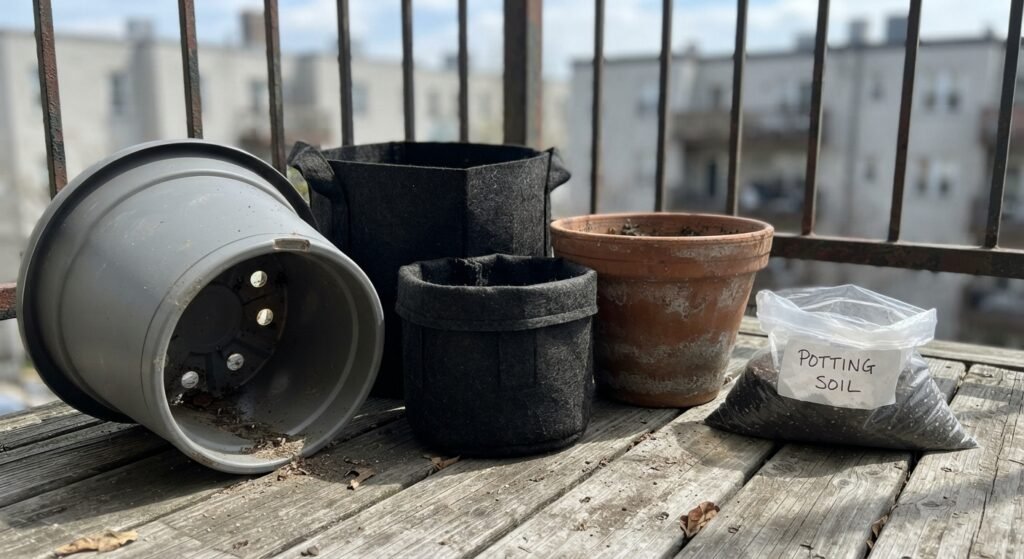
Vegetables are not fussy about what the container looks like. They’re extremely fussy about two things: size and drainage.
Go bigger than feels reasonable. Small pots dry out fast, sometimes twice a day in July, and cramped roots mean stunted plants. As a rough guide:
- Herbs and lettuce: 15 to 20 cm deep
- Spinach, radishes, bush beans: 20 to 25 cm deep
- Carrots, peppers, chard: 25 to 30 cm deep
- Tomatoes, cucumbers, zucchini: 40 cm deep or a 35 to 40 liter pot minimum
Every pot needs drainage holes. No exceptions. A pot without holes is a bucket, and vegetable roots sitting in water rot within days. If you fall in love with a container that has no holes, drill some, or use it as a decorative sleeve around a plain plastic pot.
Plastic pots are light and hold moisture well, which suits balconies. Fabric grow bags are cheap, fold flat in winter, and drain brilliantly. Terracotta looks lovely but dries out quickly and gets heavy. Speaking of weight, a large pot of wet soil can weigh 30 kg or more, so check your lease or building rules if you’re planning a wall of them, and keep the heaviest pots near the wall side of the balcony rather than the railing edge.
If you want to hang planters on a railing or wall, use proper railing brackets rather than improvising. The same logic from our guide on how to hang heavy things without drilling applies here: wet soil is heavier than it looks, and adhesive hooks are not the tool for the job.
Step 3: Buy Potting Mix, Not Garden Soil
This one trips up almost every beginner. The bags labeled “garden soil” or “topsoil” are for the ground. In a container they compact into something like concrete, drain badly, and suffocate roots.
What you want is potting mix (sometimes called container mix). It’s light, fluffy, holds moisture without waterlogging, and usually has a bit of starter fertilizer in it. Yes, it costs more per bag. It’s also the difference between plants that thrive and plants that just exist.
Two small extras worth adding:
- A slow-release vegetable fertilizer, because containers wash nutrients out with every watering.
- A bag of compost mixed in at about one part compost to three parts potting mix, if you can get it. Not essential, but your plants will notice.
Skip the old advice about putting gravel in the bottom of pots. It doesn’t improve drainage, it just steals root space.
Step 4: Pick Forgiving First Crops
Your first season is for building confidence, not for growing a farmers market stall. These are the crops that tend to survive beginner mistakes:
- Lettuce and salad leaves. Fast, shallow-rooted, and you can harvest outer leaves for weeks. Ready in about a month.
- Radishes. Seed to harvest in 25 to 30 days. Almost impossible to fail with.
- Bush beans. No support needed, heavy croppers, and the seeds are big enough for kids to plant.
- Cherry tomatoes. Choose a bush or “patio” variety rather than a tall vining one. One healthy plant in a big pot will out-produce three squeezed into small ones.
- Herbs. Basil, chives, parsley, and mint (mint always in its own pot, it takes over anything it shares).
- Chard or spinach. Tolerant of a bit of shade and keeps producing as you pick.
Start with four to six pots, not fifteen. A small garden you keep up with beats a jungle you abandon by August.
For most of these, buying small seedlings from a garden center is worth the extra couple of dollars in year one. Seeds are cheaper, but seedlings skip the most fragile stage. The exceptions are radishes, beans, and salad leaves, which grow so easily from seed that seedlings are a waste of money.
Step 5: Learn the Finger Test for Watering
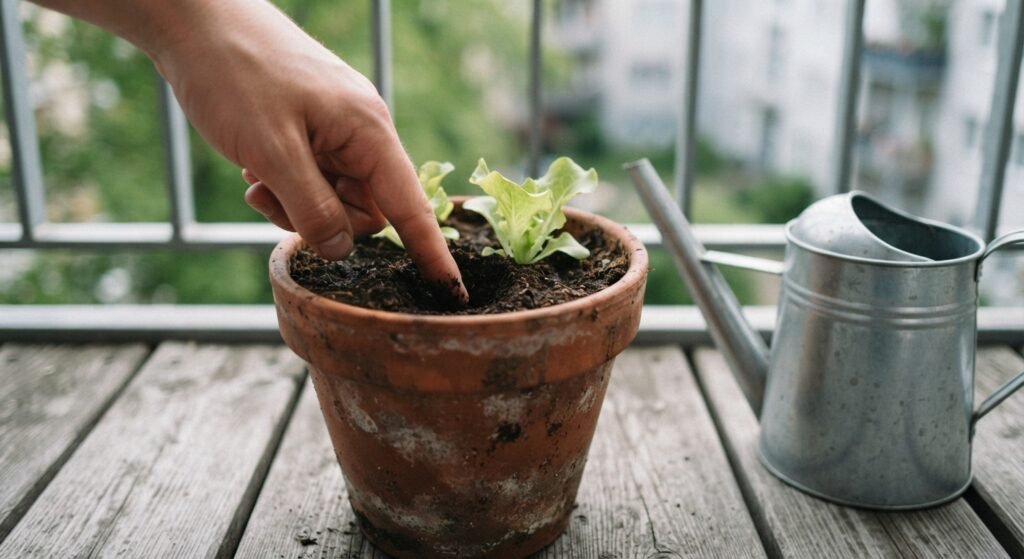
Containers dry out far faster than ground soil, and watering is where beginners lose the most plants, in both directions.
The finger test solves it: push a finger about 3 cm into the soil. Dry at that depth, water thoroughly until it runs from the drainage holes. Still damp, wait. That’s the whole system. In hot weather you might water daily, in a cool cloudy week maybe twice. The plant doesn’t care about your schedule, only about the soil.
Two habits make a real difference. Water in the morning when you can, so plants are stocked up before the heat. And water the soil, not the leaves, which keeps fungal problems away.
One more balcony-specific note: drainage water has to go somewhere, and your downstairs neighbor would prefer it wasn’t their chairs. Put saucers under pots, but tip out any water still sitting there an hour after watering. And if soil and water end up all over your balcony floor on watering day, a cheap handheld brush and dustpan kept outside saves dragging mess through the apartment. Little quality-of-life fixes like that are the same spirit as our roundup of easy home repairs for renters: small, cheap, and they remove a recurring annoyance.
Step 6: Feed, Pick, and Keep Going
About six weeks after planting, the fertilizer in the potting mix runs low. From then on, feed with a liquid vegetable fertilizer every week or two, following the label rate. Container plants literally cannot go find food elsewhere, so this matters more than it does in a garden.
Then harvest often. It feels wrong to keep cutting lettuce or pinching basil, but most crops respond to picking by producing more. A basil plant you never pinch gets leggy and flowers early. One you pinch weekly turns into a bush.
Expect some failures. Something will get eaten, something will bolt, one pot will mysteriously die. That’s a normal first season, not a sign you’re bad at this.
FAQs
How much does it cost to start a balcony vegetable garden?
Realistically $50 to $80 for a starter setup: four to six decent pots, two bags of potting mix, a few seedlings, seeds, and a watering can. You can trim that down with fabric grow bags and food-safe buckets with holes drilled in them. The soil is the one thing not to cheap out on.
Do I need permission to grow vegetables on my balcony?
Usually not for a few pots, but check your lease or building rules first. The common restrictions are about weight, things hanging over the railing edge, and water dripping onto balconies below. Saucers under every pot solve most of the drama.
Can I really grow vegetables with only a few hours of sun?
Yes, just not fruiting ones. Tomatoes, peppers, and cucumbers genuinely need 6 or more hours. Leafy crops like lettuce, spinach, chard, and most herbs do fine with 3 to 4 hours and can actually taste better without harsh afternoon sun.
When should I start planting?
After your area’s last frost date, which a quick search for your city will tell you. In most of the US and UK that means late April to mid May outdoors. Cool-weather crops like lettuce, spinach, and radishes can go out a few weeks earlier than tomatoes and peppers.
What’s the single biggest beginner mistake?
Small pots. Nearly every other problem, constant wilting, tiny harvests, plants that stall in July, traces back to containers that are too small and dry out too fast. When in doubt, size up.