
The best easy home repairs for renters share three traits: they cost under $25, they take under an hour, and they leave no trace when you move out. That last one matters as much as the first two. A repair that risks your deposit isn’t a repair, it’s a gamble. Everything on this list is reversible or invisible, needs only basic tools, and fixes the kind of daily annoyances landlords are slow to deal with: squeaky hinges, running toilets, drafty doors, drawers with a mind of their own.
A quick note before the list: check your lease first. Most leases are fine with minor maintenance, and some landlords will even reimburse parts if you ask. For anything involving gas, mains electrics, or plumbing beyond a toilet flapper, stop and call the landlord. That’s their job and their liability.
1. Silence Squeaky Doors and Hinges (Under $5)
A squeaky hinge needs lubricant, not replacement. A drop of silicone spray, white lithium grease, or plain machine oil on the hinge pin, then swing the door a dozen times to work it in. Wipe the drips before they reach the carpet. If the squeak survives, pop the hinge pin halfway out with a screwdriver and hammer tap, coat it, and reseat it.
Skip cooking spray, which people genuinely try. It works for a week, then goes sticky and collects dust.
2. Fix a Door That Won’t Stay Where You Put It ($0 to $10)
Doors that swing open or drift shut on their own aren’t haunted, they’re hanging slightly off plumb. The classic free fix is removing one hinge pin, laying it on a hard surface, and giving it a gentle bend with a hammer before tapping it back in. The extra friction holds the door anywhere you leave it. There’s a full walkthrough of that trick plus four alternatives in our guide on how to fix a door that won’t stay open.
3. Stop a Running Toilet ($5 to $15)
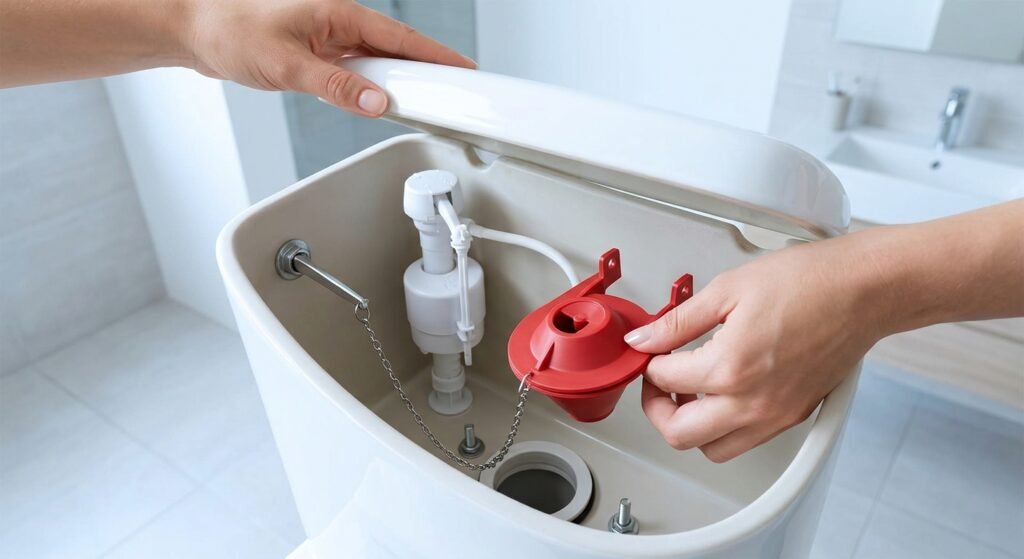
A toilet that hisses or refills itself every twenty minutes is usually a worn flapper, the rubber seal at the bottom of the tank. It wastes a genuinely absurd amount of water, which matters if you pay the water bill. Turn off the supply valve behind the toilet, flush to empty the tank, unclip the old flapper, and match it at the hardware store. Fitting the new one takes five minutes and no tools. If the water level itself sits too high and trickles into the overflow tube, adjust the float screw down a turn instead.
4. Rescue Saggy Cabinet Doors and Wobbly Handles ($5)
Cabinet doors that droop or clunk almost always have a stripped screw hole where the hinge meets the cabinet. Tightening harder makes it worse. The fix is packing the hole with glued toothpicks or a small dowel so the screw has fresh wood to bite into, and it’s easier than it sounds. Full method here: How to Fix Loose Cabinet Hinge Screw Holes. While you’ve got the screwdriver out, snug up every loose drawer pull and door handle in the kitchen. It takes ten minutes and makes the whole place feel less shabby.
5. Tame Drawers That Slide Open on Their Own ($0 to $10)
If a drawer creeps open every time you walk past, the cause is usually a cabinet leaning slightly forward or worn slides, and both have cheap fixes: leveling the cabinet with shims, adding a magnetic catch, or a strip of adhesive velcro as a soft latch. We covered all five options in how to stop drawers from sliding open, and every one of them is renter-safe.
6. Seal Drafty Doors and Windows ($10 to $20)
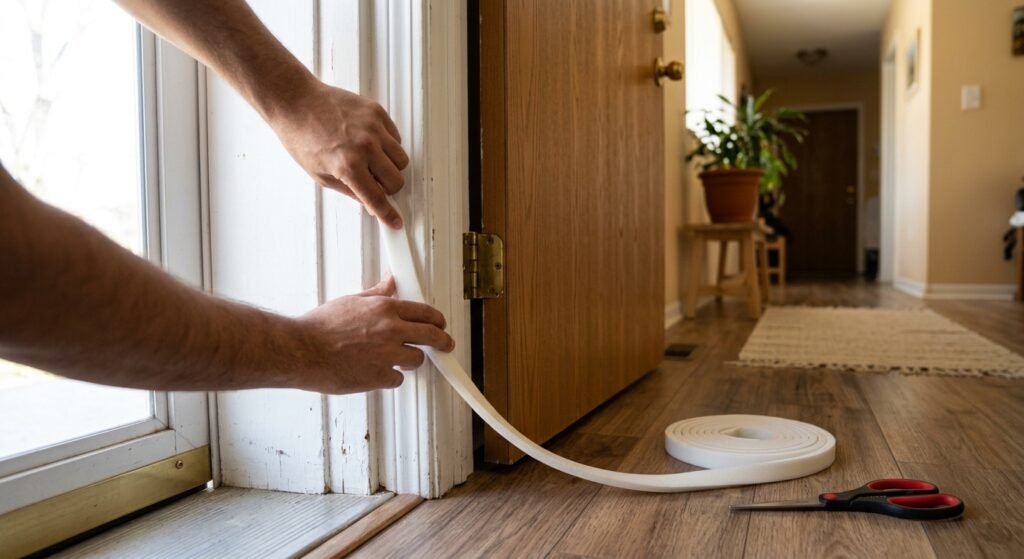
Foam weatherstripping tape and a door draft stopper are the highest-return $15 a renter can spend in a cold month. Stick the foam tape into the door frame where the door closes against it, and lay or clip a draft stopper along the bottom gap. For windows, removable rope caulk presses into gaps in autumn and peels out cleanly in spring, no residue. You’ll feel the difference the same evening, and heating bills notice too.
7. Patch Small Nail Holes and Wall Dings ($5)
A tub of lightweight spackle and a plastic putty knife handle every nail hole from your gallery wall. Press the filler in, scrape flush, let it dry, and sand lightly with fine paper. For tiny pinholes, a dab of white toothpaste is the old renter standby, though real spackle sands smoother. Test paint touch-ups somewhere hidden first, because “white” comes in fifty shades and a mismatched patch is more visible than the hole was.
Better yet, make fewer holes in the first place. Adhesive strips and hooks have gotten genuinely good, and our guide on how to hang heavy things without drilling covers what they can actually hold, including mirrors and shelves.
8. Unclog Slow Drains Without Chemicals ($5)
A slow bathroom sink or shower drain is nearly always hair, sitting just below the plug. A plastic drain snake (a flexible barbed strip, about $3) pulls it out in thirty seconds. Brace yourself, because what comes up is horrifying, but the drain runs like new. Skip the chemical drain cleaners in a rental: they can damage older pipes, and if they don’t clear the clog you’ve now got a sink full of caustic soup for the plumber to deal with.
For the kitchen sink, a plunger and a kettle of hot (not boiling, if you have plastic pipes) water with a squirt of dish soap clears most grease slowdowns.
9. Re-Grip a Loose Showerhead or Fix a Dribbly Spray ($0 to $10)
A showerhead that leaks at the joint usually just needs fresh thread seal tape. Unscrew it by hand (a cloth for grip), wrap the threads two or three times clockwise with PTFE tape, and screw it back on. If the spray pattern’s gone weird and crusty, that’s mineral buildup: soak the head in warm white vinegar for an hour and poke the nozzles clear. Keep the old showerhead in a closet if you swap in a nicer one, and reinstall the original when you move out.
10. Quiet a Banging or Rattling Door ($3)
A door that rattles in its frame, or slams like a gunshot in a draft, gets civilized with a few small felt or rubber bumper dots on the frame where the door lands. Peel, stick, done. The same bumpers fix cabinet doors that clack and toilet seats that shift. A $3 sheet of them will quietly upgrade the whole apartment.
The $25 Renter Repair Kit
If you’re starting from zero, this kit covers everything above and most surprises:
- Multi-bit screwdriver ($8)
- PTFE thread seal tape ($2)
- Plastic drain snake ($3)
- Small tub of spackle and a putty knife ($6)
- Felt/rubber bumper dots ($3)
- Silicone spray or machine oil ($4)
That’s about $26, close enough. Add a small hammer and a tape measure when budget allows. It all fits in a shoebox, which slides under the sink next to your cleaning caddy.
FAQs
Will doing my own repairs void my lease or deposit?
Minor maintenance like the fixes here almost never does, but leases vary, so skim yours for a “no alterations” or maintenance clause. The safe rule: if the fix is reversible or invisible, you’re fine. If it changes the property (painting, drilling, replacing fixtures without keeping the original), get written permission first. And report anything you fix that was broken when you moved in, so it’s on record as pre-existing.
Which repairs should I never do myself in a rental?
Anything with gas, anything behind an electrical faceplate, plumbing beyond the toilet tank and traps, and anything structural. Also mold bigger than a small patch, and pests. These aren’t skill issues, they’re liability issues. If it goes wrong, you’re on the hook, whereas the landlord is legally responsible for all of them anyway.
My landlord is slow. Can I fix something and deduct it from rent?
Careful with this one. “Repair and deduct” is legal in some US states and basically not a thing in others, and the rules are strict where it exists: written notice, reasonable waiting time, receipts. Never just withhold rent. For a $10 flapper it’s rarely worth the fight, but for real habitability issues, look up your specific state or country’s tenant rules before spending money.
What’s the single most useful tool for a renter to own?
A decent multi-bit screwdriver, and it’s not close. Probably 70 percent of apartment fixes are really just “a screw got loose somewhere.” Second place goes to PTFE tape, which costs $2 and solves nearly every small drip at a threaded joint.
How do I know if a leak is a quick fix or a call-the-landlord problem?
If water is coming from a threaded joint, a flapper, or a visible seal, that’s usually a you-sized fix. If it’s coming from inside a wall, under flooring, from a ceiling, or you can’t find the source at all, shut off the nearest valve and call the landlord the same day. Hidden water moves fast and the damage bill grows by the hour.
Pingback: Apartment Balcony Vegetable Garden for Beginners: Complete Starter Guide - The Home Perk