
You can clean mattress stains with little more than baking soda, a spray bottle, and patience. The golden rule of mattress cleaning is simple: keep it as dry as possible. A mattress is basically a giant sponge that takes days to dry inside, and a soaked mattress grows mildew long before it dries. So every method below uses the minimum liquid needed to lift the stain, with baking soda doing the drying and deodorizing.
This works on the common culprits: sweat marks, the yellow patches that build up over years, spills, urine (fresh and old), and those mystery marks that appear on every mattress eventually. Strip the bed first, and pick a morning to do this so the mattress has the whole day to air out.
What You’ll Need
Nothing exotic here:
- Baking soda, a full box if the mattress hasn’t been cleaned in a while
- White vinegar in a spray bottle, diluted half and half with water
- A few clean cloths or paper towels
- A vacuum with an upholstery or hose attachment
- Dish soap and hydrogen peroxide for the tougher biological stains
- Rubber gloves if you’re dealing with urine
That’s it. Skip the foaming mattress sprays. They add fragrance and moisture, which is the opposite of what a mattress wants.
Step 1: Vacuum the Whole Surface First
Before touching any stain, vacuum the entire mattress top and sides with the upholstery attachment. Dead skin, dust, and hair sit on the surface, and if you spray liquid onto that layer you’re making mud, not cleaning. Go slowly, and give the seams and piping extra attention because that’s where debris collects. This takes five minutes and makes every following step work better.
Step 2: Blot Fresh Spills, Never Rub
If you’re dealing with a fresh spill or accident, blot it immediately with dry paper towels or a towel. Press down firmly and hold, then swap for a dry section and repeat until almost nothing transfers. Rubbing pushes the liquid deeper and spreads the edge of the stain wider.
For fresh urine, keep blotting longer than feels necessary. Standing on a folded towel placed over the spot works surprisingly well, your body weight pulls moisture up from deeper in the foam.
Step 3: The Basic Baking Soda Treatment (Odors and Light Stains)
For general freshening and light marks, baking soda alone does a lot:
- Sprinkle a generous, visible layer of baking soda over the stain, or the whole mattress if it smells musty.
- Lightly mist the powder with the diluted vinegar spray until it’s damp, not wet. It will fizz a little.
- Let it sit for at least an hour. For odors, leave it 3 to 4 hours or all day.
- Once completely dry, vacuum up every trace of powder.
The baking soda absorbs odors and moisture while the vinegar breaks down the residue causing the mark. This combination handles sweat smells and light discoloration better than most sprays you can buy.
Step 4: Sweat and Yellow Stains
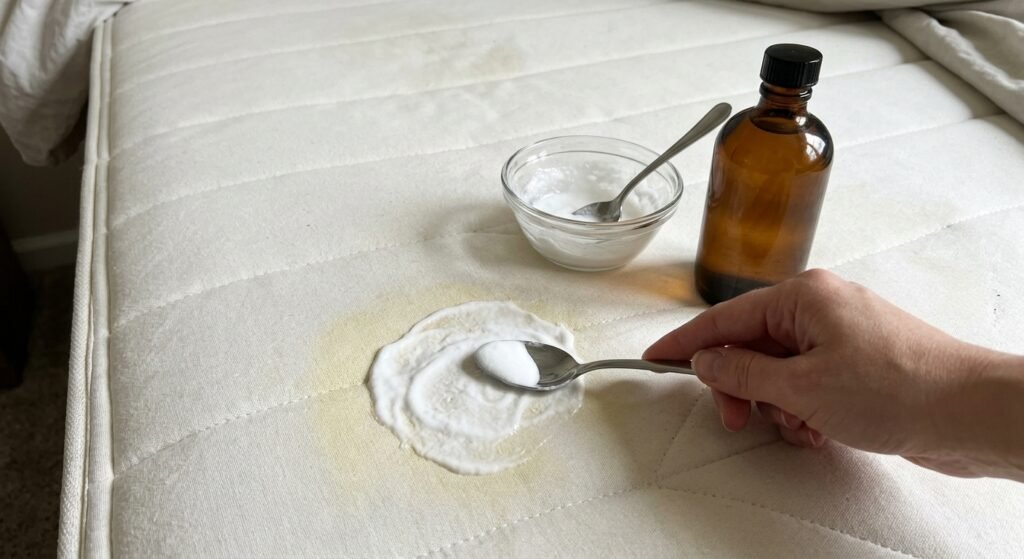
Older yellow patches need slightly more firepower. Mix a paste of 3 tablespoons baking soda, 1 tablespoon dish soap, and a splash of hydrogen peroxide (the standard 3 percent kind from the pharmacy).
- Spread a thin layer of paste over the stain.
- Let it sit for 30 to 45 minutes until it dries and crumbles.
- Scrape off the dried paste with a spoon, then vacuum.
- Dab any residue away with a barely damp cloth, then let it air dry fully.
A quick heads-up: hydrogen peroxide has a mild bleaching effect. On a white mattress that’s exactly what you want. On a colored or patterned mattress cover, test a hidden corner first, because it can lighten fabric.
Step 5: Urine Stains, Old and New
For fresh accidents, blot thoroughly (Step 2), then spray the diluted vinegar over the area, let it sit 10 minutes, and blot again. Cover with a thick layer of baking soda and leave it for a full 8 hours or overnight before vacuuming.
Old, dried urine stains are harder because the residue has crystallized in the foam. Use the peroxide paste from Step 4, and expect to repeat it once or twice. If a pet caused the stain, an enzyme cleaner is honestly worth buying, because enzymes break down the compounds that keep attracting the pet back to the same spot. Pet owners fighting hair and smells on every fabric surface might also want our guide on removing pet hair from the washing machine seal, since that’s usually the next battle.
Step 6: Dry It Properly
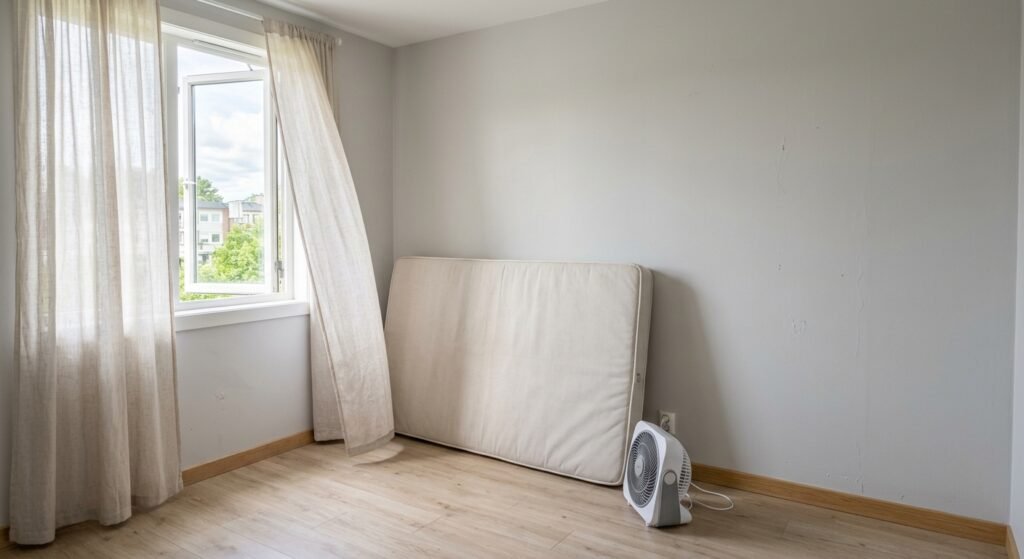
This step decides whether your clean mattress stays clean. Open the windows, point a fan at the mattress if you have one, and don’t remake the bed until the surface feels completely dry and slightly cool to the touch, which means the moisture is gone. If you can lean the mattress against a wall to expose both sides to air, even better. Sunlight helps too, both for drying and for fading what’s left of the stain.
Putting sheets on a damp mattress traps moisture, and trapped moisture in fabric is exactly how you end up with the mildew smell problem. It’s the same reason we tell people to leave the front load washer door open between loads, because damp fabric plus trapped air always ends in that sour smell. If mineral-crusted bathroom fixtures are on your list too, our guide to removing hard water stains from the toilet uses the same cheap pantry chemistry.
Keep It From Happening Again
A few cheap habits save you from doing this often:
- Get a washable mattress protector. Ten to twenty dollars, and it catches sweat, spills, and accidents before they reach the mattress. This is the single biggest upgrade.
- Wash sheets weekly, since most yellowing is transferred body oil and sweat.
- Sprinkle and vacuum baking soda over the bare mattress every couple of months when you change sheets. Ten minutes, keeps it fresh.
- Rotate the mattress head to toe twice a year so wear and staining spread evenly.
FAQs
How long should baking soda sit on a mattress?
Minimum an hour, but longer is genuinely better. For odors, leave it all day while you’re at work. Baking soda keeps absorbing as long as it sits there, so there’s no downside to leaving it, just vacuum thoroughly afterward so you’re not sleeping on grit.
Can I use this on a memory foam mattress?
Yes, but be extra stingy with liquid. Memory foam soaks up moisture like nothing else and takes ages to dry inside. Mist, don’t pour, blot firmly, and give it a full day of airflow before making the bed. The dry baking soda steps are completely safe on foam.
Will baking soda remove old yellow stains completely?
Sometimes not fully, and it’s worth being honest about that. Years-old sweat stains have chemically bonded with the fabric. The peroxide paste will lighten them a lot, often enough that you stop noticing, but a decade of yellowing rarely vanishes entirely. The smell and hygiene side, though, is completely fixable.
How often should I clean my mattress?
A quick vacuum and baking soda refresh every two or three months is plenty for maintenance. Spot-clean stains as they happen, because every stain is easier the day it appears than a month later. A full deep clean once or twice a year covers the rest.
Can I steam clean my mattress instead?
You can, carefully. Steam sanitizes well, but it pushes moisture into the mattress, so use quick passes, never hold it in one spot, and dry the mattress thoroughly afterward with fans and open windows. For most stains, the baking soda routine gets you there with far less moisture risk.