
A musty smell front load washer problem comes from three places, and you have to hit all three to fix it: the rubber door gasket, the drain pump filter, and the drum itself. Clean the gasket folds with a 1:1 vinegar and water wipe, pull and rinse the drain filter, then run the machine empty on its hottest cycle with 2 cups of white vinegar (or a washer cleaner tablet). After that, the smell stays gone only if you change two habits: leave the door ajar between loads and use less detergent.
That mildew smell isn’t your imagination and it isn’t a broken machine. Front loaders seal watertight, which means moisture, detergent residue, and lint sit in dark rubber folds after every wash. Mold and bacteria love exactly those conditions. I’ve done this reset on a washer that made towels smell worse after washing, and the whole job took about 45 minutes plus a wash cycle. Here’s the full routine.
Why Front Load Washers Get Musty in the First Place
Front loaders use less water than top loaders, which is great until you realize less water also means less rinsing power. Detergent and fabric softener residue builds up on the drum, in the gasket, and in the drawer. That film traps moisture and feeds mold.
Three things make it worse:
- Too much detergent. More suds than the machine can rinse away leaves a residue layer every single load. This is the number one cause, and almost everyone overdoses.
- Cold washes only. Modern cycles run cool to save energy, so grease and residue never get flushed with hot water.
- A sealed door. Closing the door right after a wash locks a humid box shut for days at a time.
The smell itself usually lives in the gasket. Fold back the rubber lip at the bottom of the door opening and you’ll probably find black spotted mildew, slime, maybe a sock. If you also share the house with a dog or cat, expect a mat of hair in there too, and that’s worth its own cleanout: How to Remove Pet Hair from Your Washing Machine Rubber Seal.
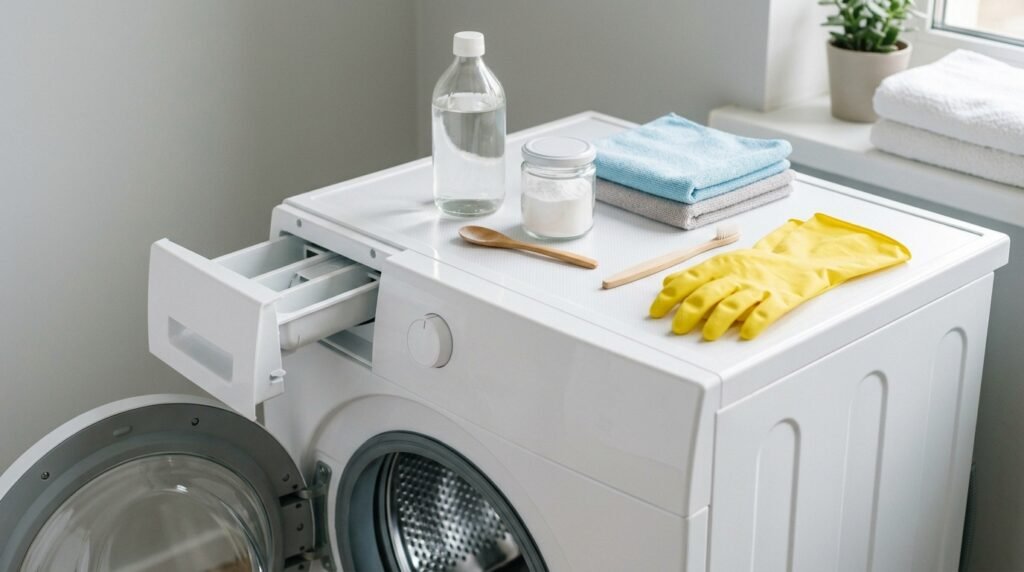
What You’ll Need
- White vinegar (about 3 cups total)
- Baking soda
- Microfiber cloths and an old toothbrush
- Rubber gloves
- A shallow pan and an old towel for the drain filter
- Optional: washing machine cleaner tablets
- Optional: diluted bleach, only for severe black mold on the gasket, and never in the same session as vinegar
That last point is a hard rule. Bleach plus vinegar releases toxic chlorine gas. Pick one for the day, rinse thoroughly, and save the other for another week if needed.
How to Get the Musty Smell Out of a Front Load Washer: The Full Reset
Step 1: Deep Clean the Door Gasket
Pull the rubber gasket folds back toward you and work around the full circle. Wipe out any lint, hair, and slime with a cloth, then scrub the folds with a cloth dampened in 1:1 vinegar and water. Use the toothbrush on the small drain holes at the bottom of the gasket, which clog easily and quietly. If there’s established black mold that wiping won’t shift, use a cloth dampened with diluted bleach (1 part bleach to 10 parts water) instead of the vinegar, let it sit on the spots for a few minutes, then rinse the gasket well with plain water and dry it. Stubborn gasket mold stains sometimes stay as faint gray shadows even once the mold is dead. Annoying, but harmless. If you’d rather avoid bleach entirely, the same vinegar and baking soda approach that works on bathroom mildew applies here too, and we’ve laid it out in How to Clean Shower Grout Without Bleach.
Step 2: Empty the Drain Pump Filter
This is the step most people have never done, and it’s often where the worst smell hides. The filter sits behind a small hatch at the bottom front of most machines. Lay a towel down, put a shallow pan under the hatch, and unscrew the cap slowly, because a cup or two of gray water will come out. Pull the filter and brace yourself. Lint, hair, coins, and sour sludge are normal. Rinse it clean in a sink, wipe out the housing, and screw it back in firmly. A loose cap leaks, so snug it properly.
Step 3: Clean the Detergent Drawer
Pull the drawer fully out (most have a release tab), and soak it in hot soapy water. Scrub the softener siphon cap, which grows mold inside where you can’t see. Wipe the cavity the drawer slides into too. The roof of that cavity is usually filthy, and a toothbrush is the only thing that reaches it.
Step 4: Run a Hot Maintenance Wash
Pour 2 cups of white vinegar into the empty drum and run the hottest, longest cycle the machine has, or the dedicated tub clean cycle if there is one. For extra punch, follow with a second hot cycle with a half cup of baking soda. A shop-bought washer cleaner tablet works just as well if you’d rather. When it finishes, wipe the drum and gasket dry and leave the door open.
If the smell survives all four steps, run the vinegar cycle once more a few days later. Long-neglected machines sometimes need two rounds to flush the residue out of the outer tub, the part you can’t see behind the drum.
What NOT to Do
- Don’t mix bleach and vinegar, ever. Not in the drum, not on the gasket, not “one right after the other” without a rinse cycle between. Chlorine gas is no joke.
- Don’t mask the smell with more fabric softener. Softener residue is part of what mold feeds on. If anything, use less or switch to distilled vinegar in the softener slot.
- Don’t run only cold washes forever. A hot wash every week or two, even just towels, keeps residue from building.
- Don’t scrub the gasket with abrasive pads. Scratched rubber traps grime faster and can eventually leak. Cloth and soft brush only.
- Don’t ignore the drain hose and standpipe. If the machine drains into a sink or standpipe that itself smells, no amount of drum cleaning fixes it. Pour a kettle of hot water and a little dish soap down the standpipe, and check the hose isn’t pushed too deep into it.
Keeping the Musty Smell Away for Good
The reset works, but the habits are what keep the machine fresh. None of these takes more than a few seconds:
- Leave the door ajar between loads. This is the single biggest change. Prop the detergent drawer open too. If you have curious toddlers or pets that climb, a magnetic door prop keeps it open just a crack.
- Halve your detergent and see what happens. Most loads need far less than the cap line suggests, especially with soft water. If your clothes come out fine, and they almost certainly will, stay at the lower dose.
- Remove wet laundry promptly. A load left sitting overnight restarts the mildew clock. If you forget one for a full day, just rewash it with a small dose.
- Wipe the gasket dry once a week. Ten seconds with the towel you’re about to wash anyway.
- Run a hot maintenance wash monthly. Vinegar, baking soda, or a cleaner tablet, whichever you have. Put a repeating reminder on your phone, because nobody remembers this one otherwise.
Sort those five and the musty smell genuinely doesn’t come back. Ours has stayed fresh for over a year on nothing but the open-door habit and a monthly hot cycle.
FAQs
Why do my clothes smell musty after washing in a front loader?
The machine itself has mold or bacteria growing in the gasket, drum residue, or drain filter, and it transfers to the wet laundry. Clean all three, then run a hot empty cycle with vinegar. If clothes still smell, you’re likely using too much detergent for the load, which leaves a residue that sours as it dries.
Can I use bleach to clean my front load washer?
Yes, either half a cup in an empty hot cycle or diluted on stubborn gasket mold. Just never combine it with vinegar in the same session, since the two react into toxic chlorine gas. Bleach also hardens rubber with repeated use, so keep it as an occasional heavy hitter rather than the monthly routine.
How often should I clean a front load washer to stop smells?
Wipe the gasket weekly, run a hot maintenance wash monthly, and clear the drain pump filter every 2 to 3 months (monthly if you have shedding pets). It sounds like a lot written down, but it’s maybe 15 minutes a month total, and it beats a 45-minute deep clean plus smelly towels.
Is vinegar bad for washing machine rubber seals?
Diluted vinegar wiped on and dried off is fine, and 2 cups diluted across a full drum of water in a hot cycle is very mild by the time it touches anything. What damages seals is neat vinegar sitting on the rubber for hours, or constant bleach use. Wipe, rinse, dry, and the gasket will outlive the machine.
The smell is gone from the drum but the laundry room still smells. Why?
Check the drain standpipe or the sink the washer empties into, since biofilm builds up in there too. Flush it with hot water and dish soap. Also check under and behind the machine for old spilled detergent or a slow hose drip, and pull the drain filter if you haven’t. A surprising amount of “washer smell” is actually plumbing smell.
Pingback: How to Remove Pet Hair from Your Washing Machine Rubber Seal - The Home Perk