
An indoor herb garden for beginners really comes down to three decisions: pick forgiving herbs, give them the brightest windowsill you have, and water them less often than you think you should. Get those three right and you’ll have fresh herbs within a few weeks, even in a rental kitchen with one decent window. Get them wrong, and you’ll join the enormous club of people who’ve killed a supermarket basil plant in nine days and decided they have a black thumb. You don’t. Supermarket basil is practically designed to die, and we’ll get to why.
Here’s the whole setup, from picking herbs to your first harvest.
Start With These Herbs (And Skip These)
Some herbs genuinely thrive indoors. Others tolerate it grudgingly, and a few just sulk and die no matter what you do.
Easiest wins for a windowsill:
- Chives. Nearly indestructible, regrow after every cut, and fine with less light than most herbs.
- Mint. Grows almost aggressively, handles some shade, and forgives missed waterings. Keep it in its own pot always, because it will strangle anything sharing soil with it.
- Parsley. Slow to start from seed but steady once going.
- Basil. Fast and rewarding, but it’s the diva of the group. It wants real warmth, lots of light, and hates cold drafts. Worth growing, just don’t judge yourself by it.
- Thyme and oregano. Both like drying out between waterings, which suits forgetful waterers perfectly.
Skip for now: rosemary (indoors it’s prone to drying out or going moldy, and it breaks beginners’ hearts), cilantro/coriander (it bolts to seed quickly indoors), and anything sold as a mature outdoor plant you’re hoping will adjust. Start with three or four pots, not ten. A small garden you keep alive beats a windowsill jungle you can’t keep up with.
If your windows face away from the sun most of the day, it’s worth knowing which herbs cope. We wrote up the shade-tolerant options in 12 herbs that grow in shade, and most of that list applies indoors too.
Light: The Thing That Actually Decides Everything
Herbs are sun plants. Most want six or more hours of bright light a day, and light is the number one reason indoor herbs get leggy, pale, and sad.
- South-facing windowsill (north-facing in Australia): the jackpot. Everything on the easy list grows here.
- East or west window: good enough for chives, mint, parsley, and thyme. Basil will survive but grow slower.
- North window or a sill shaded by another building: honestly, this is grow-light territory for most herbs, though mint and chives will limp along.
A small clip-on LED grow light fixes a dim kitchen for around $20, uses pennies of electricity, and turns almost any corner into a viable herb spot. Set it on a cheap plug-in timer for 12 to 14 hours a day and forget about it. One tell that your herbs need more light: stems stretching long and thin with big gaps between leaves, all leaning hard toward the window. Rotate pots a quarter turn every few days either way, or everything grows lopsided.
Pots, Soil, and the Drainage Rule You Can’t Break
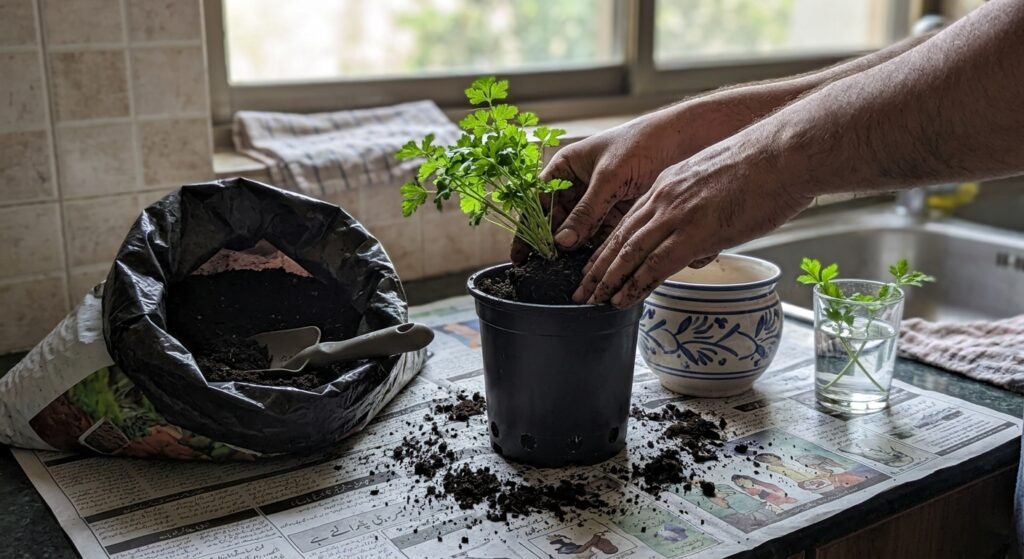
Every pot needs a drainage hole. Not decorative pebbles at the bottom of a sealed pot, an actual hole. Herbs sitting in waterlogged soil rot at the roots, and it’s the fastest way to kill them. If you love a pot with no hole, use it as a sleeve: plant the herb in a cheap plastic nursery pot with holes and set that inside the pretty one, lifting it out to water.
Size-wise, 15 cm diameter pots suit most single herbs. Use ordinary multi-purpose potting mix, not garden soil, which compacts into concrete in pots and can bring bugs indoors. Put a saucer under everything, because your windowsill or security deposit will not enjoy water rings.
One more small thing that helps: don’t crowd multiple herbs into one long trough planter as a beginner, even though every photo online shows exactly that. Different herbs want different watering, and a shared trough forces one schedule on all of them. Separate pots let the thyme dry out while the basil drinks.
Watering: Less Often, More Thoroughly
More indoor herbs die from overwatering than everything else combined. The routine that works:
- Check before you water. Poke a finger 2 to 3 cm into the soil. If it’s damp down there, walk away.
- When it’s dry, water thoroughly. Pour slowly until water runs out the drainage hole, then stop.
- Empty the saucer after ten minutes. Roots sitting in a puddle rot.
That’s it. For most herbs on most windowsills, this works out to once or twice a week, less in winter. Thyme and oregano prefer even longer between drinks. Basil and mint want it a bit more often and will dramatically wilt to tell you, then bounce back within hours of watering, which is alarming the first time and routine ever after.
The finger test beats any schedule, because light, temperature, and pot size change how fast soil dries. If you want the fuller picture on reading your plants, our guide on how often to water container plants covers the signs of overwatering in detail.
Harvesting So Your Herbs Grow Back Bushier
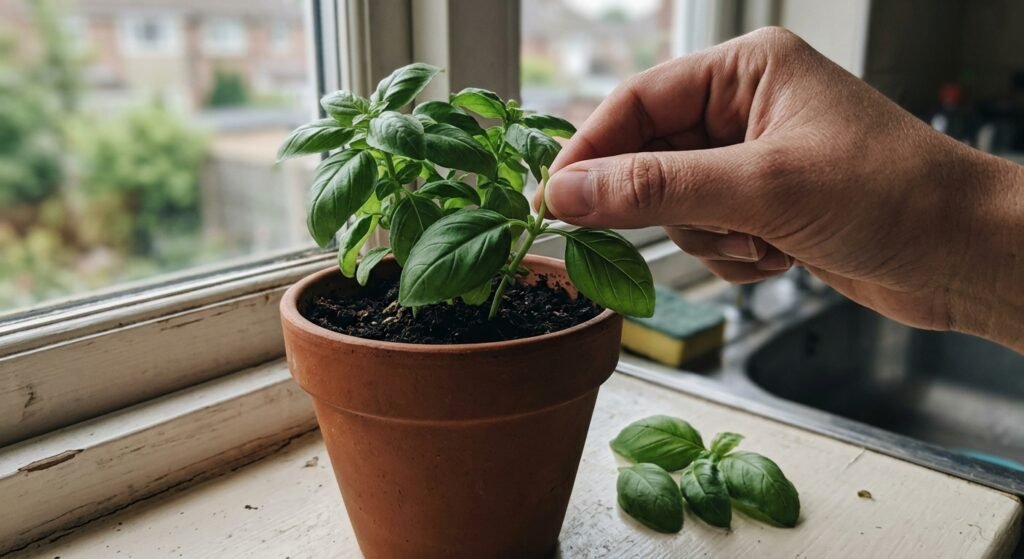
Here’s the counterintuitive part: cutting herbs regularly makes them grow more, not less. The rules:
- Never take more than a third of the plant at once.
- For basil and mint, pinch stems just above a pair of leaves. Two new stems grow from that point, which is how you get a bushy plant instead of one tall stalk.
- For chives, cut leaves 2 to 3 cm above the soil and they regrow like grass.
- For parsley, take outer stems at the base and leave the center growing.
Pinch off any flower buds the moment you see them, especially on basil. Once herbs flower, leaf production slows and flavor turns bitter. And start harvesting early, even just a leaf or two for eggs or pasta. Plants respond to it, and it’s the whole point of the garden.
About That Supermarket Basil
Those lush basil pots from the grocery store are actually dozens of seedlings crammed into one tiny pot, grown fast to look good on a shelf, not to live on a windowsill. That’s why they collapse within two weeks. The rescue: divide the clump into three or four smaller bunches, pot each into its own pot with fresh mix, water them in, and expect a few days of sulking. Most bunches recover and outlive the original pot by months. It’s also the cheapest way to start an indoor garden, since one $3 plant becomes four.
If you get hooked and want to move beyond the windowsill when spring comes, herbs transition happily to pots outside. Our apartment balcony vegetable garden guide is the natural next step.
FAQs
Can I really grow herbs indoors all year round?
Mostly, yes. Growth slows a lot in winter because days are short, so expect smaller harvests from November to February in the US and UK unless you add a grow light. The plants aren’t dying, they’re idling. Ease off watering in winter too, since soil dries much slower.
Should I start from seeds or buy small plants?
Buy small plants for your first round, honestly. Seeds are cheaper but add weeks of waiting and a whole extra failure point right when you’re building confidence. Chives and basil are easy enough from seed once you’ve kept purchased plants alive for a couple of months.
Why are my herb’s leaves turning yellow?
Nine times out of ten it’s overwatering. Check if the soil is staying wet for days and whether the pot drains. Yellow lower leaves with soggy soil means back way off the water. Pale yellowish growth all over with dry soil and a dim window points to not enough light instead.
Do indoor herbs need fertilizer?
Lightly, yes. Potting mix runs out of nutrients after six to eight weeks. A general liquid feed at half the bottle’s recommended strength, once a month during spring and summer, is plenty. Overfeeding herbs actually dulls their flavor, so this is one place lazy wins.
Are there bugs I should worry about indoors?
Occasionally fungus gnats, the tiny flies that hover around damp soil. They show up when soil stays constantly wet, so letting the top few centimeters dry between waterings usually clears them out. Sticky traps handle the stragglers. Serious pests are rare indoors compared to a balcony.