
If you’re wondering how often to water container plants, here’s the honest answer: there is no fixed schedule, and anyone who gives you one is guessing. The same pot might need water every day in a hot July week and once every ten days in a cool spring. What you need instead is a 5-second test that tells you exactly when each pot is ready, plus the ability to spot overwatering, because that’s the mistake that actually kills most container plants.
Both of those are easy to learn. Let’s start with the test.
The Finger Test: The Only Schedule You Need
Push a finger into the soil, down to about the second knuckle, roughly 3 to 5 cm.
- Dry at that depth: water now, thoroughly, until it runs out of the drainage holes.
- Still damp: don’t water. Check again tomorrow.
That’s the entire system. It works because it measures the only thing that matters, which is the moisture where the roots actually live. The soil surface lies constantly. It can look bone dry an hour after watering, or look damp while the root zone below is parched.
Two upgrades on the basic test:
- Lift the pot. With smaller containers, weight tells you even more than touch. A freshly watered pot is heavy, a dry one feels weirdly light. Lift your pots right after a good watering once, just to learn what “full” feels like. After a week or two you’ll be able to judge most pots one-handed.
- Use a wooden skewer for deep pots. Push it to the bottom, pull it out, and read it like a cake tester. Soil clinging to it means moist, clean and dry means water.
Moisture meters from the garden center work too, though the cheap ones drift out of accuracy fast. Your finger is free and never needs batteries.
Rough Frequencies, So You Know What’s Normal
No schedule replaces the finger test, but it helps to know the typical range so you can spot when something’s off:
- Hot summer weather: daily, sometimes twice a day for small pots and hanging baskets in full sun.
- Warm spring and autumn days: every two to four days.
- Cool or overcast stretches: once or twice a week.
- Winter (for outdoor perennials and shrubs in pots): every one to three weeks, only when soil is dry and not frozen.
What moves a pot toward the thirsty end of those ranges: small containers, terracotta or fabric pots, full sun, wind, big leafy plants like tomatoes and zucchini, and root-filled pots late in the season. What slows drying down: large containers, plastic or glazed pots, shade, and cool weather. Wind is the sneaky one on balconies, a breezy day can dry pots faster than a sunny one, which is why exposed balcony pots often need checking daily even when it’s not hot.
How to Water Properly When You Do
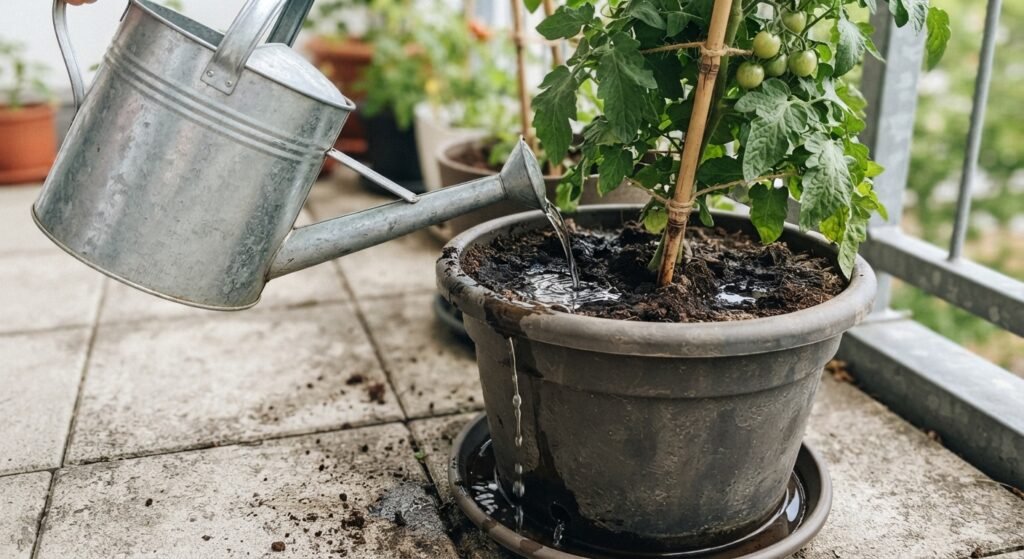
Frequency gets all the attention, but technique matters just as much:
- Water slowly and deeply until it runs from the drainage holes. A quick splash wets the top 2 cm and never reaches the roots, which trains them to stay shallow. If water races straight through a very dry pot without soaking in, the soil has shrunk from the sides; loosen the surface, then water in two or three passes a few minutes apart.
- Aim at the soil, not the leaves. Wet foliage in the evening is an open invitation to mildew and blight.
- Morning is the best time. Plants stock up before the heat, and leaves dry quickly. Evening is second best. Midday watering isn’t harmful, it just evaporates faster.
- Empty saucers an hour after watering. A pot standing in a full saucer is soaking its roots from below, which quietly causes the exact overwatering problems we’re about to cover.
Signs You’re Overwatering (Most People Misread These)
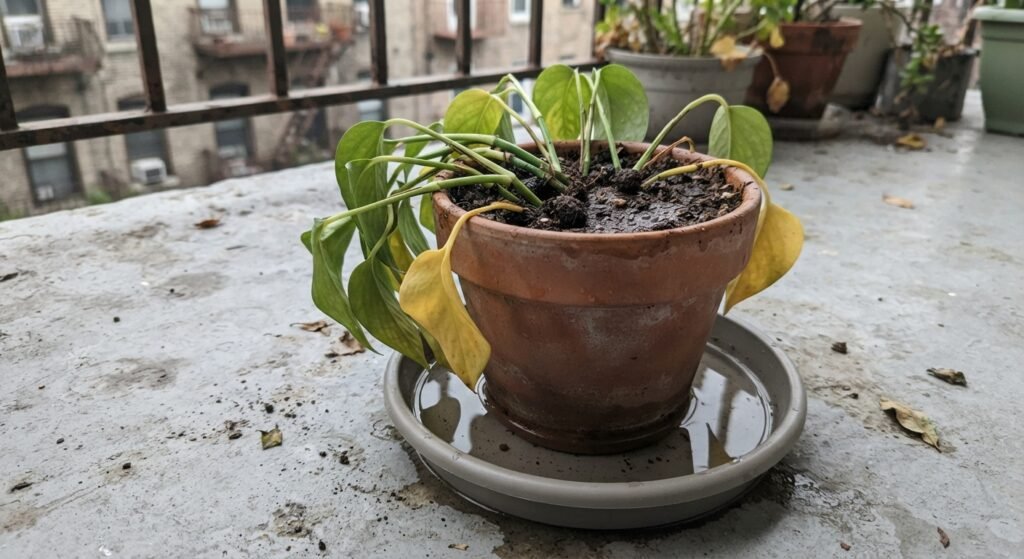
Here’s the cruel joke of container gardening: an overwatered plant looks thirsty. The roots drown, rot, and stop working, so the plant can’t take up water and it wilts. The beginner sees wilting, waters more, and finishes the job.
Check for these before reaching for the can:
- Wilting while the soil is still wet. The classic. If a plant droops but the finger test says damp, the problem is too much water, not too little.
- Yellowing lower leaves. Especially soft, limp yellow leaves. Underwatered leaves go dry, crispy, and brown at the edges instead.
- Constantly soggy soil that never dries out. Healthy pots cycle between moist and nearly dry. A pot that stays wet for a week has a drainage problem, a too-big pot, or an owner who loves it a little too much.
- A sour or swampy smell from the soil. That’s rot starting. Healthy soil smells earthy.
- Fungus gnats. Those tiny flies hovering around your pots breed in permanently damp soil. A few are normal, clouds of them mean the soil never dries.
- Mushy, brown stems at the soil line. Late-stage root rot. At this point, saving the plant means repotting into fresh dry mix and trimming off any brown, slimy roots, and even then it’s a coin flip.
If you catch overwatering early, the fix is boringly simple: stop watering, move the pot somewhere bright and airy, and let it dry until the finger test says dry. Most plants bounce back within a week or two.
Signs of Underwatering, for Comparison
Underwatering is easier to spot and far easier to fix:
- Soil dry at finger depth, pot noticeably light
- Leaves dry, crispy, or browning at the tips and edges
- Wilting that perks up within hours of a deep watering
- Soil pulling away from the sides of the pot
A badly dried-out pot sometimes needs a soak rather than a sprinkle. Stand the whole pot in a basin of water for 20 to 30 minutes and let it rehydrate from the bottom up.
Making Watering Less of a Chore
A few setup choices cut your watering workload in half:
- Bigger pots. The single most effective change. Double the soil volume and you can double the time between waterings. It’s the same advice we push in the apartment balcony vegetable garden guide for beginners, because small pots cause most beginner watering stress.
- Plastic or glazed pots for thirsty plants. Save terracotta for herbs that like drying out, like thyme and oregano.
- Mulch the surface. A 2 to 3 cm layer of bark chips, gravel, or even shredded leaves on top of the soil slows evaporation noticeably.
- Group pots together. Clustered plants shade each other’s containers and create a slightly more humid pocket, so everything dries slower. Bonus: watering ten pots in one corner takes two minutes.
- Match plants to your attention span. If you know you’ll forget, favor drought-tolerant herbs and chard over cucumbers and hanging baskets. Shade-tolerant plants need dramatically less water too, something the herbs that grow in shade on a balcony list covers in detail.
FAQs
Should I water my container plants every day?
Only if the finger test says so, which in a hot summer it often will, especially for small pots in full sun. But every day as a fixed rule, regardless of weather? That’s how plants drown in spring and autumn. Check first, water second.
Is it better to underwater or overwater?
Underwater, no contest. A thirsty plant tells you quickly and recovers within hours of a good drink. An overwatered plant hides the damage in the roots until it’s serious, and root rot is often fatal. When you’re genuinely unsure, waiting one more day is the safer call.
Why does water run straight through my pot without soaking in?
The soil has dried out completely and shrunk away from the pot’s sides, so water is bypassing it through the gap. Rough up the surface, water a little, wait five minutes, then water again. For a really parched pot, sit the whole thing in a basin of water for half an hour.
Do I still need to water pots when it rains?
Usually yes, at least a check. Balcony pots often sit under an overhang and get no rain at all, and even out in the open, a leafy plant can act like an umbrella over its own pot. After rain, run the finger test before assuming nature did the job.
How do I keep container plants watered while I’m on vacation?
For a week or less: water everything deeply, group pots in shade, and mulch the surfaces. Longer than that, ask a neighbor, or set up self-watering pots or a simple drip system before you go. A tray of water under each pot works for a few days in a pinch, just don’t leave plants standing in water as a permanent setup.