
To clean a smelly dishwasher, check four spots: the filter, the door seal, the spray arms, and the drain area. The smell almost always comes from one of them. None take long to sort out once you know where to look.
A dishwasher that smells bad even when the dishes come out clean is a common problem. People put up with it far too long. The smell is usually trapped food particles breaking down in a warm, damp space. That’s the perfect setup for bacteria and mild mold. It doesn’t mean your dishwasher is broken. It just needs the same deep clean any appliance that handles food and water needs now and then.
Start With the Filter When You Clean a Smelly Dishwasher
The filter sits at the bottom of the dishwasher, usually under the lower spray arm. It’s the most common source of dishwasher odor. It catches food particles so they don’t clog the pump or land back on your dishes. That means it slowly fills with gunk that smells terrible after a few weeks.
- Switch the dishwasher off, remove the bottom rack, and find the filter. It’s usually a round or cylindrical piece that twists to unlock.
- Take it out and see what’s caught in there. It’s often more than people expect.
- Wash it in warm soapy water. Use an old toothbrush to scrub the mesh and the small crevices where food gets stuck.
- Rinse it well and make sure no loose debris is left. Then twist it back into place the same way it came out.
This part takes patience the first time. The mesh has more nooks than you’d expect, and it’s easy to miss a spot. Doing this once a month means you rarely need to clean a smelly dishwasher from scratch.
Wipe Down the Door Seal
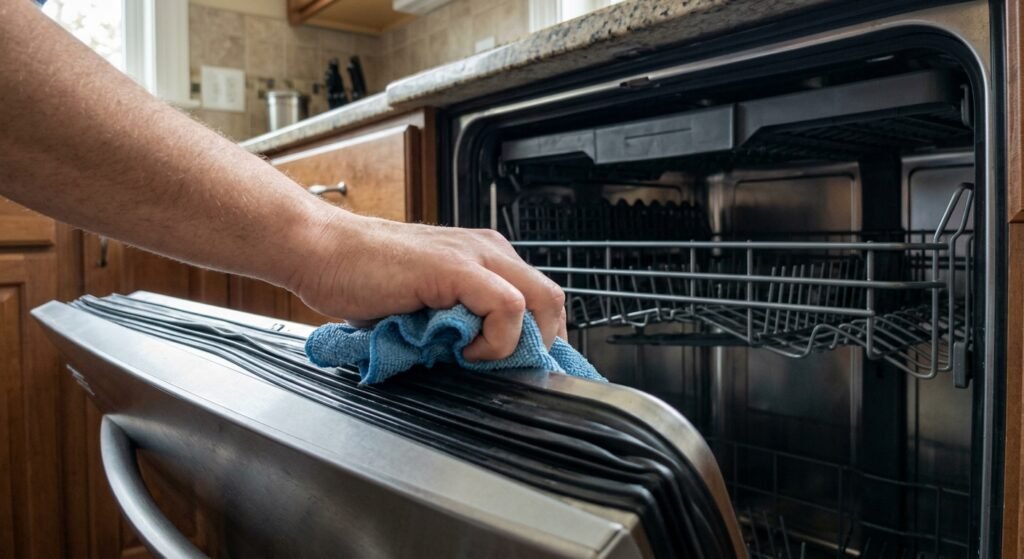
The rubber gasket around the door traps moisture and food splatter every time you close the dishwasher. It’s easy to miss when you clean a smelly dishwasher. It rarely gets a second thought during a normal wash. Run a damp cloth with a bit of soapy water all the way around the seal. Pay close attention to the bottom edge and the folds in the rubber, since grime collects there most.
A soft toothbrush works well for the tighter creases. Dark spots that don’t wipe away easily might be early mold, not just food residue. A stronger pass with diluted vinegar usually clears it. Never combine vinegar with bleach.
Check the Spray Arm Holes
The spray arms are the rotating bars that shoot water onto your dishes. Their small holes clog with mineral deposits or bits of food over time. A clogged arm adds to the odor, so check it when you clean a smelly dishwasher. It also means your dishes aren’t getting cleaned as well as they should.
Remove the spray arms if your model allows it. Most just lift or unclip. Run a toothpick or a thin piece of wire through each hole to clear the blockage. Rinse the arms under running water, then give them a quick shake to check nothing is still stuck inside.
Run a Hot Vinegar Cycle

Once the physical cleaning is done, give the whole interior a deeper flush. This is the step that finishes the job when you clean a smelly dishwasher.
- Place a cup of white vinegar in a dishwasher-safe container on the top rack. The machine should be completely empty of dishes.
- Run a hot, full cycle. The vinegar helps break down grease, mineral buildup, and lingering odors, including spots you can’t reach by hand.
- When it finishes, sprinkle a small amount of baking soda across the bottom of the empty machine. Then run a short, hot cycle again. This lifts any remaining odor and leaves things noticeably fresher.
Never combine bleach and vinegar in the same cycle, or even close together. Mixing them can release harmful fumes. If you use bleach elsewhere in your kitchen routine, keep it well away from this process. Skip bleach on stainless steel dishwasher interiors too, since it can cause pitting and discoloration over time.
Clean Around the Drain
Food debris that doesn’t break down fully tends to settle near the drain at the bottom of the machine. Don’t skip it when you clean a smelly dishwasher. After removing the filter, look at the drain opening for visible buildup. Wipe it out with a cloth or a small brush. If water keeps pooling here even after cleaning, that can point to a bigger drainage problem, not just a smell.
If drains are a recurring headache around your home, our guide on unclogging a drain without chemicals covers safe methods. They work well on kitchen sink drains too, which often back up around the same time as a smelly dishwasher.
Wipe Down the Exterior
It’s easy to focus on the inside and forget the outside, even after you clean a smelly dishwasher. Handles, buttons, and the area around the door seal collect grime too, especially in a kitchen. A quick wipe with a damp cloth and mild soap finishes the job. The whole appliance then looks as clean as it smells.
Prevention: Scrape, Don’t Necessarily Rinse
People argue about whether you need to rinse dishes before loading them. Most modern dishwashers handle food residue well as long as it isn’t caked on. Scraping large food scraps into the trash is enough for most households. Rinsing every dish defeats the point of having a dishwasher. If your machine gets smelly between cleanings, a light rinse on greasy or starchy dishes can help. Good loading habits mean you won’t have to clean a smelly dishwasher as often.
Other Habits That Help
These habits keep you from having to clean a smelly dishwasher again.
- Leave the door ajar after a cycle finishes. This lets the interior air out and dry, instead of sitting damp and closed. That’s exactly the setup that breeds odor and mild mold.
- Clean the filter monthly as routine maintenance, not after a smell develops.
- Check for standing water at the bottom after a cycle. A small amount is sometimes normal, depending on the model. A puddle that never drains is worth mentioning to a landlord or repair technician. It usually points to a mechanical issue.
If your kitchen has more than one odor problem lately, it’s often not a coincidence. A messy drain, a smelly dishwasher, and fruit flies tend to show up together. They’re all drawn to the same lingering food residue. Our guide on getting rid of fruit flies is worth a look if that’s part of the picture.
If the odor problem goes beyond the dishwasher, try our guide to cleaning an oven without oven cleaner. It uses a similar chemical-light approach and pairs well with a broader kitchen deep clean.
Which Fix Matters Most When You Clean a Smelly Dishwasher
You don’t always need the full deep clean. Match the fix to what you notice.
- Smell only during a cycle: clean the filter and the spray arms first.
- Smell when you open the door: wipe the door seal, then run the vinegar cycle.
- Musty smell with a little standing water: clean the filter and the drain area.
- Rotten egg smell: clear trapped food from the filter and drain. If it stays, call a repair technician.
- White film or greasy residue: run the hot vinegar cycle.
If you’re not sure where to start, start with the filter. It fixes more dishwasher smells than everything else on this list.
Safety Notes Before You Start
Run through these quick checks before you clean a smelly dishwasher.
- Switch the dishwasher off before you pull out the filter or spray arms.
- Wear gloves. Broken glass or sharp bits can hide under the filter.
- Never mix bleach with vinegar or other cleaners.
- Check your manual before using bleach or vinegar. Stainless steel tubs and rubber seals can be sensitive.
- Don’t force a stuck spray arm or filter. If it won’t come out, stop and check the manual.
- Keep vinegar, baking soda, and any cleaners away from kids and pets.
A Monthly Maintenance Checklist
Once you clean a smelly dishwasher properly, keeping the smell away is mostly a handful of quick habits. You won’t need another big cleaning session.
- Pull and rinse the filter once a month, more often after greasy or starchy meals.
- Wipe the door seal every couple of weeks, since it’s easy to forget.
- Run a vinegar cycle every one to two months, not just after the smell returns.
- Leave the door cracked open after each cycle so the interior actually dries.
- Scrape large food scraps before loading, without stressing about rinsing every plate.
This routine takes about ten minutes a month. It’s a lot less unpleasant than tackling a dishwasher that’s been smelling for weeks.
FAQs
How often should I actually clean my dishwasher?
Cleaning the filter once a month and running a vinegar cycle every one to two months keeps most dishwashers fresh. If you cook a lot of greasy or starchy food, do it a little more often. That’s the easiest way to clean a smelly dishwasher before it even starts.
My dishwasher smells fine when empty but bad once I run a cycle. Why?
That usually points to the filter or spray arms. Running water stirs up trapped food particles and pushes the smell into the air. Cleaning both usually fixes it.
Is it safe to use bleach to clean my dishwasher?
It depends on the interior material. Bleach can damage or discolor stainless steel tubs, so check your manual first. Never mix bleach with vinegar in the same cleaning session, since the fumes can be harmful.
Can I just run an empty hot cycle with dish soap instead of vinegar?
Regular dish soap isn’t made for dishwashers. It can create too many suds that leak out or mess up the wash cycle. Stick with vinegar, baking soda, or a dishwasher cleaning tablet to clean a smelly dishwasher.
Why does my dishwasher smell like rotten eggs specifically?
That smell often points to trapped food breaking down. A partly clogged drain that doesn’t clear waste water between cycles can add to it. Cleaning the filter and drain area usually fixes it. If the smell stays, have a repair technician take a look.