
You can unclog a drain without chemicals in most cases using tools you already have: a kettle, some baking soda, a plunger, and maybe a cheap plastic drain snake. Chemical drain cleaners feel like the easy option, but they’re harsh on pipes (especially older ones), dangerous to skin and eyes, and if they don’t clear the clog, you’re left with a sink full of caustic water you now have to plunge through. Not fun.
The five methods below go from easiest to most involved. Start at the top and work down. Somewhere in this list is the fix for probably 95 percent of household clogs, whether it’s a slow bathroom sink, a greasy kitchen drain, or a shower that turns into a paddling pool.
First, Figure Out What You’re Dealing With
A quick diagnosis saves time. Bathroom sink and shower clogs are almost always hair bound up with soap scum, sitting just a few inches down the drain. Kitchen clogs are usually grease and food buildup, often deeper in the pipe. Slow draining means a partial clog; standing water that never moves means a full blockage.
That matters because hair clogs respond best to hooking and pulling (methods 4 and 5), while grease responds to heat and flushing (methods 1 and 2). Plunging works on both.
Method 1: Boiling Water (Best for Grease)
The simplest fix, and for kitchen sinks it works more often than you’d think.
- Boil a full kettle.
- Remove any standing water from the sink first so the hot water hits the clog instead of getting diluted.
- Pour the water down in two or three stages, waiting several seconds between pours.
- Repeat once or twice if the drain starts moving but stays slow.
The heat melts grease enough for the flow to push it along. One caveat: if you have PVC (plastic) pipes, use very hot tap water instead of a roaring boil, since repeated boiling water can soften plastic joints over time. And never pour boiling water into a porcelain sink with standing cold water in it, because the thermal shock can crack it.
Method 2: Baking Soda and Vinegar
The classic, and it earns its reputation on partial clogs and smelly drains.
- Clear standing water as best you can.
- Pour about half a cup of baking soda directly down the drain. Use a funnel or a folded piece of paper if the drain has a grate.
- Follow with a cup of white vinegar. It will fizz enthusiastically. That’s the point.
- Cover the drain with a plug or a cloth so the fizzing pushes downward into the clog instead of up out of the drain.
- Wait 30 minutes, then flush with hot water.
Honestly, the fizzing does less mechanical work than the internet claims, but the combination loosens grime and soap scum, deodorizes, and paired with a hot water flush it clears a lot of sluggish drains. It’s also completely safe to repeat, unlike chemical cleaners. The same duo does great work elsewhere in the house too, like in our method for removing hard water stains from a toilet.
Method 3: The Plunger (Underrated for Sinks)
People think plungers are just for toilets, but a small cup plunger is brilliant on sinks and showers.
- Remove the drain stopper or grate if it lifts out.
- Add enough water to cover the plunger cup, since plungers push water, not air.
- Block the overflow hole. This is the step everyone skips. That little hole near the top of the sink lets your plunging pressure escape. Stuff a wet rag into it and hold it there.
- Seat the plunger over the drain and give 8 to 10 sharp, vertical pumps, keeping the seal.
- Pull up sharply on the last pump and see if the water rushes down.
For double kitchen sinks, block the second drain with a rag or stopper too. If you can hear gurgling from another opening while you plunge, pressure is escaping there and you need to seal it. Use a clean plunger or buy a cheap dedicated sink plunger, because using the toilet one in the kitchen is a hygiene decision you’ll regret.
Method 4: A Drain Snake or Zip Tool (Best for Hair)
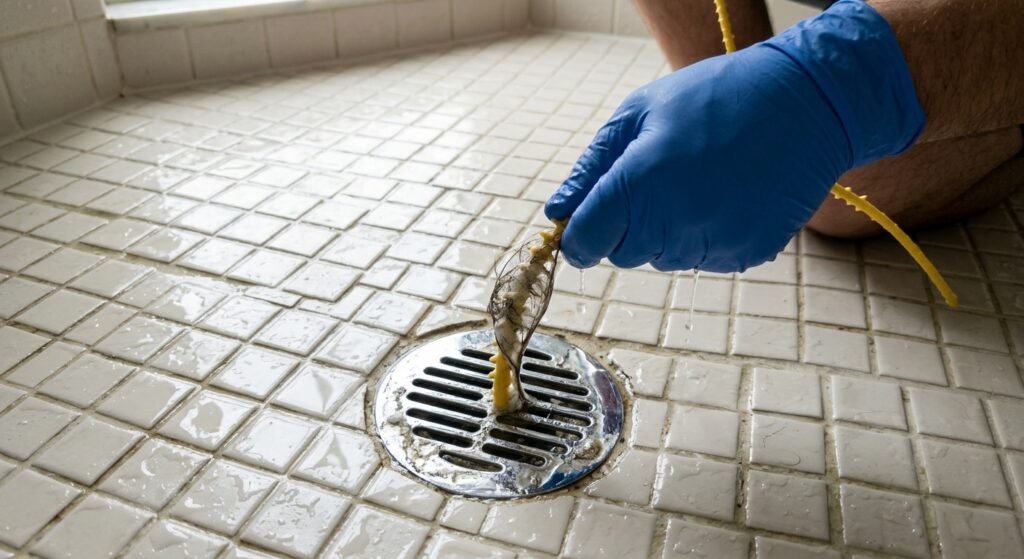
For bathroom clogs, this is the closer. The cheap plastic zip tool, a flexible strip with barbs down each side, costs a couple of dollars and lives up to the hype.
- Remove the stopper. Some lift straight out, some need a quarter twist, and some pop-up stoppers need a small nut disconnected under the sink.
- Feed the tool down the drain as far as it goes.
- Twist gently, then pull up slowly.
- Brace yourself. What comes up is a matted rope of hair and soap gunk, and it will smell like a swamp. This is normal, and weirdly satisfying.
- Repeat until the tool comes up clean, then flush with hot water.
A straightened wire coat hanger with a small hook bent into the end does a similar job if you don’t want to wait for a proper tool. Just work gently so you don’t scratch the drain finish or push the clog deeper.
Method 5: Clean the P-Trap (The Nuclear Option)
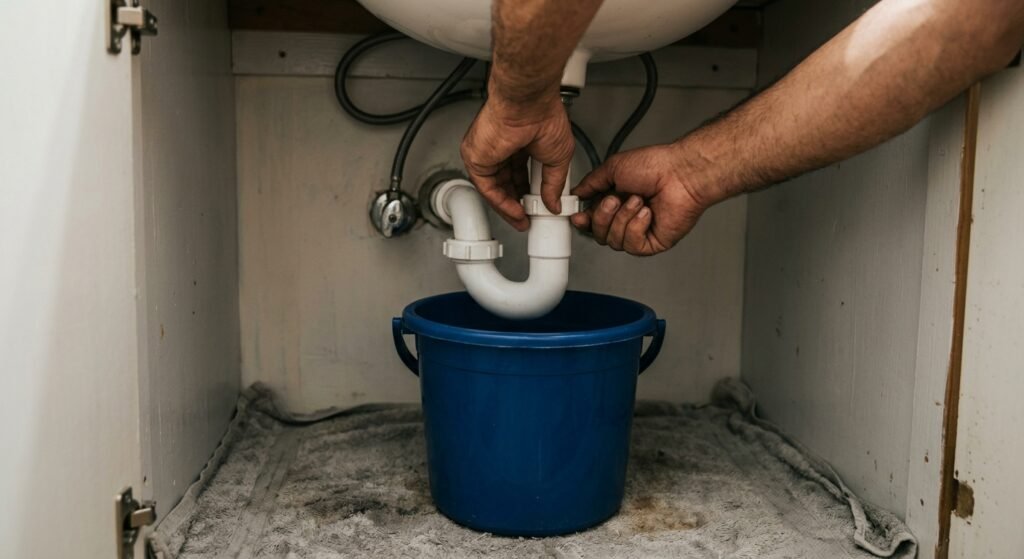
If nothing above works on a sink, the clog is probably sitting in the P-trap, that U-shaped bend under the basin. Clearing it sounds like plumbing, but it’s genuinely a beginner job on most modern sinks.
- Put a bucket or roasting tray under the trap, plus an old towel. Water will come out.
- Unscrew the two large slip nuts holding the curved section, usually hand-tight on plastic pipes. Stubborn metal ones may need adjustable pliers wrapped in a cloth.
- Pull the trap free and tip its contents into the bucket. You’ll likely find the clog right there, often with a bonus lost earring or bottle cap.
- Scrub the inside with an old toothbrush or bottle brush, then reattach and hand-tighten the nuts.
- Run water and check underneath for drips. Snug the nuts a little more if you see any.
Renters, this is still within normal DIY territory, but if pipes are corroded, fused, or you have to force anything, stop and call the landlord. Forcing an old fitting can turn a slow drain into a flood. The same “know when to stop” rule applies to toilet repairs, which we walk through in how to fix a running toilet yourself.
Keeping Drains Clear So You Don’t Do This Again
- Put a cheap silicone or mesh hair catcher in the shower drain. It’s the single highest-value drain purchase that exists.
- Never pour grease or pan oil down the kitchen sink. Wipe pans with paper towel first, the same habit that helps when you clean a burnt pot without scrubbing.
- Flush the kitchen drain with a kettle of hot water once a week or so.
- Do the baking soda and vinegar treatment monthly as maintenance, before things slow down.
FAQs
Does the baking soda and vinegar trick actually work?
On partial clogs, soap scum, and smells, yes. On a fully blocked drain with standing water, not really, because the mixture can’t reach the clog in strength. Use it for slow drains and prevention, and reach for the plunger or snake when things are properly blocked.
Is it safe to plunge a sink after someone already poured chemical cleaner in?
Be very careful. Plunging can splash caustic water onto your skin and eyes. If a chemical cleaner is sitting in there, wait the full time on the label, flush with lots of cold water, and wear gloves and eye protection if you must plunge. This is a big part of why skipping chemicals in the first place is the better route.
What can I use instead of a drain snake?
A wire coat hanger, straightened with a tiny hook bent in the end, handles most hair clogs near the surface. A zip-tie with a few angled notches cut into it works in a pinch too. Both are rougher on the drain finish than a proper plastic tool, so go slowly.
Why does my drain clog again a few weeks after I clear it?
You’re probably removing part of the clog and leaving a base layer behind, which catches new debris fast. Follow whichever method worked with a hot water flush and a baking soda treatment, and add a hair catcher. If a kitchen sink re-clogs constantly, grease buildup deeper in the line may need a landlord or plumber visit.
When should I stop DIY-ing and call someone?
If multiple drains clog at once, if water backs up into the tub when the sink drains, or if there’s a sewage smell, the blockage is in the main line and that’s beyond home methods. Renters should report it right away, since main line issues are squarely the landlord’s problem.