
The fastest way to clean a burnt pot is to stop attacking it with a scouring pad and let heat and chemistry do the work instead. Boil water with baking soda in the pot, let it sit, and most of the burnt layer lifts off on its own. It feels almost like cheating the first time you try it. Below are four methods that work on everything from lightly scorched rice to that pot of caramel you walked away from at exactly the wrong moment.
A quick note before we start: don’t plunge a hot pot into cold water. The sudden temperature change can warp the base, especially on thinner pans, and a warped pot never sits flat on the stove again. Let it cool for a few minutes first, or use hot water for the soak.
Why Scrubbing Is the Worst Option
Burnt food is basically carbonized sugar, starch, and protein welded to the metal. Scrubbing it dry means you’re grinding that hard layer across the surface of your pot, which scratches stainless steel and absolutely destroys nonstick coatings. You also end up doing twenty minutes of arm work for a result that soaking would’ve handled while you watched TV.
The trick with every method below is the same: soften the burnt layer until it releases, then wipe or gently nudge it off. Heat plus time beats muscle every time.
Method 1: Baking Soda and Boiling Water (The Reliable One)
This is the method to try first because it works on the widest range of disasters and costs almost nothing.
- Fill the pot with enough water to cover the burnt area by a couple of centimeters.
- Add 2 to 3 tablespoons of baking soda.
- Bring it to a boil on the stove and let it bubble for 10 to 15 minutes. You’ll often see flakes of the burnt layer floating up, which is oddly satisfying.
- Turn off the heat and let it sit until the water is cool enough to handle.
- Pour it out and wipe with a soft sponge or a wooden spatula. Most of the mess slides right off.
If a stubborn patch remains, make a paste of baking soda and a little water, spread it on the spot, and leave it for an hour. Then wipe. This works on stainless steel, enamel, and ceramic. For nonstick pots, use less baking soda and skip any scraping, even with wood.
Method 2: Vinegar Then Baking Soda (For Serious Burns)
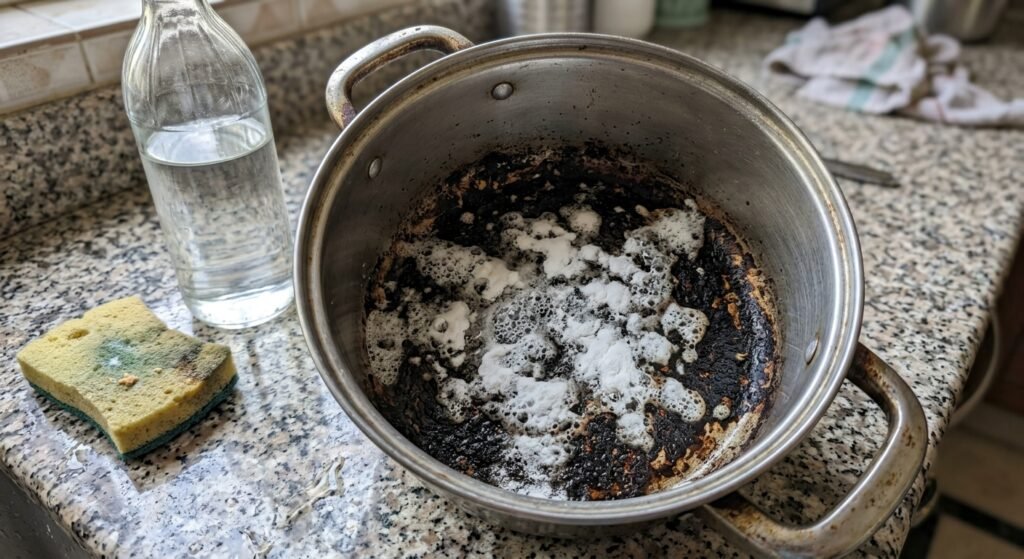
When the bottom of the pot looks black and glassy, bring out both cupboard staples, just not at the same time in a sealed container.
- Pour in equal parts water and white vinegar, enough to cover the burn.
- Simmer for 5 to 10 minutes. The smell isn’t pleasant, so crack a window.
- Pour the liquid out, then sprinkle a generous layer of baking soda over the warm, damp surface. It’ll fizz. That fizzing helps lift the loosened gunk.
- Once it settles, wipe with a sponge. For anything left, add a splash of water to make a paste and let it sit for 30 minutes before wiping again.
The vinegar softens and dissolves, the baking soda lifts and deodorizes. Between the two, even a badly scorched pot usually comes back. It’s the same one-two combination that works on mineral buildup, which is why we lean on it in our guide to cleaning glass shower doors with hard water buildup too.
Method 3: A Dishwasher Tablet (The Lazy One)
This one sounds like an internet myth but it genuinely works, because dishwasher tablets are packed with enzymes and degreasers designed to break down cooked-on food.
- Fill the pot with hot water, enough to cover the burnt area.
- Drop in one dishwasher tablet, or a spoonful of dishwasher powder if that’s what you have.
- Let it soak for at least an hour. Overnight is even better for bad burns.
- Pour out the water and wipe. The burnt layer usually comes away in soft sheets.
You can speed it up by simmering the water gently with the tablet in it for ten minutes, though the soak alone handles most cases. One warning: dishwasher detergent is harsh, so rinse the pot really well afterward and don’t use this method on nonstick surfaces or raw cast iron.
Method 4: Boiling Water and Dish Soap (Gentlest, Great for Nonstick)
For lighter burns, or for nonstick pots where you don’t want anything abrasive near the coating, plain dish soap and heat is enough.
- Squirt a good amount of dish soap into the pot and fill with water.
- Bring it to a gentle simmer for 10 minutes. Watch it, because soapy water loves to foam over.
- Let it cool, then wipe with a soft sponge.
The heat melts the greasy layer holding the burnt bits down, and the soap keeps it from resettling. This is also the method to use on pots with plastic handles you don’t want to soak in harsh stuff. If grease splatter reached beyond the pot, our guide on getting cooking grease off painted cabinets covers the cleanup around the stove.
What About Cast Iron and Nonstick?
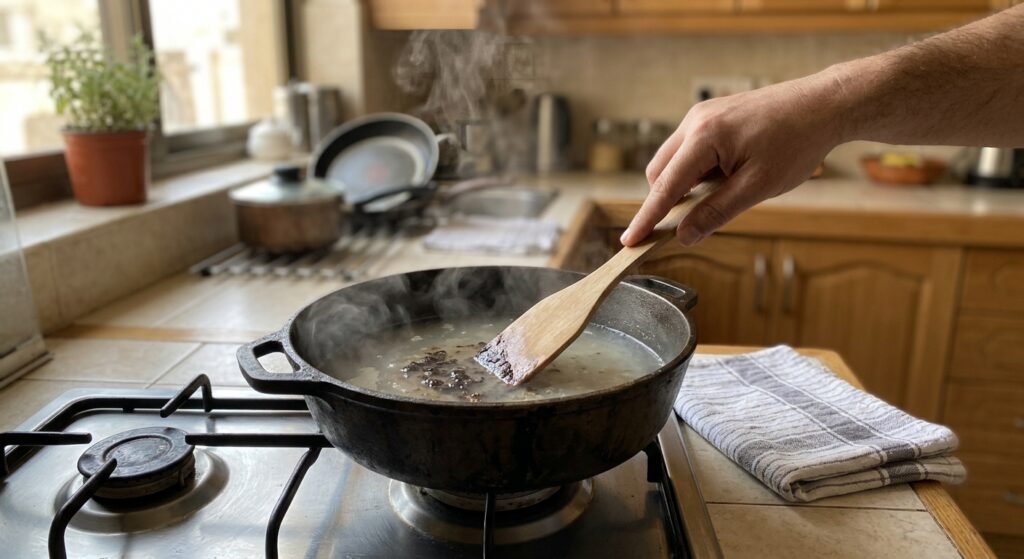
Two exceptions worth calling out, because the wrong method can ruin these:
- Cast iron: skip vinegar soaks and dishwasher tablets, both strip the seasoning. Instead, boil plain water in the pan for a few minutes and nudge the softened bits loose with a wooden spatula. Dry it immediately and rub in a thin layer of oil.
- Nonstick: stick to Method 4, or Method 1 with a light hand. Never use anything metal, and don’t let a nonstick pot boil dry a second time. Once the coating is scratched or bubbling, the pot is done.
Stainless steel is the most forgiving. It can take all four methods, and if the outside got splattered too, the streak-free wipe-down tricks in our stainless steel appliance cleaning guide work just as well on cookware.
How to Stop Burning Pots in the First Place
Nobody plans a burnt pot, but a few habits cut the odds a lot:
- Set a timer for anything with rice, milk, or sugar in it. Those three cause most kitchen scorching because they burn fast and silently.
- Use medium heat more than you think you need to. High heat saves two minutes and creates twenty minutes of cleanup.
- Deglaze while the pot is still warm. A splash of water in a just-used pan, plus a quick scrape with a wooden spoon, means stuck bits never get the chance to harden.
That last one takes about ten seconds and has saved more pots than any cleaning method.
FAQs
Will these methods work on a pot that’s been burnt for days?
Yes, they just take longer. Old burns are fully dried and hardened, so plan on an overnight soak with baking soda or a dishwasher tablet instead of an hour. You might need two rounds. The chemistry still works, it just needs more time to penetrate.
Can I use bleach to clean a burnt pot?
Please don’t. Bleach doesn’t break down burnt carbon anyway, so it’s not even effective for this job, and it can pit stainless steel if it sits too long. Save it for the bathroom. Baking soda and heat do this job better and won’t leave you rinsing a pot ten times wondering if it’s food-safe yet.
My pot is clean but there’s a rainbow or cloudy stain left. What is that?
That’s heat tint on stainless steel, or sometimes mineral deposits from your water. It’s harmless. If it bugs you, wipe the pot with a splash of white vinegar on a cloth and it’ll disappear. It doesn’t affect cooking at all.
Is it worth saving a badly burnt nonstick pot?
Honestly, it depends on the coating. If the nonstick surface is still smooth after cleaning, you’re fine. If it’s bubbled, flaking, or scratched down to metal, replace the pot. The cleaning methods can rescue the mess, but they can’t rescue a cooked coating.
Does the Coke trick actually work?
Sort of. Cola is mildly acidic, so simmering it in a burnt pot does loosen some gunk, similar to a weak vinegar soak. But it’s stickier, more expensive, and less effective than vinegar or baking soda. Fun party fact, mediocre cleaning method.