
If you’re wondering what to plant in containers in fall, the short answer is: more than you’d think. Fall is quietly one of the best planting seasons for balcony gardeners. The soil in your pots is still warm, the sun is gentler, watering drops to a fraction of the summer workload, and a whole cast of plants actually prefers cool weather. While everyone else packs their balcony away, you can be picking fresh salad in November and setting up a wave of spring flowers.
This guide covers what to plant, roughly when, and how to keep it all alive as the temperature drops. The advice is written for typical US and UK conditions, so shift the timing a bit earlier if your winters arrive fast, or later if they barely arrive at all.
Why Fall Planting Works So Well in Pots
Cool-season plants germinate and grow happily between roughly 5 and 20 degrees Celsius (about 40 to 70 Fahrenheit), which describes most fall days. Warm soil left over from summer gets roots established quickly, and then cool air keeps the leafy tops sweet and slow-growing.
Pots have one extra advantage in fall: they’re mobile. When a hard frost is forecast, you can shuffle your most tender pots against the house wall or under cover in five minutes. Garden growers can’t do that.
There’s one catch. Growth slows dramatically as daylight shrinks, so timing matters more than in spring. Plant in early fall while there’s still warmth and light, and things establish beautifully. Plant a month too late and everything just sits there until spring. The plants usually survive, they just pause, which is honestly still a decent outcome.
Cool-Weather Vegetables and Salad Greens
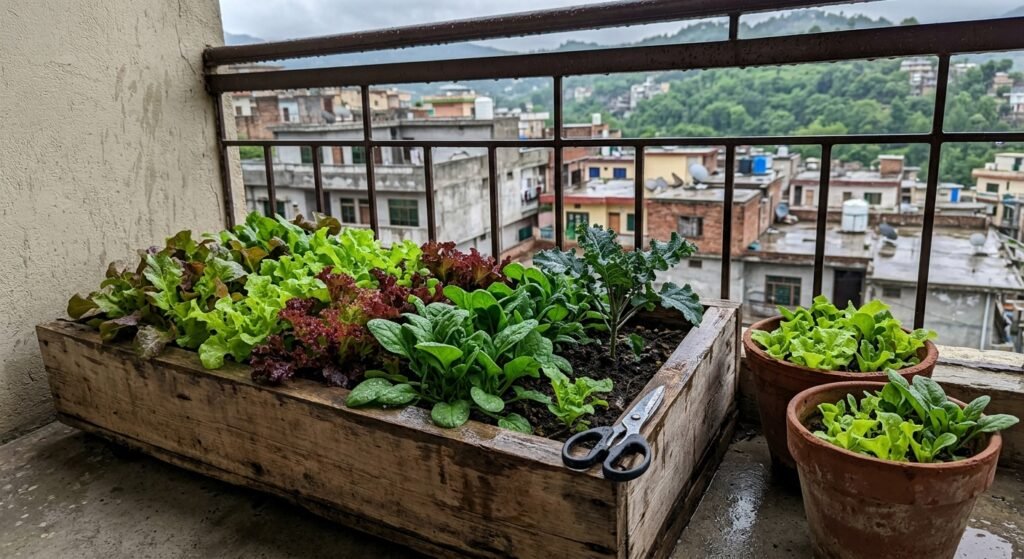
Leafy greens are the stars of fall containers. Many of them taste better after a light frost, which turns some of their starch to sugar.
- Lettuce and salad leaves. Cut-and-come-again mixes sown in early fall give you salads for months. Sow a fresh pinch of seed every two weeks for a steady supply.
- Spinach. Loves cool weather, hates summer. Fall is its season. Baby leaves are ready in about five weeks.
- Kale. Nearly indestructible in pots and genuinely sweeter after frost. One or two plants in a 20 liter pot will feed you all winter in milder areas.
- Swiss chard. The bright-stemmed varieties are pretty enough to double as ornamentals, and they keep producing in the cold.
- Radishes. The instant gratification crop. Some varieties go from seed to harvest in under a month, which is great if you’re gardening with kids.
- Spring onions and baby leeks. Slow but steady, and they hold in the pot all winter waiting for you.
- Garlic. Plant individual cloves in mid to late fall, pointy end up, about 5 cm deep. They need the winter cold and reward you the following summer. It’s the most patient crop on this list, and weirdly satisfying.
Most of these are also on our list of the best vegetables for container gardening, because easy plants tend to stay easy in any season. If you’re brand new to all of this, the basics in our apartment balcony vegetable garden for beginners guide apply just as well in fall as in spring.
Herbs That Keep Going in the Cold
Soft summer herbs like basil are finished once nights get cold, so don’t fight it. These are the ones worth potting up in fall:
- Parsley shrugs off frost and often looks better in November than it did in July.
- Chives die back in deep winter but keep producing well into fall, and they return in spring.
- Thyme, sage, and rosemary are woody and evergreen. Planted in fall, they establish before winter and hit the ground running in spring. Keep their soil on the dry side.
- Mint dies back but the roots are tough. A pot of mint on the balcony returns reliably every spring.
Fall is also a good moment to move a pot of parsley or chives close to the kitchen door, because nobody crosses a cold balcony for a garnish in December.
Flowers for Fall Color
A few reliable performers keep the balcony looking alive while everything else fades:
- Pansies and violas are the champions. Planted in early fall, they flower through fall, take a break in the coldest weeks, then explode again in early spring. Violas handle wind and rain better than large-flowered pansies.
- Chrysanthemums give you an instant blast of fall color. Treat cheap ones as temporary decor and you won’t be disappointed.
- Heuchera carries colorful evergreen foliage right through winter, which earns it a permanent spot.
- Ornamental kale and cabbage get more vivid as it gets colder, and they look striking in modern pots.
- Heathers flower in winter itself and cope with anything the weather does.
Fall winds are stronger and wetter than summer ones, so put taller flowers somewhere sheltered. If your balcony catches serious gusts, the fixes in our guide on how to protect balcony plants from wind matter even more this time of year.
Plant Spring Bulbs Now (Future You Says Thanks)
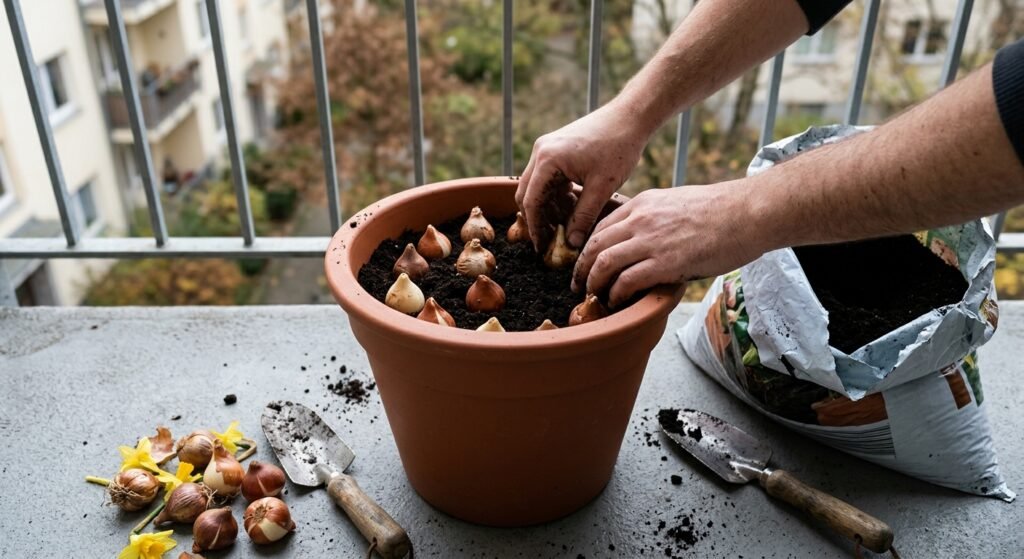
This is the fall job with the biggest payoff. Tulips, daffodils, crocuses, and hyacinths all get planted in fall pots and then do absolutely nothing visible for months, which feels anticlimactic. Then February and March arrive and your balcony wakes up before anyone else’s.
The easy method is a “bulb lasagne” in one deep pot. Plant a layer of tulips about 20 cm deep, cover with compost, add a layer of daffodils around 15 cm, cover again, then a top layer of crocuses at about 8 cm. Each layer flowers in sequence for weeks of color from a single container.
A few pointers: plant bulbs pointy end up, don’t waste money on giant premium bulbs for a first attempt, and make sure the pot drains freely because bulbs rot in waterlogged soil. In areas with squirrels, a piece of chicken wire laid over the soil until shoots appear saves a lot of heartbreak.
Keeping Fall Containers Happy
Fall care is mostly about doing less, carefully.
Water much less, but don’t stop. Cool air and weaker sun mean pots stay moist for a week or more. Overwatering becomes the main risk, especially in rainy spells. Check with a finger before you pour, and if you’re unsure how to read the signs, our guide on how often to water container plants walks through it.
Get pots off the ground. Pot feet, bricks, or even old tiles under each container let winter rain drain out instead of pooling. Soggy frozen soil kills more overwintering pots than cold alone.
Move pots toward the wall. The spot against your building is several degrees warmer and drier than the railing edge. That microclimate is your overwintering zone.
Have a frost cloth ready. An old bedsheet or a cheap fleece cover thrown over pots on the coldest nights protects the borderline plants. Take it off in the morning so light gets in.
Skip the fertilizer. Growth is slowing on purpose. Feeding now produces soft growth that frost damages. Start feeding again in early spring.
FAQs
Is it too late to plant containers in October or November?
Usually not, it just changes what you plant. Early fall suits seeds and young veg plants. By late October, switch to things that don’t mind sitting still: garlic, spring bulbs, pansies, heathers, and established herb plants. They’ll settle in quietly and take off when spring comes. The genuinely bad move is sowing warm-season seeds late, because those need heat that isn’t coming.
Do I need to bring all my pots inside for winter?
No, and most cool-season plants would actually hate the warm dry air indoors. Hardy plants stay out all winter with pot feet and a sheltered spot. The exceptions are tender plants like geraniums, succulents, and citrus, which need to come inside or into a frost-free spot before the first proper freeze.
Can I reuse my summer potting soil for fall planting?
For one more round of leafy greens or flowers, usually yes. Pull out the old roots, top up the pot with a third of fresh compost, and mix it through. Don’t reuse soil from any plant that had disease problems, and give bulbs fresh or mostly fresh compost since they’ll sit in it for months.
Will my fall containers survive a hard freeze?
The plants listed here handle typical US and UK cold snaps, but the pots themselves are the weak point. Terracotta can crack when wet soil freezes and expands. Frost-proof pots, plastic, or glazed containers are safer for overwintering, and grouping pots together against a wall protects both plants and pots.
What’s the single best thing to plant in fall if I only do one pot?
A bulb lasagne topped with violas. The violas flower right away and keep going through mild spells all winter, then the crocuses, daffodils, and tulips come up through them in sequence in spring. One pot, one afternoon of work, and about six months of something to look at.