
The most effective way to clean shower grout without bleach is a paste of baking soda and hydrogen peroxide (about 2:1), spread onto the grout lines, left for 10–15 minutes, then scrubbed with a stiff grout brush and rinsed. For everyday grime, a 1:1 vinegar-and-water spray works on ceramic tile (skip vinegar on natural stone). For deep, set-in discoloration, a handheld steam cleaner lifts what chemicals can’t. All five methods below are cheap, renter-safe, and won’t gas out your bathroom the way chlorine bleach does.
Bleach has real downsides in a shower: the fumes are rough in a small, poorly ventilated room, it can irritate skin and lungs, it’s risky around kids and pets, and over time it can actually weaken and pit grout, making it stain faster next time. Here’s what to use instead, ranked from gentlest to heaviest-duty.
Why Grout Gets So Dirty (and Why It Matters Which Method You Pick)
Grout is porous, essentially hardened cement sponge. It absorbs soap scum, body oils, and mineral-rich water, and its damp texture is a perfect home for mildew. That’s why surface wipes never work: you need something that penetrates (peroxide, steam) or physically lifts (paste + brush).
One important check before you start: is your tile ceramic/porcelain or natural stone (marble, travertine, slate)? Vinegar and other acids etch natural stone. If you have stone tile, stick to Methods 1, 3, and 5 below and skip anything acidic.
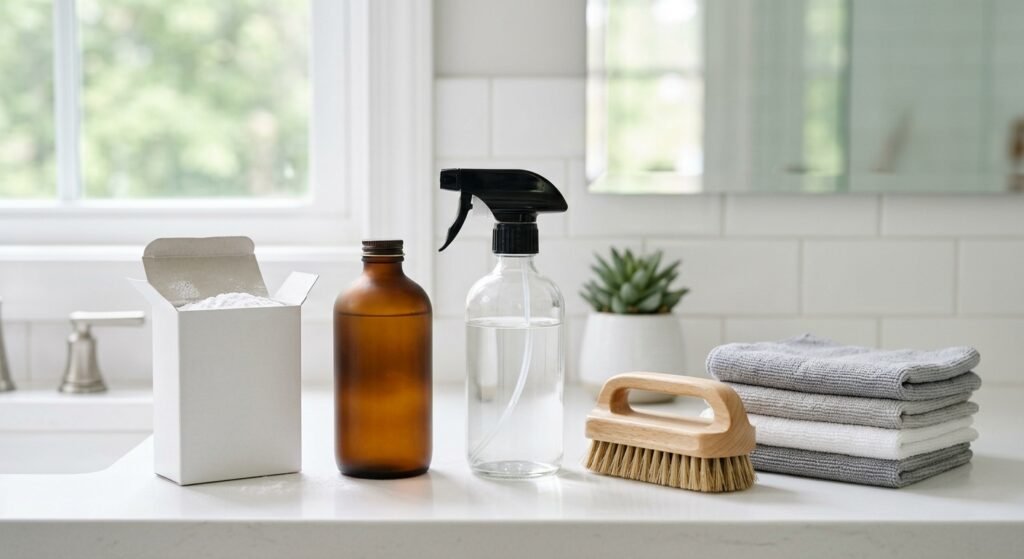
What You’ll Need
- Baking soda (a full box, you’ll use more than you think)
- Hydrogen peroxide, 3% (the standard brown-bottle drugstore kind)
- White distilled vinegar (ceramic/porcelain tile only)
- Dish soap
- A grout brush or stiff-bristled scrub brush (an old toothbrush works for small areas)
- Spray bottle
- Microfiber cloths or old towels
- Rubber gloves (peroxide dries skin out)
- Optional: handheld steam cleaner, oxygen bleach powder (sodium percarbonate, not chlorine bleach)
5 Ways to Clean Shower Grout Without Bleach
Method 1: Baking Soda + Hydrogen Peroxide Paste (Best All-Around)
This is the workhorse. Peroxide whitens and kills mildew; baking soda gives gentle scrubbing grit.
- Mix roughly 2 parts baking soda with 1 part hydrogen peroxide into a spreadable paste (like toothpaste).
- Add a small squirt of dish soap if your grout also has soap scum or body-oil film.
- Spread the paste along the grout lines with your fingertip (gloved) or the brush.
- Wait 10–15 minutes. Don’t let it fully dry out. Mist lightly with water if needed.
- Scrub each line with the grout brush using short back-and-forth strokes.
- Rinse with warm water and wipe down with a cloth or squeegee.
For badly stained lines, do a second pass. Two rounds of paste beat one round of furious scrubbing.
Method 2: Vinegar Spray (Everyday Maintenance, Ceramic Tile Only)
Best for weekly upkeep once grout is clean, and for soap scum and light mildew film.
- Mix 1:1 white vinegar and warm water in a spray bottle.
- Spray grout lines generously and let sit 5-10 minutes.
- Scrub lightly and rinse.
Do not use on natural stone, and don’t mix vinegar into the peroxide bottle or store vinegar + peroxide blends. Use them in separate steps, never combined in a sealed container.
Method 3: Steam Cleaning (Best for Deep, Set-In Grime, Zero Chemicals)
A handheld steam cleaner with a nozzle brush attachment is the single most satisfying grout tool you can own, and it’s ideal if you’re sensitive to any cleaning products.
- Fill the steamer per its instructions and let it fully heat (usually 3-5 minutes).
- Work in sections about 2 feet at a time, moving the nozzle slowly along each grout line.
- Follow immediately behind with a dry towel to wipe up the loosened gunk before it resettles.
- Steam also sanitizes, which handles the mildew problem without a single chemical. Entry-level handheld steamers are inexpensive and also work on fixtures and glass, handy if hard water is a whole-bathroom problem for you: dealing with hard water buildup on shower glass.
Method 4: Oxygen Bleach Soak (Heavy Discoloration on Floors and Large Areas)
“Oxygen bleach” (sodium percarbonate, the active ingredient in OxiClean-type powders) is chemically unrelated to chlorine bleach. No harsh fumes, and it’s what tile pros often use.
- Dissolve 2 tablespoons of oxygen bleach powder in about 2 cups of very warm water.
- Pour or sponge the solution over grout lines so they stay wet.
- Let it work 15-30 minutes, re-wetting as needed.
- Scrub, then rinse thoroughly.
This is especially good for shower floors, where you can flood the grout and let it soak.
Method 5: Dish Soap + Baking Soda Scrub (Gentlest, Weekly Upkeep and Stone-Safe)
- Mix 3 parts baking soda with 1 part water and a drop of dish soap.
- Scrub grout lines, let sit 5 minutes, scrub again lightly, rinse.
Not a miracle worker on old stains, but perfect for keeping clean grout clean, and safe on every tile type.
What NOT To Do
- Never mix cleaners. Especially don’t combine vinegar with hydrogen peroxide in a bottle (creates peracetic acid), and obviously never vinegar or ammonia with any chlorine product.
- Don’t use metal brushes or blades. Wire brushes gouge grout and scratch tile glaze.
- Don’t use vinegar or lemon on natural stone tile. Acid etches marble and travertine permanently.
- Don’t scrub brand-new grout. Grout needs about 48-72 hours to cure (and sealing takes longer). Aggressive cleaning too early damages it.
- Don’t let paste dry to concrete on the wall. Mist it to keep it damp; dried paste just means more rinsing.
- Don’t ignore ventilation habits. Even the best cleaning won’t outpace mildew in a shower that never dries. Run the fan or crack a window for 20-30 minutes after showering.
Keep It Clean: The 2-Minute Habit That Prevents 90% of Grout Grime
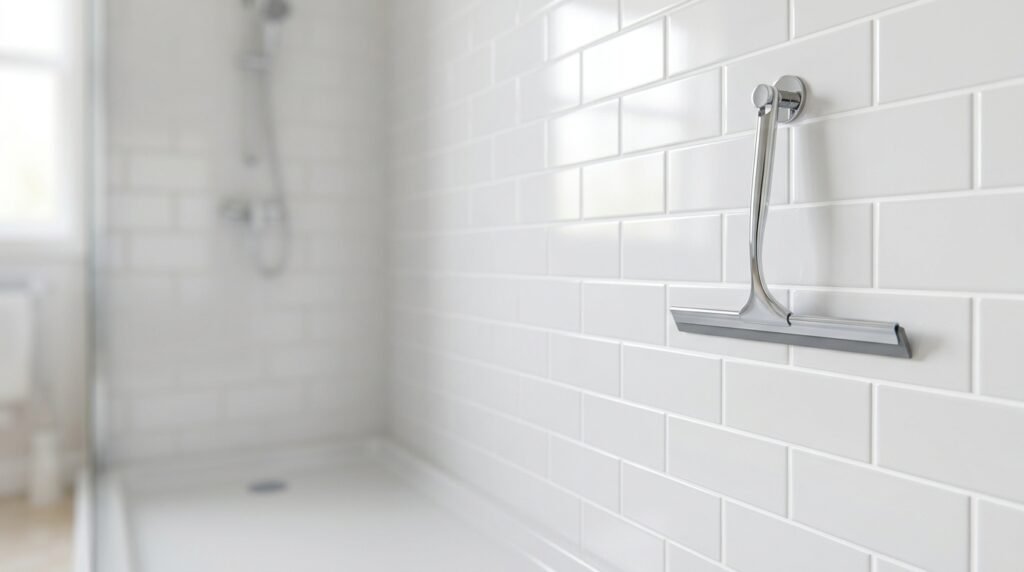
- Squeegee or towel-wipe the walls after the last shower of the day. Dry grout doesn’t grow mildew.
- Spray a weekly maintenance mix (the 1:1 vinegar spray on ceramic, or the dish-soap scrub on stone).
- Reseal your grout once or twice a year if you own your home, grout sealer is a $10 bottle and a 20-minute job that makes every future cleaning dramatically easier. Renters: it’s landlord-approval territory, but worth asking, since it protects their tile.
- While you’ve got the baking soda and gloves out, the shower isn’t the only spot that benefits from a bleach-free deep clean. Your washing machine’s door gasket collects the same kind of grime: cleaning the washing machine gasket and a funky washer often needs the same mildew treatment: getting the musty smell out of a front load washer.
FAQs
What is the best homemade grout cleaner without bleach?
A paste of 2 parts baking soda to 1 part 3% hydrogen peroxide, with a drop of dish soap for greasy soap scum. Spread it on the grout, wait 10-15 minutes, scrub with a stiff brush, and rinse. It whitens, kills mildew, and costs pennies per use.
Does vinegar damage grout?
Occasional use of diluted vinegar (1:1 with water) on sealed, cured grout is fine for ceramic and porcelain tile. Frequent use of strong, undiluted vinegar can slowly erode unsealed grout, and vinegar should never be used on natural stone tile like marble or travertine, which it etches.
How do I get black mold out of shower grout without bleach?
Hydrogen peroxide is the go-to: spray 3% peroxide directly on the blackened grout, let it sit 10 minutes, scrub, and repeat if needed. Steam cleaning also kills mold. If black staining sits deep in the grout and returns within days no matter what, the grout may need regrouting or the mold may be behind the tile, a landlord or pro conversation.
Is hydrogen peroxide safe for colored grout?
Generally yes at 3% strength, but peroxide is a mild whitener, so test a hidden corner first on dark or colored grout. If you see lightening, switch to the dish soap + baking soda method or steam.
How often should I clean shower grout?
A light weekly spray-and-wipe plus a deep clean every 1-2 months keeps grout permanently presentable. The real difference-maker is drying: a daily 30-second squeegee habit prevents most staining and mildew from ever starting.
Pingback: How to Remove Pet Hair from Your Washing Machine Rubber Seal - The Home Perk