
Most first-year balcony gardens don’t fail because of bad luck or a missing green thumb. They fail because of the same short list of container gardening mistakes that nearly every beginner makes, usually in the first two weeks, before a single plant has had the chance to prove itself. The encouraging part is that every one of them has a cheap, simple fix, and once you know the list, you’ll spot the problems in other people’s balconies from across the street.
Here are the ten that do the most damage, roughly in the order they tend to happen.
1. Pots That Are Too Small
The number one mistake, and the root cause of half the others. Small pots dry out in hours, restrict roots, and run out of nutrients fast. That cute 15 cm pot the garden center sold with the tomato seedling? It’s a nursery pot, not a home.
The fix: size up, always. Tomatoes and zucchini want 40 liter containers, peppers and chard 25 to 30 cm deep, and even lettuce appreciates a proper window box over a teacup-sized pot. One big pot is less work than three small ones, not more.
2. No Drainage Holes
Decorative pots without holes cause more quiet plant deaths than any pest. Water goes in, never leaves, and the roots sit in a stagnant puddle until they rot. The plant wilts, the owner assumes it’s thirsty, and things go downhill from there.
The fix: every container needs drainage holes, full stop. Drill them in (most plastic and even ceramic pots survive a careful drill bit), or use the pretty pot as an outer sleeve with a plain plastic pot inside that you can lift out to water.
3. Filling Containers with Garden Soil
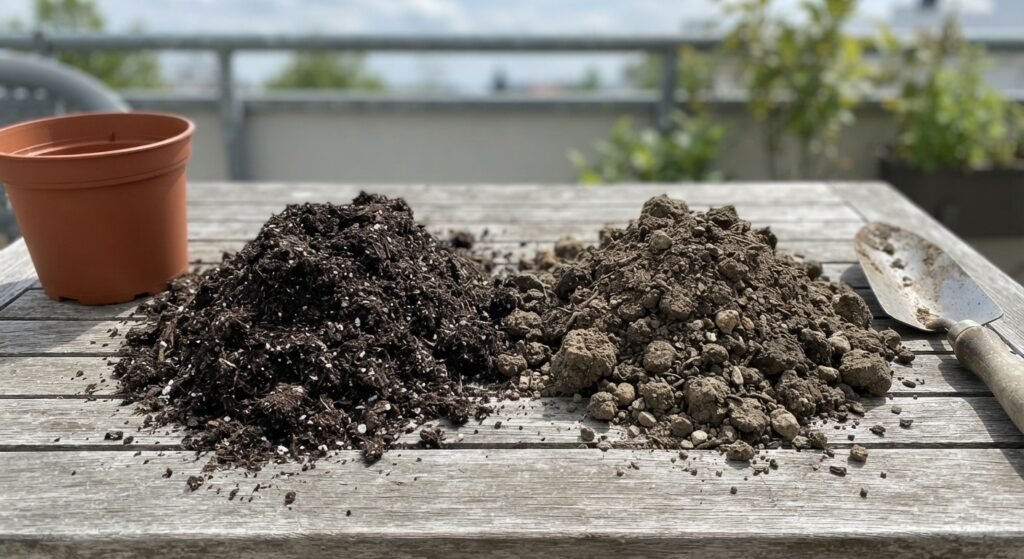
Bags labeled “garden soil” or “topsoil” are for the ground. In a pot they compact into a dense, airless brick that drains badly and suffocates roots. It’s cheaper per bag, and it costs you the whole season.
The fix: buy potting mix, sometimes labeled container mix. It’s engineered to stay light and drain well in a pot. If you’re setting up from scratch, the soil section of our apartment balcony vegetable garden guide for beginners covers what to buy and what to skip.
4. Watering on a Schedule Instead of by Feel
“Every morning” sounds responsible, and in cool weather it’s how plants drown. Pots don’t dry on a calendar. Weather, pot size, and plant size change everything week to week.
The fix: the finger test. Push a finger 3 cm into the soil, water only if it’s dry there, and when you do water, go deep until it runs from the drainage holes. There’s a full breakdown, including the overwatering signs people misread, in our guide on how often to water container plants.
5. Ignoring Sunlight Reality
Buying plants first and checking light second is the classic order of operations, and it’s backwards. Tomatoes in a north-facing corner won’t be “a bit slower,” they’ll be a season-long disappointment.
The fix: track your balcony’s sun for one day before buying anything. Fruit crops need 6+ hours, leafy and root crops manage on 3 to 5, and real shade calls for a different plant list entirely. Match the plant to the light you have, not the light you wish you had.
6. Planting Too Much, Too Close
Enthusiasm crams six seedlings into a pot meant for one. For the first month it looks lush and clever. Then everything competes for water, food, and light, and you end up with six stressed plants instead of one thriving one. Overcrowding also blocks airflow, which is how mildew gets started.
The fix: respect spacing, even when the pot looks embarrassingly empty at planting time. A single zucchini fills a 40 liter pot on its own. If you crave fullness, pair one big plant with a shallow-rooted quick crop like lettuce that will be eaten before the competition matters.
7. Forgetting That Pots Run Out of Food
Garden plants can send roots out foraging. Container plants eat only what’s in the pot, and every watering flushes a little of it out the bottom. The potting mix’s built-in fertilizer lasts about six weeks, which is exactly when beginners notice everything has mysteriously stalled.
The fix: from six weeks after planting, feed with a liquid vegetable fertilizer every one to two weeks at the label rate. It takes two minutes and it’s the difference between a plant that survives and one that produces.
8. Choosing Ambitious Plants in Year One
Melons, cauliflower, a fig tree, and full-size beefsteak tomatoes make an exciting shopping list and a demoralizing first season. Difficult crops don’t teach you much except that gardening is hard, which isn’t even true.
The fix: build year one around forgiving, productive plants: cherry tomatoes, salad leaves, radishes, bush beans, chard, and herbs. Our list of the best vegetables for container gardening ranks them by how much food you get per pot. Save the exotic stuff for year two, when watering is a habit instead of a chore.
9. Underestimating Wind and Weight
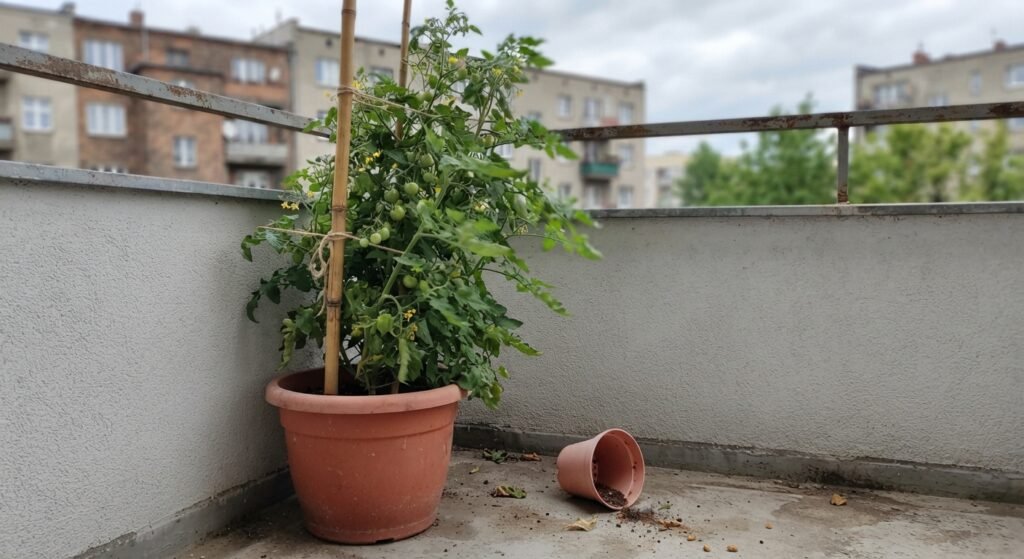
Balconies aren’t gardens. Wind two floors up snaps unstaked tomatoes, tips over light pots, and dries soil shockingly fast. And on the flip side, a big container of wet soil can weigh 30 kg or more, which matters for railings, shelving, and occasionally the balcony itself.
The fix: put tall plants against the building wall, stake them at planting time, and choose wider, heavier pots for anything with height. Keep the heaviest containers near the wall rather than the railing edge, and check your lease or building rules if you’re planning a serious number of large pots. Anything hanging on the railing should use proper brackets rated for the load.
10. Giving Up After the First Casualties
Something will die. A pot of basil, the cucumber that got bitter, the lettuce that bolted the week you were away. Beginners read this as proof they can’t garden, quietly stop watering the survivors, and the whole balcony fades out by August.
The fix: treat casualties as tuition. Even experienced growers lose plants every single year, they just replant the pot and move on. A dead radish crop costs about a dollar of seed and three weeks. Pull it, refresh the top of the soil, sow again. The gardeners who end up with impressive balconies aren’t the ones who never kill plants, they’re the ones who kept planting.
A 30-Second Pre-Season Checklist
Before you plant anything this year, run down this list:
- Every pot has drainage holes and is a size bigger than feels necessary
- Bags say potting mix, not garden soil or topsoil
- You know your balcony’s actual sun hours
- Tall plants have stakes ready and a wall-side position
- Liquid fertilizer is on the shopping list
- Your plant choices match your light, and year one leans easy
That’s it. Dodge those ten mistakes and you’ve avoided the failures that end most beginner gardens. Everything else, you can learn as you go.
FAQs
What’s the biggest container gardening mistake of all?
Small pots. It’s upstream of nearly everything else that goes wrong: constant drying out, stunted roots, nutrient crashes, and daily watering stress. If you only change one habit, buy containers a size bigger than your instinct says.
Why do my container plants keep dying even though I water them?
That “even though” might be the problem. Overwatering kills more container plants than drought, and it disguises itself as thirst because rotting roots can’t take up water, so the plant wilts. Check the soil with your finger before watering, and make sure every pot actually drains.
Can I reuse last year’s potting soil?
Mostly yes, with a refresh. Pull out the old roots, top up the pot with a third or so of fresh mix or compost, and add slow-release fertilizer, since last year’s nutrients are long gone. The exception is soil from a pot where a plant died of disease, send that one to the bin, not into a new pot.
Do I really need to fertilize if I bought good potting mix?
For the first six weeks or so, no, the mix has you covered. After that, yes. Container plants exhaust a pot’s nutrients far faster than anything in the ground, and regular feeding is why some balconies crop until October while others fizzle in July.
Is it too late to start if I made these mistakes already this season?
Almost never. Repot cramped plants into bigger containers, start feeding, and switch to finger-test watering, and most struggling plants recover within a few weeks. Fast crops like salad leaves and radishes can be resown well into late summer, so even a rough start can end in a decent harvest.