
If you want to know how to clean matte black fixtures without wrecking them, the answer is almost boring: warm water, a drop of mild dish soap, a soft microfiber cloth, and a thorough dry. That’s it. The finish on matte black taps, shower heads, and cabinet pulls is a thin powder coat or electroplated layer, and nearly every “stronger” cleaner people reach for will strip it, dull it, or leave permanent shiny patches. The trick isn’t finding a better product. It’s knowing what to avoid.
I learned this the annoying way on a matte black kitchen tap. One scrub with a green scouring pad left a glossy smear right on the front of the spout, and there’s no undoing that. The coating doesn’t grow back. So before anything else, here’s the golden rule: nothing abrasive, nothing acidic left to sit, nothing with bleach or ammonia.
Why Matte Black Fixtures Need Gentler Cleaning Than Chrome
Chrome is a hard, shiny metal plating. You can be fairly rough with it. Matte black is different. Most matte black taps and hardware get their color from a powder-coated paint layer or a PVD (physical vapor deposition) coating over brass or stainless steel.
Powder coating is the more common and the more delicate of the two. It scratches, it can fade with harsh chemicals, and once you burn through it, the metal underneath shows as a bright spot. PVD is tougher, but even PVD makers tell you to stick to soap and water, because acids and abrasives dull the uniform matte look.
The matte texture itself works against you too. That slightly rough surface shows fingerprints, soap scum, and mineral spots more than gloss does, which tempts people into aggressive scrubbing. Resist it.
What You’ll Need
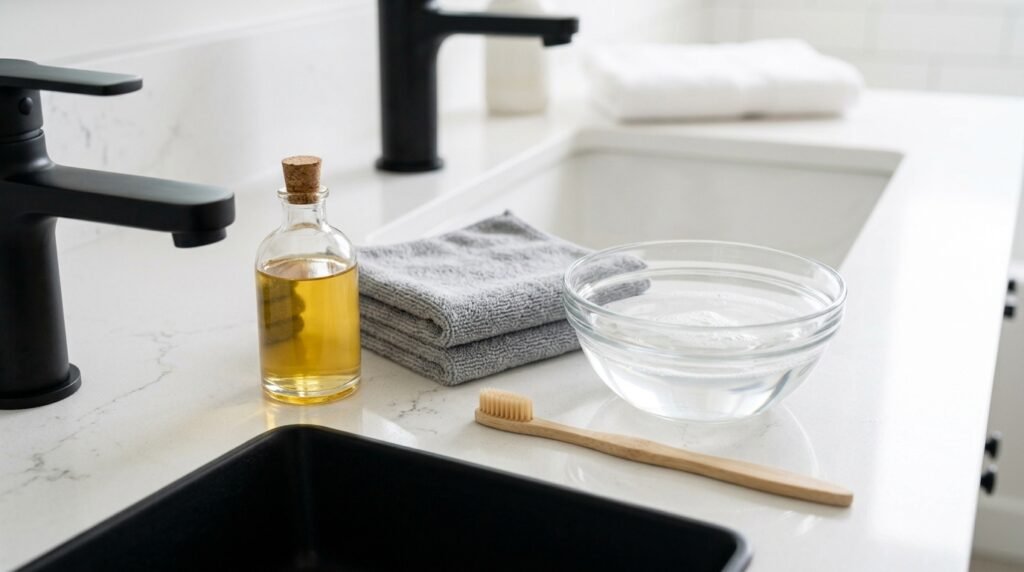
- Two soft microfiber cloths, one for washing and one just for drying
- Warm water
- Mild dish soap (a small squirt, nothing “power degreaser” strength)
- A soft toothbrush for around the base and handle joints
- White vinegar, only for spot-treating mineral buildup, diluted 50/50 and never left to sit
- Optional: a drop of baby oil or a fixture-safe wax for a light protective sheen
Skip anything labeled bathroom cleaner, limescale remover, or all-purpose spray unless the bottle specifically says it’s safe for matte black or powder-coated finishes. Most aren’t.
How to Clean Matte Black Fixtures: The Everyday Method
- Mix your solution. A bowl of warm water with one small drop of dish soap. If it’s foaming like a bubble bath, you used too much, and you’ll be rinsing residue off forever.
- Wipe the whole fixture. Dip the microfiber cloth, wring it well, and wipe the tap, handles, and base. Go with light pressure. Matte finishes don’t need force, just contact time.
- Detail the tight spots. Grime hides where the handle meets the body and around the base plate. A soft toothbrush dipped in the soapy water gets in there without scratching. This part takes a bit of patience on ornate handles.
- Rinse with plain water. Wipe again with a cloth wrung out in clean water so no soap film dries on the finish. Soap residue is what causes that streaky, patchy look people blame on the fixture.
- Dry completely. This is the step that actually matters. Use the dry microfiber cloth and buff gently until there’s no moisture left. Water that evaporates on its own leaves mineral spots, and on black they show up like chalk.
Do this once a week in bathrooms and every few days on a busy kitchen tap, and you’ll rarely need anything stronger.
Dealing With Hard Water Spots and Limescale
White crusty spots are dissolved minerals left behind by evaporated water, and they’re extra visible on black. For light spots, the soapy wipe and a firm dry usually handles it.
For actual limescale buildup, you can use vinegar, but carefully. Mix white vinegar 50/50 with water, dampen a cloth with it, press it onto the spot for two or three minutes, then wipe, rinse with plain water, and dry. Don’t soak the fixture, don’t leave a vinegar-wet cloth draped on it overnight, and keep the vinegar off any natural stone counter or marble tile nearby, because it etches stone on contact.
Heavy, stubborn buildup on black taps is its own project with a few extra tricks, and we’ve covered it in detail here: How to Remove Hard Water Stains from a Black Faucet.
What to Never Use on Matte Black Finishes
This list matters more than the cleaning method itself. One bad product can do permanent damage in a single use.
- Abrasive pads and powders. Scouring pads, steel wool, magic erasers (they’re fine sandpaper, essentially), and gritty powder cleansers all burnish the matte surface into shiny scars.
- Bleach and anything containing it. It attacks the coating and can discolor it. Also never mix bleach with vinegar or other acids anywhere in your cleaning routine, since that combination releases toxic chlorine gas.
- Ammonia and glass cleaners. Classic blue glass spray dulls powder coating over time.
- Undiluted vinegar, CLR, and limescale gels. Strong acids eat the finish. Diluted vinegar for a couple of minutes is the absolute limit.
- Alcohol and acetone. Nail polish remover on a black tap handle is a fast way to a bare metal spot.
- Rough cloths and paper towels. Paper towels are mildly abrasive. They’re fine once or twice, but daily paper-towel wiping slowly polishes sheen into the finish. Microfiber only.
If in doubt, test any product on a hidden spot, like the underside of the spout, and wait a day.
Keeping Matte Black Fixtures Looking New
A few small habits do more than any deep clean:
- Dry after use, or at least once a day. A 10-second towel wipe after the evening teeth-brushing prevents nearly all water spotting. It sounds fussy, but it becomes automatic within a week.
- Wipe splashes fast. Toothpaste is mildly abrasive and slightly alkaline, and dried toothpaste splatter is one of the most common causes of dull patches on black bathroom taps.
- Apply a light protective coat every month or two. A single drop of baby oil buffed in with microfiber, or a dedicated faucet wax, helps water bead and roll off. Use barely any, or the tap looks greasy instead of matte.
- Consider your water. If you’re in a hard water area, spots will be a constant battle on dark fixtures. Drying after use stops being optional and becomes the whole game.
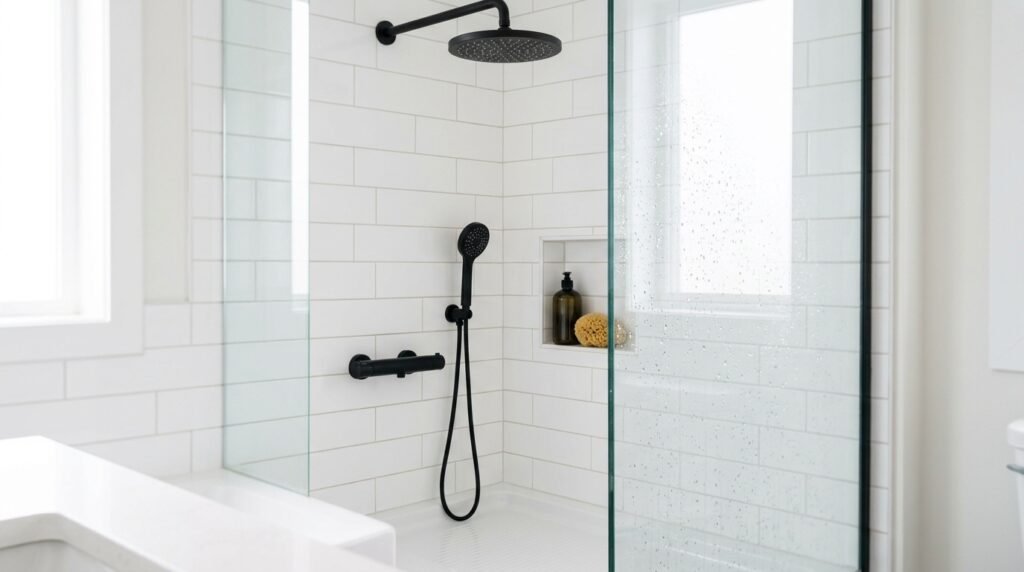
- Glass shower doors have the same problem, and we cover that in How to Clean Glass Shower Doors with Hard Water Stains.
And while you’ve got the gentle cleaners out, matte black shower frames often sit against grout that needs attention. If you’d rather skip harsh chemicals there too, this pairs well: How to Clean Shower Grout Without Bleach.
FAQs
Can I use vinegar on matte black fixtures?
Diluted and briefly, yes. A 50/50 vinegar and water mix on a cloth, pressed on a limescale spot for a couple of minutes, then rinsed and dried, is generally safe. What ruins finishes is soaking, using it neat, or letting it sit for an hour “to work.” Check your fixture’s care guide too, since a few brands void the warranty over any acid at all.
Why does my matte black tap have shiny spots?
Something abrasive polished the coating. Scouring pads, magic erasers, gritty cleansers, even years of paper towels can do it. Sadly there’s no home fix once the matte texture is burnished smooth. You can only prevent more of it, so switch to microfiber and soap from here on.
How do I remove fingerprints from matte black hardware?
Usually a dry or barely damp microfiber cloth does it in one pass. If prints keep coming back fast, wash the hardware with a drop of dish soap in warm water, dry it, then buff in the tiniest amount of baby oil. That thin layer makes future prints wipe off much easier.
Are magic erasers safe for matte black finishes?
No. They feel soft but they work like ultra-fine sandpaper, which is exactly how they remove marks from walls. On matte black they leave lighter, shinier patches that don’t come back. Keep them well away from powder-coated anything.
Do matte black fixtures fade over time?
Quality PVD-coated fixtures hold their color for decades with gentle care. Cheaper powder-coated ones can fade or chalk if they’re regularly hit with harsh cleaners, bleach fumes, or strong sunlight. The cleaning routine matters more than the age. Soap, water, and a dry cloth will keep even a budget tap looking new for years.
Pingback: How to Remove Hard Water Stains from a Black Faucet (Without Scratching It) - The Home Perk