
The best way to organize a small bedroom is to declutter first. Then put the wasted space to work: under the bed, on the walls, and behind the door. You probably can’t fit everything you own into the room neatly, and that’s fine. Most of the fix is about storage strategy, not square footage.
If you’ve ever stood in the doorway wondering how a room this small holds this much stuff, you’re not alone. Small bedrooms respond well to a handful of specific changes. You don’t need to gut the room or buy matching furniture. You need a decluttering pass and smarter use of vertical and under-used space. You also need a system that keeps chaos from creeping back in within a week.
Start Decluttering Before You Organize a Small Bedroom
Trying to declutter an entire bedroom in one go usually backfires. You get halfway, feel overwhelmed by decisions, and end up with piles that sit there for days. A more realistic plan is to pick one category and finish it before the next.
- Clothes first, since they usually take up the most space. Pull everything out of the closet and drawers, then be honest about what you’ve worn in the past year.
- Then papers and random surfaces. Nightstands and dressers collect receipts, chargers, and odd items that don’t belong in a bedroom.
- Sentimental or “maybe” items last. They take the longest to decide, so save them until you’ve built some momentum.
This part takes patience. It’s normal to need a few short sessions instead of one long, exhausting day. Use three boxes as you go: keep, donate, and toss. Put the donate box by the door right away, so it doesn’t sit in the room for a month.
Small bedrooms especially benefit from a slow pass. Every item you keep needs a real home, not just a flat surface to land on. That’s the hardest part when you organize a small bedroom.
Use the Space Under Your Bed

The space under a bed is one of the most wasted spots in a small bedroom. It’s the easiest win when you organize a small bedroom, because it needs no tools. It can hold a whole season of clothes, spare bedding, or bulky items you don’t need daily. Flat boxes or bags made to slide under a bed frame work well. Clear bins let you see what’s inside without pulling everything out.
Label the end that faces out, and skip anything you use every day. Keep paper documents out too, because damp can ruin them.
If your frame sits too low, risers are a cheap fix. They usually add three to six inches of clearance. Check that the risers are rated for your bed and mattress weight, and make sure all four sit level. Our guide to under bed storage ideas covers containers and setups for different bed heights and room layouts.
Go Vertical With Renter-Safe Storage

When floor space runs out, the walls are still free. Use them to organize a small bedroom without buying new furniture. Renter-safe hooks and small floating shelves use adhesive strips and hold light weight without drilling. They add storage without touching the lease or the security deposit. A few hooks near the closet can hold bags, a robe, or tomorrow’s outfit. That keeps them off chairs and doorknobs.
Always check the weight limit on the package and stay under it. For anything heavier, read our guide on hanging heavy things without drilling first. That includes mirrors and shelves of books. Not every adhesive product is rated for real weight. A fallen shelf is not a fun surprise at 2 a.m.
Zone Your Closet Instead of Just Stuffing It
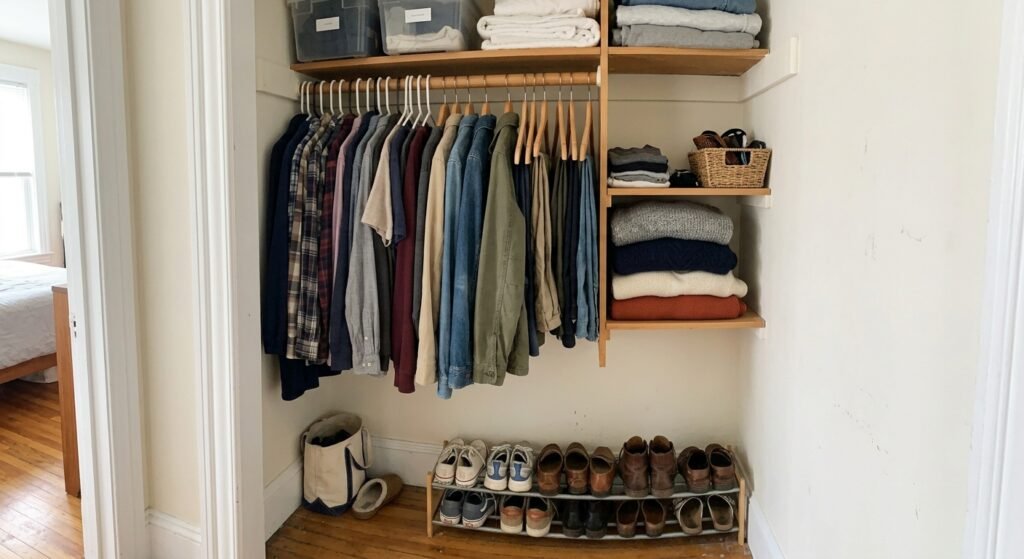
Closets in small bedrooms turn into dumping grounds fast. Split the space into zones. Zoning is a big part of how you organize a small bedroom. Hang clothes on one side, put folded items on a shelf, and keep shoes in a rack instead of loose. Then you don’t have to dig through a pile every morning. Slim hangers help too, because they save a surprising amount of rail space.
A double hanging rod roughly doubles your hanging space if the closet is tall enough. It adds no furniture to the room. If your closet is genuinely tiny, try our guide on organizing a small closet on a budget. It covers low-cost setups that fit even the tightest layouts.
Rethink the Nightstand
A full-size nightstand eats a surprising amount of floor space when you organize a small bedroom. A lot of what people keep in one, like chargers, old receipts, and half-used lotion, doesn’t need to live there. A slim wall-mounted shelf or small floating ledge next to the bed does the same job. It holds a lamp, a glass of water, and a phone charger without the bulky footprint.
If you’d rather keep a traditional nightstand, look for one with drawers instead of open shelving. Closed storage hides the small clutter that otherwise builds up in plain sight.
Use Over-Door Space

The back of a bedroom door is free space that most people ignore. An over-door organizer with pockets works well for shoes, accessories, scarves, and belts. It needs no tools and no wall damage, since it just hangs over the top of the door. Make sure the door still closes properly after you load it.
The same idea works just outside the bedroom. If your entryway or hallway is cramped too, see our guide on entryway organization for small spaces. It uses a similar over-door and vertical approach, and it pairs well with a bedroom decluttering project.
A Note on Bed Choice, If You’re Buying
Shopping for a new bed? A frame with built-in drawers does a lot of heavy lifting in a small room. It turns wasted under-bed space into designed storage, so you don’t need separate bins. A low platform bed also opens up the room more than a tall frame with a bulky headboard.
If your current bed is fine, don’t replace it just for this. Risers and bins give you most of the same benefit for far less money.
Rotate Clothes by Season
Keeping every season’s clothes within reach is one of the fastest ways to overwhelm a small closet. Store off-season clothes in bins under the bed or on a high shelf, and swap them twice a year. Your closet then holds only what you need right now. Packing away winter coats in spring also feels easier when the rail isn’t jammed.
Keep Surfaces Clear on Purpose
Dressers, windowsills, and desks fill up fast because they’re flat and empty. Give every surface a defined job. A dresser is for folded clothes, and a desk is for actual work. Surfaces without a job turn into catch-alls for whatever you’re holding when you walk in.
What Not to Buy
It’s tempting to fix bedroom clutter by buying small bins, baskets, and organizers before you’ve decluttered. Skip that step until you’ve cleared things out. Buying storage first often gets you a fancy place to keep stuff you don’t need. You’ll also end up with mismatched bins that don’t fit once you know what you’re really storing.
Which Fix Helps Most When You Organize a Small Bedroom
You don’t need to do everything at once, and no single trick will organize a small bedroom on its own. Pick the fix that matches your biggest problem.
- Clothes piled on a chair: add a hook or small basket for in-between clothes, then clear out the closet.
- Floor covered in stuff: use under-bed bins or risers before you buy anything new.
- Not enough closet space: add a double rod and rotate your seasonal clothes.
- No room for a nightstand: swap in a wall shelf or a slim ledge.
- Cramped door and hallway: use an over-door organizer.
Not sure where to start? Start with the floor. A clear floor and a tidy nightstand make a bigger visual difference than almost anything else, and that costs nothing.
Safety Checks Before You Load Up the Room
Small rooms get crowded, so a few safety checks matter more than they seem. Run through this list as you organize a small bedroom.
- Anchor tall dressers and shelves to the wall. They can tip over, especially with kids around.
- Keep heavy things low. Put light items like off-season sweaters on high shelves, not books or boxes.
- Leave a clear path from the bed to the door, and don’t block the window.
- Keep chargers, power strips, and cords away from bedding and clothes.
- Don’t store paint, strong cleaners, or loose batteries in the bedroom closet.
- Stay under the weight limit on every adhesive hook and shelf.
A 20-Minute Weekly Reset
Once you organize a small bedroom, keeping it that way is the part people usually skip. A short weekly reset stops clutter from building back up. Put clothes away, clear the nightstand, and return anything that wandered in from another room. Twenty minutes on a Sunday is enough once the systems are in place. A recurring phone alarm helps if you keep forgetting.
Keep a “One In, One Out” Habit
Small bedrooms fill back up fast if new items keep arriving and nothing leaves. A simple rule works well over time. When something new comes in, something similar goes out. It could be a piece of clothing, a book, or a small decor item. Donate it, sell it, or toss it.
It sounds strict at first, but it’s far easier than a full declutter every few months. It also keeps your new systems from filling up with the same clutter you just cleared. This habit matters even more when you organize a small bedroom. There’s so little spare space to absorb extra stuff before it spills onto the floor again.
FAQs
What’s the fastest way to make a small bedroom feel bigger without buying anything?
Clear the floor and the nightstand first. That’s the quickest way to organize a small bedroom without spending money. An empty floor and a tidy nightstand make a bigger visual difference than almost anything else.
Should I get rid of my dresser to save space?
Not necessarily. A dresser is usually more efficient per square foot than a closet, since drawers stack vertically. If space is really tight, try a slimmer dresser, or one that doubles as a nightstand. That works better than removing storage altogether.
How do I stop clothes from piling up on a chair?
Give your “not quite dirty, not clean enough to rehang” clothes a designated spot, like a small hook or basket. Most chair piles happen because those in-between clothes have nowhere else to go.
Is it worth buying a bed with built-in drawers?
If you’re buying a new bed anyway and you’re short on storage, yes. It’s one of the better upgrades to organize a small bedroom. It’s not worth replacing a good bed you already own, though. Bed risers and under-bed bins get you most of the same benefit for a lot less money.
How often should I organize a small bedroom?
A light pass every few months keeps things manageable. Add a bigger seasonal declutter once or twice a year, when you’re rotating clothes anyway. Waiting until it feels overwhelming just makes the job bigger than it needs to be.