
Waking up to a window fogged over with water droplets, sometimes with a little puddle collecting on the sill, is one of the most common cold-weather complaints in rentals. If you want to stop condensation on windows once the heating comes on for the season, the fix usually has less to do with the windows themselves and more to do with what’s happening with moisture inside your home.
Condensation forms when warm, moist indoor air hits a cold surface, in this case your window glass, and the moisture in the air turns back into liquid water. It’s the same reason a cold drink sweats on a warm day, just in reverse. Autumn and winter make this worse because you’ve got the heating running (adding warm air) while the glass itself stays cold from the outdoor temperature, so the contrast is bigger.
Why It Matters More Than It Looks
A little condensation now and then isn’t a huge deal. But if it’s happening every morning and nobody wipes it up, that moisture works its way into the frame, the sill, and sometimes the wall around the window. Over weeks and months, that leads to mold growth, a musty smell in the room, and paint or wood damage on the frame itself. None of that is expensive to prevent early, but it can get pricey and unpleasant to fix once mold sets in.
Start With Ventilation Habits

This is genuinely the biggest lever you have, and it costs nothing. A few small habit changes usually cut condensation dramatically:
- Short cross-ventilation bursts. Open two windows on opposite sides of the home for five to ten minutes a day, even in cold weather. This swaps out the moist air fast without losing much heat, which is more effective than leaving one window cracked all day.
- Use extractor fans. Run the bathroom fan during and after showers, and the kitchen extractor while cooking. Moist air from cooking and bathing is one of the biggest daily contributors to condensation elsewhere in the home.
- Keep lids on pots while cooking. It sounds minor, but an uncovered pot of boiling pasta puts a surprising amount of water vapor into the air.
- Dry laundry differently, or with a window cracked. Drying clothes on an indoor rack releases a lot of moisture as they dry. If you don’t have anywhere else to dry them, crack a window slightly in that room or run an extractor fan while they dry.
If you’re already noticing a musty smell somewhere in your laundry routine on top of the window condensation, it’s worth checking whether your washer is contributing. Our guide on getting a musty smell out of a front load washer covers a related moisture problem that often shows up around the same time of year.
Moisture Absorbers and a Small Dehumidifier
Moisture absorbing tubs or bags, the kind with calcium chloride crystals, are cheap and genuinely help in smaller rooms or closets prone to dampness. They’re not a full solution for a whole apartment, but placed near a problem window they do make a noticeable dent.
A compact dehumidifier is a bigger step up if condensation is a recurring problem in one specific room, like a bedroom with poor airflow. Keep expectations realistic though. A small unit won’t dry out an entire apartment, but running one in the worst-affected room overnight often stops the morning fog on the glass almost completely.
Wipe-Down Routine and a Window Vac

Even with better ventilation, some mornings you’ll still get a bit of condensation, especially after a particularly cold night. Keep a microfiber cloth or a small squeegee near the window and wipe it down as part of your morning routine. This takes less than a minute and prevents that moisture from sitting on the sill and frame for hours.
A window vacuum, the kind that sucks up moisture as you run it along the glass, is a small investment that a lot of people find worth it if this is a daily occurrence in a room that gets hit hard. It’s faster and less fiddly than a cloth, and it collects the water in a small tank instead of leaving a damp rag lying around.
If you’ve been doing a full window cleaning session as part of tackling condensation, our guide to cleaning windows without streaks is worth a look too, since a genuinely clean pane makes it much easier to see condensation forming early and wipe it away before it pools on the sill.
Small Layout and Window Changes That Help
- Keep curtains slightly off the glass. Curtains that touch or hang right against a cold window trap moist air between the fabric and the glass, which actually makes condensation worse. Leave a small gap where possible.
- Don’t block trickle vents. Those small vents built into some window frames exist specifically to let a bit of stale, moist air escape. Painted over or blocked vents are a common, quiet cause of condensation buildup.
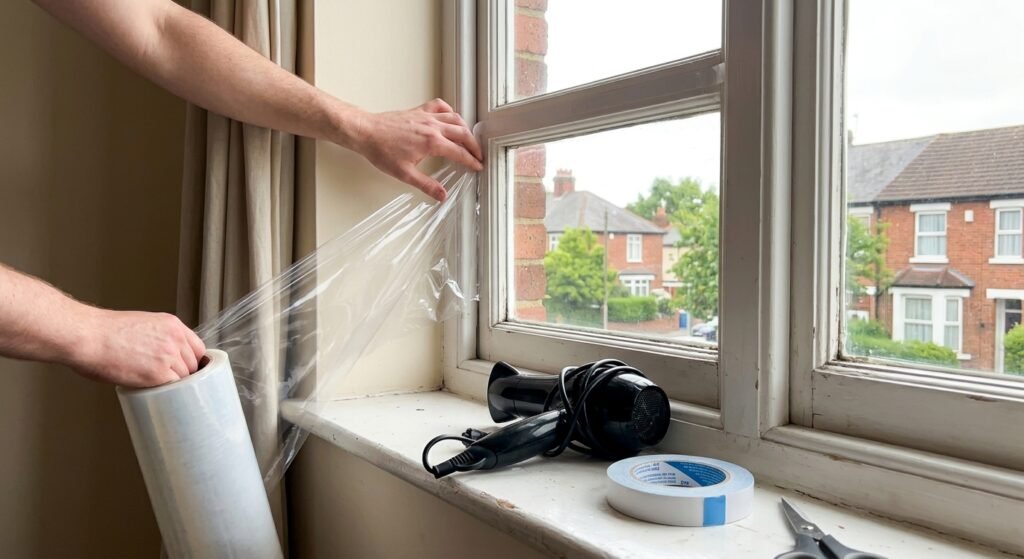
- Removable window insulation film kits. These clear plastic kits, applied with a hairdryer to shrink them tight, add a thin insulating layer over the glass. They’re inexpensive, fully removable at the end of the season, and renter-safe since they don’t touch the frame permanently.
- Keep furniture a bit away from external walls and windows. Pushing a bed or wardrobe right against a cold exterior wall restricts airflow behind it, which can lead to damp patches. A couple of inches of gap makes a real difference.
When to Tell the Landlord
Some condensation problems go beyond what ventilation habits and moisture absorbers can fix, and that’s the point to loop in your landlord rather than keep managing it yourself:
- Black mold that keeps coming back no matter how well you ventilate and clean, especially around the same spot repeatedly.
- Misting or fogging between the panes of double glazing, which means the seal has failed and moisture is trapped inside the glass unit itself. No amount of wiping fixes that, since it’s on the inside of a sealed window.
- Persistent damp smells in a room even after you’ve addressed laundry, cooking, and general ventilation.
Don’t make permanent alterations to the windows or frames without checking your lease first, even something as simple as drilling for a small vent cover. Renter-safe fixes like film kits, moisture absorbers, and better ventilation habits cover the vast majority of condensation problems without needing any landlord involvement at all.
A Simple Daily and Weekly Routine
Once you’ve made the bigger changes, condensation control mostly comes down to small, repeatable habits rather than one-time fixes:
- Every morning: a quick wipe of any windows that fogged up overnight, especially in the bedroom where doors and windows tend to stay closed for hours at a stretch.
- After cooking or showering: run the extractor fan for a few extra minutes after you’re done, not just while it’s happening.
- Once a week: check moisture absorber tubs and swap them out once they’ve filled with water, and do a quick cross-ventilation burst even on days you haven’t noticed obvious condensation, since some buildup happens gradually without an obvious morning fog.
- Once a month: check trickle vents and any window film kits for gaps or peeling edges, and top up or replace moisture absorbers around the home as needed.
None of this takes more than a few minutes at a time, but it adds up to a noticeably drier home through the coldest stretch of the year, and it’s a lot easier to keep up with than dealing with mold once it’s already taken hold.
FAQs
Why does condensation only show up on some windows and not others?
It usually comes down to which rooms have the most moisture in the air and which windows face the coldest direction. A bedroom window on a north-facing wall, for example, tends to get colder glass than a sunnier south-facing one, so it condenses first even if both rooms have similar humidity.
Does cracking a window in winter actually help, even though it lets cold air in?
Yes, and it’s one of the more counterintuitive fixes. A short burst of cold air swaps out humid indoor air for drier outdoor air fast, and the room reheats quickly once you close it again. Leaving it cracked all day loses more heat than it’s worth, so short bursts are the better approach.
Will a dehumidifier fix condensation completely on its own?
It helps a lot, but it works best alongside good ventilation habits, not instead of them. If you’re not also running extractor fans and airing rooms out briefly each day, a small dehumidifier will be fighting a losing battle against moisture that keeps getting added to the air.
Is condensation on the inside of my windows a sign something is actually wrong with them?
Not necessarily. Condensation on the inside surface of the glass is just normal physics when warm moist air meets cold glass, and it happens in plenty of perfectly fine windows. It’s condensation trapped between two panes of double glazing that signals an actual problem with the window itself.
Can houseplants make window condensation worse?
A little, since plants release moisture through their leaves as part of normal transpiration. It’s rarely the main cause, but if you’ve got a cluster of plants right against a cold window that’s already prone to condensation, moving them a bit further into the room can help both the window and, often, the plants themselves.