
To remove sticker residue from wood without damaging the finish, start with heat: warm the sticker with a hair dryer on low for 30-45 seconds, peel it slowly from a corner, then rub off leftover adhesive with a few drops of cooking oil or mineral oil on a soft cloth, let it sit 5 minutes, and wipe clean with mild soapy water. For stubborn residue on sealed wood, rubbing alcohol on a cloth (tested in a hidden spot first) dissolves what oil can’t. Never scrape with metal blades or use acetone. Both go straight through wood finishes.
Whether it’s a price tag on a new bookshelf, kids’ stickers on a dresser, or tape residue from moving, the approach is the same: soften the adhesive first, then lift it gently. Adhesive bonds weaken with heat and dissolve in oil or alcohol. Force is never the answer on wood, because the finish scratches long before the glue gives up.
First, Identify Your Wood Surface
The safe method depends on what you’re working with:
- Sealed/finished wood (polyurethane, lacquer, varnish, most furniture, tables, floors): tolerates heat, oil, and careful alcohol use.
- Painted wood: heat and oil are safe; alcohol can soften some paints, test first.
- Unfinished, raw, or waxed wood: oil will soak in and leave a permanent dark spot. Use heat + gentle rubbing only, or the eraser trick (below).
- Veneer and laminate “wood”: heat on low only (high heat can lift veneer glue); otherwise treat like sealed wood.
Quick test: drop a tiny bead of water on an inconspicuous spot. If it beads up, the wood is sealed. If it soaks in and darkens, it’s raw or waxed, skip all liquids.
What You’ll Need
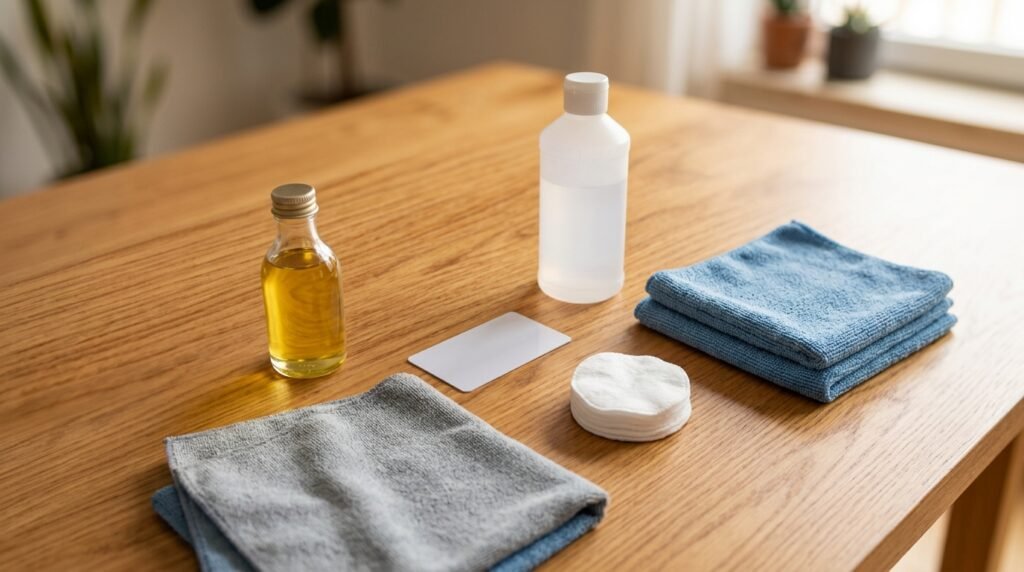
- Hair dryer (your best tool for this job)
- Plastic scraper: an old credit/gift card or a plastic putty knife, never metal
- Cooking oil, mineral oil, or mayonnaise (yes, really, it’s oil plus a little acid)
- Rubbing alcohol (70% isopropyl), for sealed wood only
- Soft microfiber cloths
- Mild dish soap and warm water
- Optional: a pencil eraser (raw wood), furniture polish or wax for finishing
How to Remove Sticker Residue from Wood: Step by Step
Step 1: Peel What You Can, With Heat
- Set a hair dryer to low or medium heat and hold it 4-6 inches from the sticker for 30-45 seconds, keeping it moving.
- Lift a corner with a fingernail or the edge of a plastic card.
- Peel slowly and at a low angle (pull the sticker back along the surface, not straight up). Slow peeling brings the adhesive with the sticker; fast peeling leaves it behind.
- If it resists, stop and reheat. Heat, peel an inch, heat again, patience here saves all the work below.
Step 2: Dissolve the Leftover Residue with Oil
- Put 3-4 drops of cooking oil or mineral oil on a soft cloth.
- Rub the residue in small circles with light pressure.
- For thicker gunk, dab oil (or a small blob of mayonnaise) directly on the residue and let it sit 5-10 minutes so it penetrates the adhesive.
- Rub again. The residue should ball up and roll off. Use the plastic card at a shallow angle for any stubborn ridges.
- Wash the spot with a cloth dampened in mild soapy water to remove the oil film, then dry immediately.
Skip this step on raw or waxed wood, oil stains it permanently. Instead, after heat-peeling, rub the residue with a clean pencil eraser or a ball of masking tape (dab the sticky tape ball against the residue repeatedly; adhesive lifts adhesive).
Step 3: Escalate to Rubbing Alcohol (Sealed Wood, Stubborn Cases)
- Test first: dampen a cotton swab with rubbing alcohol and rub a hidden spot for 10 seconds. Check the cloth for color transfer or dulling.
- If safe, dampen a cloth corner (not the wood) with alcohol and rub the residue with light, quick strokes.
- Work fast, don’t let alcohol pool or dwell. It dissolves adhesive within seconds.
- Wipe with a damp soapy cloth, then dry.
Alcohol evaporates quickly, which is exactly why it’s safer than stronger solvents, but it can still dull shellac and some lacquers with prolonged contact, hence the test and the quick strokes.
Step 4: Restore the Finish
After any of these methods, the cleaned spot can look slightly flat compared to the surrounding wood. Buff in a small amount of furniture polish or paste wax matching your finish, and the spot disappears.
What NOT To Do
- No metal scrapers, razor blades, or knives. The #1 cause of permanent damage. A blade gouge can’t be buffed out. A little leftover adhesive always can.
- No acetone or nail polish remover. Acetone dissolves lacquer and varnish on contact, leaving a melted-looking dull patch.
- No abrasives, magic erasers, scouring pads, or baking soda scrubs will haze the finish.
- No Goo Gone-type citrus solvents without testing. They’re usually fine on hard polyurethane but can blotch oil finishes, lacquer, and paint. Hidden-spot test, always.
- No soaking. Water sitting on wood raises grain and leaves white marks, even on sealed finishes.
- No high heat on veneer or laminate. Keep the dryer on low and moving, or the surface glue can bubble.
- Don’t rush the peel. Ripping a heated sticker off fast leaves twice the residue.
Special Cases
Old, sun-baked stickers (years old): The adhesive has hardened. Do two heat cycles, then lay an oil-soaked cloth scrap over the residue for 15–20 minutes before rubbing. It will come off. It just needs the longer soak.
Tape residue in long strips (from moving): Same method, but work in sections; heat one foot at a time. A ball of duct tape dabbed repeatedly along the strip picks up softened residue quickly.
Stickers on painted furniture: Heat + slow peel, then oil. Skip alcohol unless tested, it can lift or dull paint. If the paint is delicate, treat it as gently as you would kitchen cabinet paint: cleaning delicate painted surfaces without damage.
Sticker residue on wood-look laminate floors: Use the heat + plastic card + alcohol-on-cloth sequence, then clean the spot properly so it doesn’t turn into a dull patch: cleaning laminate floors without leaving a film.
If the sticker was on a wood dresser or table with a decorative dark or matte-finish frame, the same “no abrasives, test everything” rule applies to those surfaces too: safe cleaning for matte black finishes.
FAQs
What removes sticker residue from wood without damage?
Heat the sticker with a hair dryer, peel slowly, then rub the leftover adhesive with a few drops of cooking or mineral oil on a soft cloth. On sealed wood, rubbing alcohol handles stubborn residue. Finish by washing the spot with mild soapy water and drying. Avoid metal scrapers, acetone, and abrasives.
Does vinegar remove sticker residue from wood?
It can help. Warm 1:1 vinegar and water dabbed on the residue for a few minutes softens some adhesives. But oil and alcohol work better on most sticker glues, and vinegar’s moisture and acidity make it a second-choice option on wood. Never use it on raw, waxed, or oil-finished wood.
Is Goo Gone safe on finished wood?
Usually on hard modern finishes like polyurethane, but not always. Citrus solvents can blotch lacquer, shellac, oil finishes, and paint. Test on a hidden spot for 30 seconds first, and wash the area with soapy water afterward so the solvent doesn’t keep working on the finish.
How do you get sticker residue off unfinished wood?
Skip all liquids. They stain raw wood. Heat the sticker with a hair dryer and peel slowly, then lift remaining adhesive by dabbing it with a ball of masking tape or rubbing gently with a clean pencil eraser. If a faint mark remains, a very light pass with fine sandpaper (220 grit), sanding with the grain, removes it.
Will a hair dryer damage wood finish?
Not on low or medium heat, held 4-6 inches away and kept moving. Avoid high heat concentrated in one spot, especially on veneer, laminate, or waxed finishes, where excessive heat can soften glue or wax.
Pingback: How to Hang Heavy Things Without Drilling (Renter-Safe) - The Home Perk
Pingback: How to Get Cooking Grease Off Painted Cabinets Without Ruining the Paint - The Home Perk