
The way to clean laminate floors without film is to use far less of everything: less water, less product, less mopping. Dry dust or vacuum first, then go over the floor with a microfiber mop that’s barely damp with either plain hot water or a mix of 1 cup white vinegar to 4 liters (a gallon) of water. No soap, no “shine” products, no steam, no soaking. The cloudy film most people fight on laminate isn’t dirt at all. It’s dried residue from the cleaner they used last time, built up layer on layer.
Laminate looks like wood but behaves like a photograph sealed under a plastic wear layer, sitting on a fiberboard core that hates water. That wear layer is naturally easy to clean, which is exactly why soap-based floor cleaners backfire on it. There’s nothing porous for the soap to sink into, so the residue just sits on top and dries into streaks and haze. Once you switch to the barely-damp, low-product method, laminate becomes one of the easiest floors in the house.
Why Laminate Floors Get That Cloudy Film
Three culprits, usually in combination:
- Soap and polish residue. Sudsy floor cleaners, “mop and shine” products, and anything that promises gloss leave a sticky layer that dries dull, shows every footprint, and grabs new dirt faster. Weeks of this builds a genuine film you can scratch with a fingernail.
- Too much water. A soaked mop leaves puddles that dry into mineral streaks, and worse, water that seeps into the seams swells the fiberboard core permanently. Puffy, lifted edges along the plank joints don’t recover.
- Dirty mop water. Dragging one bucket of increasingly gray water across the whole floor just redistributes the dirt thinly and evenly. That’s a film too, technically.
The fix is a strip-back clean to remove the old buildup, then a maintenance routine that never creates residue in the first place.
What You’ll Need
- A flat microfiber mop (the kind with a washable pad, not a string mop or sponge mop)
- A spray bottle
- White vinegar
- Hot water
- A vacuum with the beater bar off, or a soft dry dust mop
- Two or three spare microfiber pads or cloths
- Optional: a drop of rubbing alcohol for the streak-free upgrade mix
Notice what’s missing: no bucket. Spraying the floor lightly and mopping gives you far better control over moisture than any bucket-and-wring routine, and it’s faster.
How to Clean Laminate Floors Without Film: Step by Step
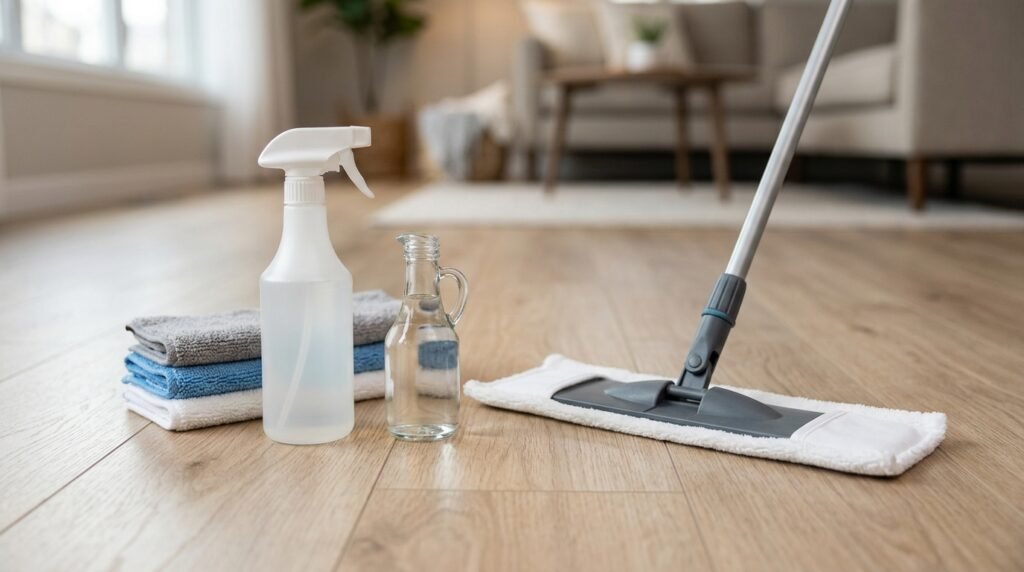
- Dry clean first, every time. Vacuum or dust mop the whole floor. Grit is the enemy here twice over: mopping over it grinds micro-scratches into the wear layer, and wet grit becomes the muddy streaks you’re trying to avoid. If you’ve got shedding pets, this step is most of the job, and the same fur that coats the floor is probably building up in your washing machine too: How to Remove Pet Hair from Your Washing Machine Rubber Seal.
- Mix the cleaner. For maintenance: plain hot water is honestly enough. For a floor with existing film: 1 cup white vinegar per 4 liters of water, in the spray bottle. The mild acid dissolves old soap residue and dries without a trace. If the smell bothers you, it’s gone within half an hour, but a drop of essential oil masks it fine.
- Spray a light mist over one section. About a two-meter stretch at a time. The floor should look lightly misted, never wet enough to pool. This is the part that takes a little recalibrating if you’re used to a sloshy mop. When in doubt, less.
- Mop with the grain of the planks. Long overlapping strokes along the plank direction hide any faint drying lines. Flip or swap the pad the moment it looks grubby. A dirty pad is just a residue applicator.
- Let it flash dry. Barely damp laminate dries in a minute or two on its own. If water is still sitting there after five minutes, you used too much, so wipe it up with a dry cloth rather than waiting.
- For heavy buildup, repeat with fresh pads. A floor that’s had months of shine product may need two or three passes over a week before the haze fully lifts. You’ll know it’s working because the pads come away gray-brown and the floor stops showing footprints.
The Streak-Free Upgrade Mix
For laminate that shows every mark, especially dark gray or high-gloss planks, mix in the spray bottle: 1 cup water, 1 cup white vinegar, and a tablespoon or two of rubbing alcohol. The alcohol speeds evaporation so the floor dries before streaks can form, the same trick window cleaners rely on. Use it as a spot spray for the kitchen traffic path between full cleans.
What NOT to Do on Laminate
- No steam mops. Steam forces moisture into the seams and can delaminate the wear layer. Several flooring manufacturers void the warranty over steam cleaning, and the damage shows up as whitening or bubbling months later.
- No wet mopping with a soaked string mop. Swollen seams are permanent. If a spill happens, wipe it up promptly rather than letting it sit, especially along joints.
- No wax, polish, or “restore shine” products. Laminate can’t absorb them, so they sit on top as the exact film this article exists to remove. If the floor is genuinely dull under the film, that’s wear, and no bottle fixes wear.
- No oil soaps or sudsy cleaners. Anything that foams leaves residue on a nonporous surface. Save them for surfaces that can take a rinse.
- No abrasive pads or powder cleansers. The wear layer scratches, and scratched laminate goes cloudy in a way you can’t clean off.
- Careful with vinegar strength. The diluted mix above is safe for laminate, but don’t go stronger thinking it’ll work faster, and keep vinegar off any natural stone thresholds or tiles that meet the laminate.
One more: scraping dried gunk with a knife or metal spatula. For sticker labels, tape marks, or mystery adhesive on laminate, use the gentle solvent approach instead, the same one that works on wood furniture: How to Remove Sticker Residue from Wood.
A Maintenance Routine That Never Builds Film
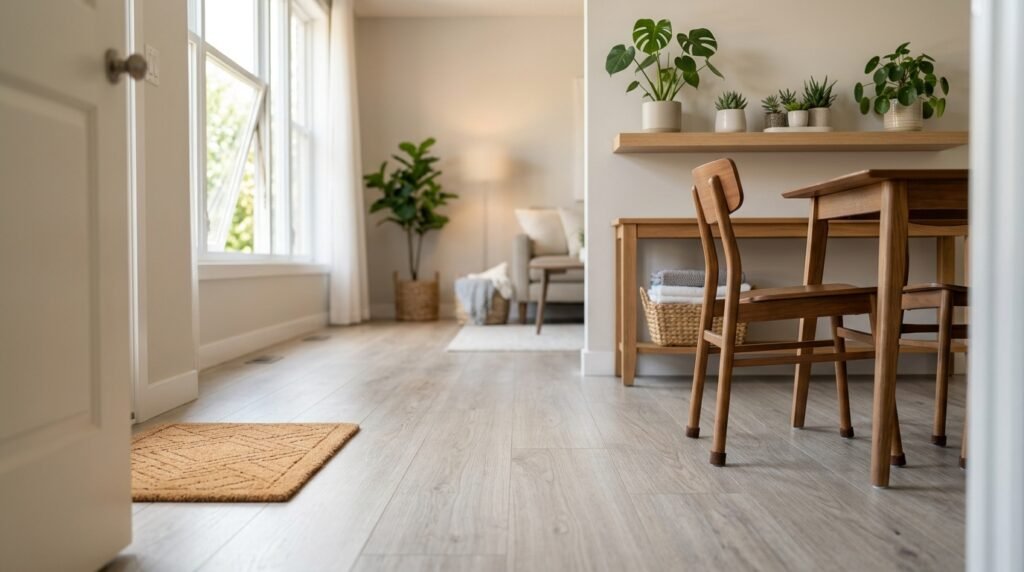
- Daily-ish: quick dust mop or robot vacuum run in traffic areas. Two minutes.
- Weekly: the misted microfiber mop with plain hot water or the vinegar mix. A normal-sized kitchen and hallway takes maybe ten minutes.
- Immediately: wipe spills, especially anything sugary, which dries sticky and grabs dirt. In the kitchen, airborne cooking grease settles on the floor near the stove too, and the same light-touch logic applies to the cabinet fronts above it: How to Get Cooking Grease Off Painted Cabinets.
- Seasonally: wash the mop pads on hot without fabric softener. Softener coats microfiber and stops it grabbing dirt, which quietly ruins your results even when your technique is perfect.
Doormats at every entrance and felt pads under chair legs round it out. Most laminate “cleaning” problems are really grit and residue problems, and both are cheap to prevent.
FAQs
Why does my laminate floor look smeared after mopping?
Either the cleaner is leaving residue, the mop water was dirty, or too much liquid dried on the surface. Switch to a barely damp microfiber mop with plain hot water or diluted vinegar, swap pads as soon as they look gray, and mop along the plank direction. If smearing continues, there’s old product buildup that needs a few vinegar passes to strip.
What is the best homemade cleaner for laminate floors?
One cup of white vinegar in 4 liters of warm water, applied as a light mist. It cuts residue, dries clear, and costs pennies. Add a splash of rubbing alcohol if you want faster drying and extra streak insurance. Plain hot water alone is genuinely fine for weekly maintenance once the floor is residue-free.
Can I use a steam mop on laminate flooring?
Best not to, even on models with a “laminate setting.” Steam drives moisture into the seams and can cause swelling, whitening, or bubbling over time, and many flooring warranties specifically exclude steam damage. A barely damp microfiber mop cleans just as well without the risk.
How do I get the shine back on dull laminate?
First remove any film with the diluted vinegar method, because buildup is the most common cause of dullness and the shine is often hiding under it. If the floor is still dull after stripping, the wear layer itself is worn, usually in traffic lanes, and polishes won’t help. They only add film. At that point it’s rugs, runners, or eventually replacement planks.
How often should I mop laminate floors?
Once a week in busy areas is plenty, with dry dusting or vacuuming in between as needed. Laminate doesn’t benefit from more frequent wet cleaning, and every extra mopping is another chance to introduce moisture and residue. Dry clean often, wet clean lightly.
Pingback: How to Fix a Door That Won't Stay Open (5 Cheap Fixes) - The Home Perk
Pingback: How to Remove Sticker Residue from Wood Without Damaging the Finish - The Home Perk