
The fastest way to protect balcony plants from wind is to break the wind before it reaches them, using a screen, a railing cover, or simply your sturdiest plants as a living shield. Wind is the balcony gardener’s biggest enemy, and hardly anyone warns you about it. It snaps stems, shreds big leaves, tips over pots, and dries out soil faster than direct sun does. If your plants keep looking battered and thirsty no matter what you do, wind is probably the reason.
The good news is that most fixes are cheap, quick, and renter-friendly. Here’s what actually works, roughly in order of how much difference it makes.
First, Figure Out What Kind of Wind You’re Dealing With
Spend a windy afternoon just watching your balcony. It sounds silly, but ten minutes of observation saves you money and dead plants.
You’re looking for a few things:
- Where does the wind come from? Most balconies have one dominant direction. That’s the side to block.
- Is it a steady breeze or violent gusts? A breeze mostly dries things out. Gusts snap and topple.
- Are there wind tunnels? Gaps between buildings and open balcony corners channel wind into fast streams. High floors are dramatically windier than the second floor, and a corner balcony on the tenth floor can be a genuinely hostile environment.
A cheap trick: tape a few strips of light plastic ribbon to the railing at different spots and see which ones thrash the hardest. That maps your problem zones in one afternoon.
Put Up a Windbreak (The Fix That Matters Most)
A windbreak doesn’t need to stop the wind completely. In fact, it shouldn’t. A solid wall makes wind whip over the top and swirl down behind it in turbulence. What you want is something that filters wind and slows it down, letting maybe half of it through.
Renter-friendly options that work:
- Balcony privacy screen or railing fabric. These stretch along the railing and attach with zip ties in about twenty minutes. Choose a mesh or woven style rather than solid plastic, because mesh filters the wind instead of fighting it. This is the best value fix on this list.
- Reed, willow, or bamboo screening. Rolls of natural screening tie onto railings the same way and look much nicer than plastic. They filter wind well because they’re naturally full of small gaps.
- A freestanding trellis in a heavy planter. Placed on the windy side, it slows gusts and gives you somewhere to grow a climber later. Make sure the planter is genuinely heavy, because a trellis is basically a sail.
- Clear balcony panels. Some balconies have open railings with bars. Clear acrylic panels zip-tied to the inside block low-level wind without stealing light from your plants.
Whatever you use, check the building rules first. Some landlords and buildings restrict what can be attached to railings, and a screen that blows off a tenth-floor balcony is dangerous. Zip ties every 20 to 30 centimeters, pulled tight, hold better than string or bungees. If you’re attaching anything to walls instead of railings, our guide on how to hang heavy things without drilling covers renter-safe options.
Make Your Pots Harder to Tip Over
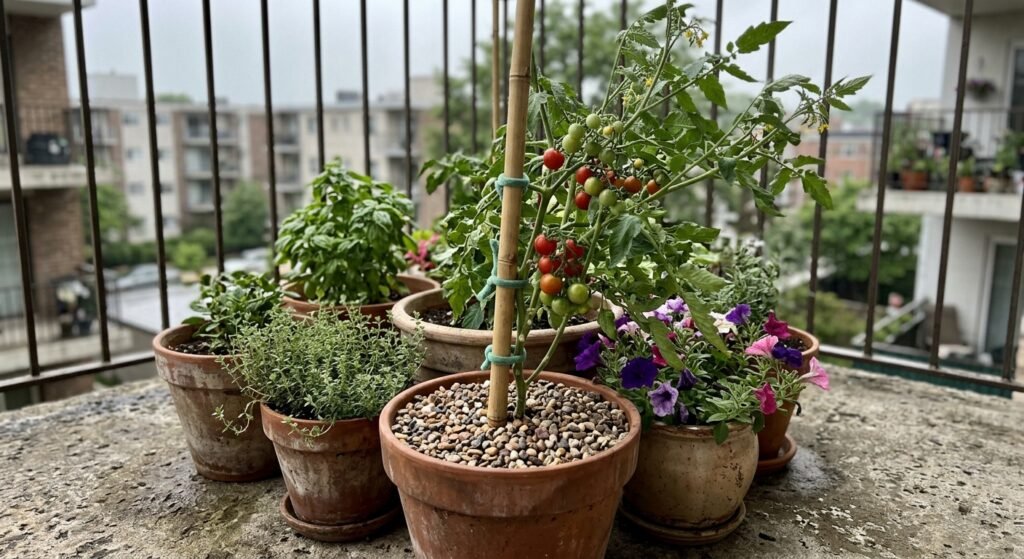
Even with a windbreak, gusts will find a way in. The next layer of defense is making everything heavier and lower.
- Choose wide, heavy pots for anything tall. Terracotta and ceramic beat plastic here. A tall plant in a light plastic pot is a domino waiting for a breeze.
- Add weight to the base. A layer of gravel or a couple of bricks in the bottom of large pots drops the center of gravity. Keep the drainage hole clear.
- Cluster pots together. A tight group of pots shields itself. The outer pots take the hit, the inner ones stay calm, and everything dries out slower. Put your toughest plants on the windy edge.
- Drop things to floor level. The wind at railing height is always stronger than at floor level. Anything delicate lives low.
- Tie tall plants to a support. A simple bamboo cane and soft ties stop tomatoes and other tall growers from snapping. Tie loosely in a figure-eight so the stem can still flex a bit, because a little movement actually makes stems grow stronger.
One warning from hard experience: never leave saucers full of water under light pots on a windy balcony. The pot skates around on the wet saucer like a hovercraft. It’s funny exactly once.
Pick Plants That Don’t Mind Wind
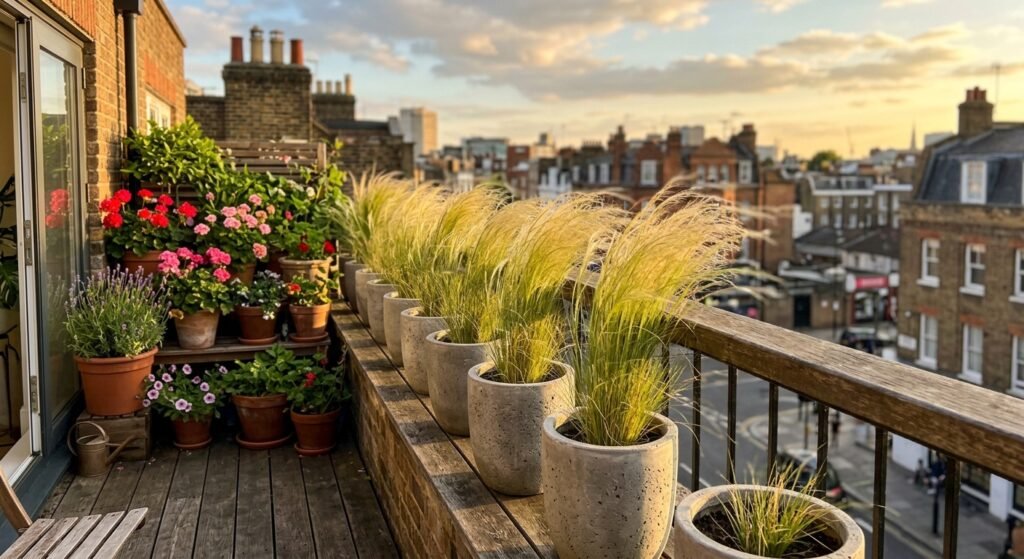
Some plants handle wind cheerfully, and stacking your balcony with them makes the whole problem smaller. Good choices include ornamental grasses, lavender, rosemary, sedums and other succulents, geraniums, and small-leaved compact shrubs like hebe or box. What they share is small, tough, or flexible foliage.
The plants that suffer most are the big-leaved and top-heavy ones: bananas, cannas, large hostas, hydrangeas, and anything tall and floppy. Big soft leaves tear in strong gusts, and tall flower spikes snap. You don’t have to avoid them completely, just give them the most sheltered corner you have.
Plenty of wind-tolerant plants are also beginner-friendly. There’s a lot of overlap with our list of low maintenance balcony plants, which is handy if you want a balcony that shrugs off both wind and neglect.
You can even use tough plants as the windbreak itself. A row of ornamental grasses or a couple of dense shrubs in heavy pots along the windy edge creates a living filter, and it looks a lot better than plastic mesh.
Deal With the Hidden Problem: Wind Dries Everything Out
Wind damage isn’t always dramatic. Often it just quietly steals moisture. Moving air pulls water out of leaves and soil constantly, so a windy balcony can need twice the watering of a sheltered one. If your plants wilt even though the soil felt damp yesterday, this is why.
A few habits that help:
- Mulch the top of every pot. A couple of centimeters of bark chips, gravel, or even pebbles slashes evaporation from the soil surface.
- Use bigger pots. More soil means a bigger water reservoir between waterings.
- Check windy-side pots more often. They’ll dry out a day or two before the sheltered ones. The finger test doesn’t lie, and our guide on how often to water container plants explains what to look for.
- Water in the morning on windy days. Evening watering is fine too, but morning gives plants a full tank before the drying hours.
If watering is the part you keep failing at, self watering pots with a built-in reservoir take real pressure off on a windy balcony, since the soil drinks from below all week instead of relying on you every morning.
A Quick Setup That Covers Most Balconies
If you want the short version, here it is. Put mesh screening along the windiest stretch of railing. Move tall or delicate plants to floor level in the most sheltered corner. Line the windy edge with grasses, lavender, or other tough plants in heavy pots. Mulch everything. Check soil twice a week in breezy weather.
That’s an afternoon of work and maybe the cost of a takeaway dinner, and it turns a wind-blasted balcony into somewhere plants can actually live.
FAQs
Will a windbreak make my balcony dark?
Not if you pick mesh or woven screening, which lets plenty of light through. Reed and bamboo screens block a bit more light but still far less than a solid panel. Only put taller screening on the side the wind actually comes from and leave the rest open.
My balcony is on a high floor and everything dies. Is it hopeless?
Not hopeless, but be picky. High balconies need the full treatment: railing screening, heavy low pots, mulch, and wind-tolerant plants only. Skip anything tall or big-leaved for the first year. Grasses, succulents, lavender, and geraniums are your friends up there. Once you’ve got a sheltered pocket established, you can experiment with fussier plants inside it.
Can I just bring plants inside when it’s windy?
For a few small pots, sure, and it’s worth doing before a named storm. As a routine it gets old fast, and most plants dislike constantly changing light conditions. It’s easier to build a setup that survives wind without your help.
How do I stop hanging baskets from swinging and spilling?
Honestly, on a windy balcony the best answer is not to use them, or to hang them in the most sheltered corner only. If you’re set on them, use a short chain rather than a long one, clip the basket to the bracket so it can’t bounce off, and accept that they’ll need watering almost daily.
Do I need to protect plants from wind in winter too?
Yes, sometimes more than in summer. Cold wind dries out evergreen leaves when the roots are too cold to replace the moisture, which is why potted evergreens sometimes turn brown in late winter. Keep screening up year-round, push pots together against the most sheltered wall, and raise pots slightly off cold concrete.