
The best low maintenance balcony plants are the ones that forgive you. Forgot to water for a week? Fine. Went on holiday and left them baking? They’ll sulk, then bounce back. If you’ve killed a few plants already and you’re starting to think you have a black thumb, the problem probably wasn’t you. It was the plant. Some plants are just needy, and nobody tells beginners that.
This list sticks to plants that handle missed waterings, weird balcony weather, and general neglect. Everything here grows happily in a pot, doesn’t need daily fussing, and looks good enough that your balcony stops feeling like a concrete box.
What Makes a Plant Genuinely Low Maintenance
Before the list, it helps to know what you’re actually looking for, because “easy” on a plant label often means nothing.
A genuinely forgiving balcony plant usually has a few things going for it:
- Thick or waxy leaves. These store water, so the plant can ride out a missed watering or three.
- Tolerance for both sun and partial shade. Balconies have strange light. A plant that only thrives in one exact condition will struggle.
- Slow, steady growth. Fast growers need constant feeding, watering, and repotting. Slow growers just sit there being pleasant.
- No dramatic reaction to wind. Balconies are windier than gardens, and delicate plants shred fast.
One thing that surprises most beginners: overwatering kills more balcony plants than underwatering. Tough plants tend to be the ones that prefer being left alone. If you tend to hover with the watering can, pick from the succulent end of this list and hide the can.
The Hard-to-Kill List
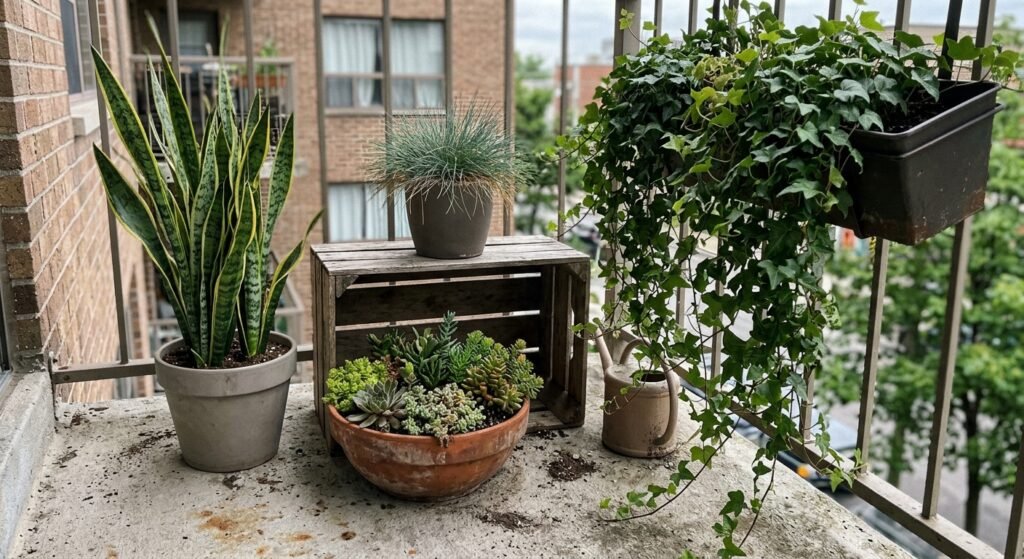
1. Snake plant (for shaded balconies)
If your balcony gets barely any direct sun, a snake plant will still be fine. It stores water in its thick upright leaves and genuinely prefers being ignored. Water it every two or three weeks in summer, less in winter, and bring it inside before frost. That’s the whole care routine.
2. Lavender
Lavender likes exactly what balconies offer: sun, decent airflow, and soil that dries out. It hates soggy roots more than anything, so give it gritty, free-draining compost and don’t baby it. As a bonus, it smells wonderful and bees love it.
3. Geraniums (pelargoniums)
The classic balcony flower for a reason. Geraniums bloom for months, shrug off dry spells, and actually flower better when slightly underwatered. Snap off dead flower heads when you walk past and that’s most of the maintenance done.
4. Sedum and other succulents
Sedums are close to unkillable in a sunny spot. Their fleshy leaves hold weeks of water. Plant a few varieties in a wide shallow bowl and you get a little living centerpiece that needs watering maybe twice a month.
5. Rosemary
A tough, woody herb that treats neglect as a lifestyle. Rosemary wants sun and hates wet feet, so use a terracotta pot with good drainage. You also get free seasoning for roast potatoes, which feels like cheating. If you’d like more edible options for darker corners, our guide to herbs that grow in shade on a balcony covers the shade-tolerant ones.
6. Ornamental grasses
Festuca, carex, and similar small grasses handle wind better than almost anything else, and they add movement to a balcony. They need a trim once a year and water during long dry spells. That’s about it.
7. Ivy
Ivy grows in sun, shade, wind, and general chaos. Trail it from a railing planter or let it climb a trellis. Your only real job is cutting it back before it takes over, because it will absolutely try.
8. Marigolds
Cheap, cheerful, and very hard to discourage. Marigolds flower from late spring to the first frost, tolerate poor soil, and even help keep some pests away from nearby pots. Grow them from seed and a packet costs less than a coffee.
9. Hostas (for shade)
If your balcony faces away from the sun, hostas fill pots with big lush leaves and ask for almost nothing except moisture. Watch for slugs and snails, though. Even a third-floor balcony isn’t safe, which took me longer to believe than it should have.
10. Bay laurel
A small bay tree in a pot looks smart, survives cold snaps, tolerates drought once established, and gives you bay leaves for cooking. It grows slowly, so one plant lasts years without repotting drama.
Set Yourself Up So Even Less Can Go Wrong
Plant choice is half the battle. The setup is the other half, and a few small decisions make everything more forgiving.
Use bigger pots than you think you need. Small pots dry out fast, sometimes within a day in summer wind. A larger pot holds more soil, which holds more water, which buys you more forgiveness. This is the single biggest upgrade for lazy gardeners.
Drainage holes are not optional. No hole means rainwater pools at the bottom and rots the roots. If you love a pot that has no hole, use it as a sleeve with a cheap plastic pot inside.
Group pots together. Clustered plants shade each other’s soil and create a slightly more humid pocket, so everything dries out slower. It looks better too.
Consider self watering pots for the thirstier plants. They have a reservoir at the bottom that the plant drinks from over days, which is great for anyone who travels or forgets.
Wind deserves a mention as well. It dries out pots quicker than sun does, and it snaps tall stems. If your balcony is above the second floor or catches a channel of wind between buildings, stick to the shorter, tougher plants on this list and keep anything delicate close to the wall. Ignoring wind is one of the classic container gardening mistakes beginners make, and it’s an easy one to dodge.
A Realistic Watering Routine for Forgetful People
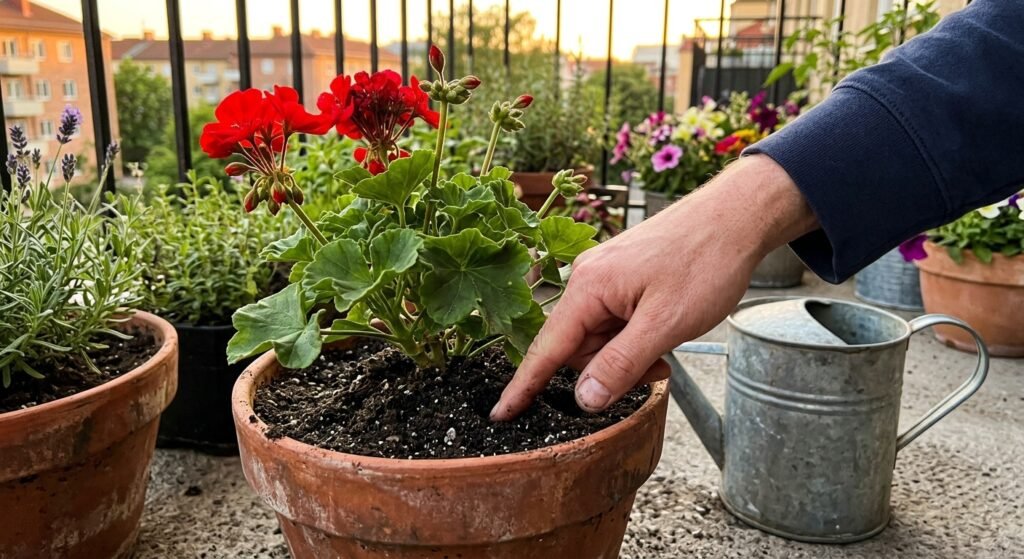
Here’s a routine that works even if plants aren’t really your hobby. Once a week, stick a finger a couple of centimeters into the soil of each pot. Dry? Water until it runs out the bottom. Damp? Walk away. That’s the entire system.
In a heatwave, check twice a week. In winter, most of these plants need almost nothing, and rain often does the job for you. If you want to get the feel for reading your plants properly, our guide on how often to water container plants goes deeper into the signs of too much and too little.
The plants on this list will tolerate you getting this wrong sometimes. That’s the point of them.
FAQs
Which balcony plant is the hardest to kill overall?
For a sunny balcony, sedum or another hardy succulent. For shade, a snake plant in summer or ivy year-round. All three can go weeks without attention and still look presentable. If I had to hand one plant to a total beginner, it’d be a geranium, because it flowers all summer and complains loudly (droopy leaves) before actually dying, so you get a warning.
Do low maintenance plants still need feeding?
A little, but not much. Flowering plants like geraniums and marigolds bloom better with a liquid feed every couple of weeks in summer. The succulents, grasses, and woody herbs honestly don’t care. If you skip feeding entirely, most of this list survives fine, just with fewer flowers.
Can I leave these plants alone for a two-week holiday?
The succulents, snake plant, rosemary, lavender, and bay will be fine, especially if you water deeply before you leave and move pots out of direct afternoon sun. The flowering annuals might look rough when you get back. Grouping pots in a shaded corner before you go makes a big difference, and a couple of self watering pots basically solve the problem.
What should I avoid as a beginner?
Anything sold as a hanging basket of mixed annuals (they need daily water in summer), fuchsias, most ferns, and hydrangeas in small pots. They’re all lovely and they’re all thirsty. Also skip anything tall and top-heavy if your balcony is windy.
Are these plants safe around pets?
Not all of them. Ivy and snake plants can upset cats and dogs if chewed, and lavender in large amounts isn’t great either. Rosemary, bay, marigolds, and most ornamental grasses are generally considered pet-friendly. If your pet is a known plant-chewer, check each plant before buying and keep the risky ones out of reach on a shelf or railing.