
To overwinter container plants successfully, you need to protect one thing above all: the roots. A plant that survives winters fine in the ground can die in a pot on your balcony at the exact same temperature, because pot roots sit above ground in a thin shell of soil that freezes solid from every side. Ground soil barely freezes a few centimeters down. A balcony pot can freeze all the way through overnight. Once you understand that, everything else about getting plants through winter makes sense: it’s mostly about insulating pots, moving the right things, and not accidentally drowning dormant plants.
Here’s the full plan, sorted by effort, and it works for typical US and UK winters.
Step 1: Sort Your Plants Into Three Groups
Somewhere in mid to late autumn, before the first proper frost, walk your balcony and put every pot into one of three mental buckets.
Group 1: Done for the year. Annuals like tomatoes, basil, petunias, and most summer bedding plants complete their life cycle and die regardless of what you do. Don’t try to save them. Compost the plants, and keep the pots and soil for spring. Letting these go isn’t failure, it’s how annuals work.
Group 2: Hardy, but pot-vulnerable. Perennial herbs like thyme, sage, mint, and chives, small shrubs, strawberries, spring bulbs, and most perennials rated for your climate. These want to stay outside and go dormant. Your job is just protecting their roots from the freeze-thaw cycle.
Group 3: Tender, must come in. Anything that can’t take frost at all: pelargoniums (bedding geraniums), fuchsias, citrus, succulents, chillies you’re keeping, and most houseplants that summered outside. One night below freezing can finish these, so they come indoors before frost is even forecast.
A rough rule if you’re unsure: check the plant’s hardiness rating, then assume a potted plant is effectively one climate zone less hardy than the label says, because of that exposed root ball.
Step 2: Protect the Pots Staying Outside
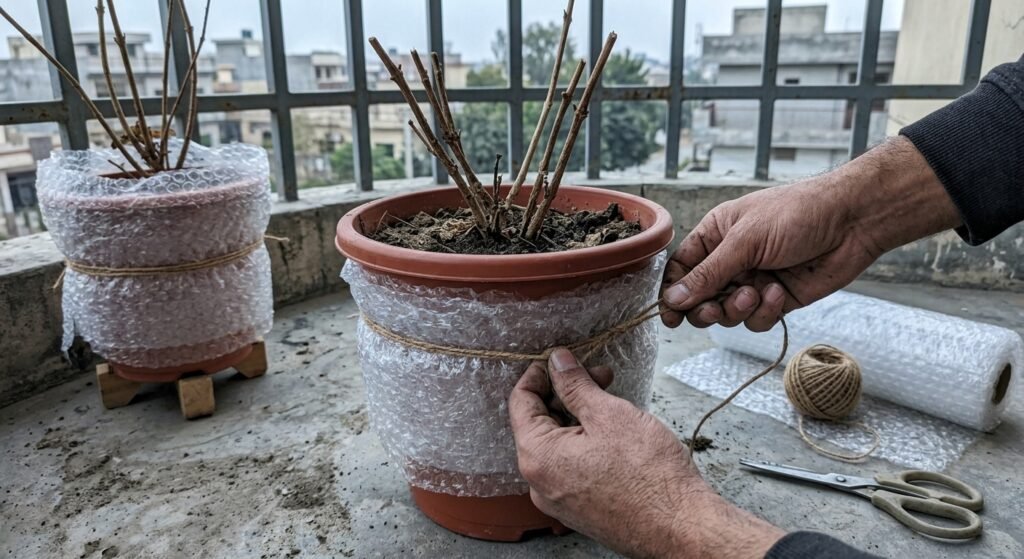
This is where the cheap tricks live, and none of them need drilling or anything a landlord would notice.
- Cluster pots together against the most sheltered wall, ideally the one shared with your heated flat. A huddle of pots insulates itself, and the building wall radiates a surprising amount of warmth. Corner spots protected from wind are gold.
- Wrap the pots, not the plants. Bubble wrap around the outside of each pot, a couple of layers, tied with string. Old towels, burlap, or even cardboard work too. You’re insulating the root ball. The dormant top growth of hardy plants generally doesn’t need wrapping.
- Lift pots off the concrete floor. Pot feet, bricks, or scraps of wood under each pot. A pot sitting flat on a frozen balcony floor wicks cold straight up and, worse, can’t drain, so it sits in an ice puddle.
- Mulch the soil surface. A few centimeters of bark, straw, or even dead leaves on top of the soil buffers temperature swings.
- Skip terracotta for overwintering if you can. Wet terracotta absorbs water, freezes, and cracks or flakes apart. Plastic, fiberglass, and glazed pots survive much better. If a favorite terracotta pot must stay out, wrap it well and keep it on the dry side.
Wind matters as much as cold on a balcony, since it strips moisture from evergreens and drives windchill into pots. If your balcony is a wind tunnel, the screens and shelter tricks in our guide on how to protect balcony plants from wind do double duty in winter.
Step 3: Bring the Tender Ones In (The Right Way)
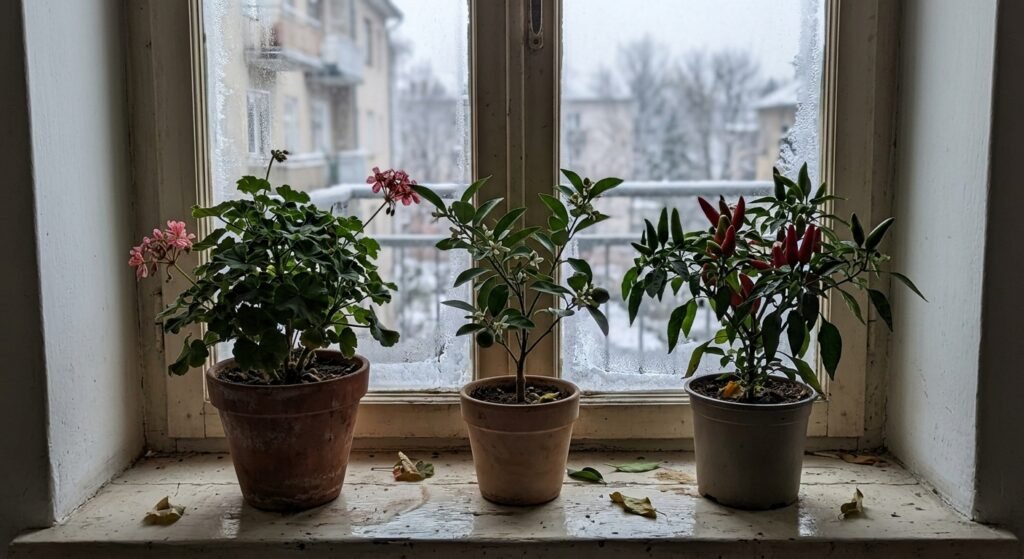
Moving plants indoors sounds simple, but a few details prevent the classic disasters:
- Do it before the first frost, not after. In much of the US and UK that means October, earlier in cold regions. One surprise cold night is all it takes.
- Check for hitchhikers. Look under leaves and around the pot rim for slugs, spiders, and insect eggs, and pull the pot out of any outer sleeve to check the bottom. A quick shower with the hose helps. This step feels fussy right up until you skip it and hatch a balcony’s worth of aphids in your living room in January.
- Expect the sulk. Plants moving from outdoor light to indoor light often drop a bunch of leaves in the first couple of weeks. That’s adjustment, not death. Put them in your brightest window and wait it out.
- Cool and bright beats warm and dark. A cool bedroom windowsill or a bright stairwell suits most overwintering plants better than a hot living room. Many tender plants want to rest, not grow.
- Water sparingly indoors. Growth has stalled, so their thirst has too.
No indoor space? A few tender plants can squeak through against the house wall under a wrapped-up cluster in milder UK winters, but it’s a gamble. Prioritize bringing in the plants you’d actually be sad to lose.
Step 4: Winter Watering, the Part Everyone Gets Wrong
More overwintered container plants die from winter wet than from cold. Dormant roots in cold, soggy soil rot, and soaked soil also freezes harder and more damagingly than moist soil.
The winter routine:
- Water the outdoor pots roughly once or twice a month, only when the top few centimeters are dry and only on milder days when the soil isn’t frozen. Watering frozen soil does nothing except build ice.
- Never let pots sit in saucers of water outside. Remove saucers entirely for winter so rain drains through.
- Evergreens still drink. Anything keeping its leaves through winter (bay, rosemary, evergreen shrubs) needs more regular checks than dormant bare plants, especially during windy dry spells.
- Rain does most of the work in a UK-style winter, and the bigger risk is pots getting waterlogged. If a spell of weeks of rain is forecast, shifting pots under the balcony overhang is worth the shuffle.
If you struggled with watering judgment all summer, winter is more forgiving in one way: when in doubt, don’t. The signs to read are the same ones from our container watering guide, just on a much slower clock.
Step 5: Know What Not to Do
A few well-meaning moves that backfire:
- Don’t fertilize. Feeding a dormant plant pushes soft new growth that frost then kills. Feeding restarts in spring when you see new growth.
- Don’t prune hardy plants heavily in autumn. Pruning also triggers tender new growth, and the old top growth actually shelters the crown. Save the tidy-up for late winter or early spring.
- Don’t bring hardy plants indoors. A dormant hardy herb in a warm flat gets confused, breaks dormancy, and grows weak and pale. Hardy things belong outside, protected.
- Don’t panic at ugly. Overwintering plants look rough. Brown edges, dropped leaves, and general scruffiness are normal. Scratch a stem with a fingernail in early spring: green underneath means it’s alive and waking up.
Winter is also a good moment to plan, because an empty-ish balcony shows you which pots and spots earned their keep. If you want the balcony to keep producing something through the cold months rather than sitting bare, some things genuinely thrive planted in autumn, and our guide on what to plant in containers in fall covers the good candidates.
FAQs
At what temperature do I actually need to worry?
For tender plants, the first forecast of 0°C (32°F) is your deadline, and it’s smart to move them when nights start dipping below about 5°C (41°F), since some tender plants sulk below that anyway. For hardy plants in wrapped, clustered pots, a typical US or UK winter is fine. It’s the sustained deep freezes, several days well below freezing, where extra wrapping or a temporary shuffle indoors to a shed or stairwell earns its keep.
Can I overwinter plants in an unheated shed or stairwell?
Yes, and for some plants it’s ideal. Dormant deciduous plants (fuchsias, bare perennials) don’t need light while dormant, so a shed at a few degrees above freezing suits them. Anything evergreen still needs light and belongs by a window. Check monthly and give a small drink if the soil is bone dry.
Do I need to repot before winter?
No, and it’s better not to. Repotting stimulates roots right when the plant wants to shut down, and fresh loose soil holds more water, which is the opposite of what you want in winter. Repot in spring when growth restarts.
My balcony gets no sun in winter. Will hardy plants survive?
Dormant hardy plants, yes. They’re essentially asleep and barely photosynthesizing, so a shady winter balcony is fine for them. Evergreens cope too, though they’ll look a bit tired by March. The lack of sun actually helps in one way, since the pots avoid damaging freeze-thaw cycles caused by winter sun warming them by day.
Is it worth overwintering, or should I just buy new plants in spring?
For cheap annuals, buy new. For perennial herbs, shrubs, and anything that took a season to establish, absolutely overwinter. A sage or mint plant that comes back in April is weeks ahead of anything you can buy, and the protection costs a roll of bubble wrap. Plus keeping plants alive through a winter teaches you more about them than a whole summer does.