
To stop drawers from sliding open on their own, you first need to figure out which of two things is happening: either the cabinet is leaning slightly forward, so gravity pulls the drawer out, or the drawer slides are worn, dirty, or missing their built-in catch. Fix the lean with adjustable feet or shims, and fix the slides with a clean-up, a magnetic catch, or a five-dollar replacement. Every fix in this guide is cheap, and all but one are fully reversible for renters.
A drawer that creeps open an inch every time you walk past isn’t just annoying. It’s a hip-height corner waiting for you in the dark, and in a kitchen it lets steam and grease drift into your utensil drawer. The good news: this is one of the easiest fixes in the whole house. Most people solve it in under twenty minutes.
First, Diagnose: Gravity or Hardware?
Do this quick test before buying anything. Empty the problem drawer, close it fully, and watch it for a minute. Then press it shut firmly and let go.
- If the empty drawer still glides open, the cabinet is tilting forward. That’s a leveling problem.
- If it stays shut when empty but creeps open when loaded, the weight is overcoming a worn or missing catch. That’s a hardware problem.
- If it only opens when you close a neighboring drawer or slam a door, air pressure and vibration are the trigger, and a simple catch will solve it.
Put a small spirit level on the countertop or on top of the dresser, front to back. Even a phone with a level app works. A lean of just one or two degrees toward the front is enough to pull a loaded drawer open.
Fix 1: Level the Cabinet (The Real Cure)
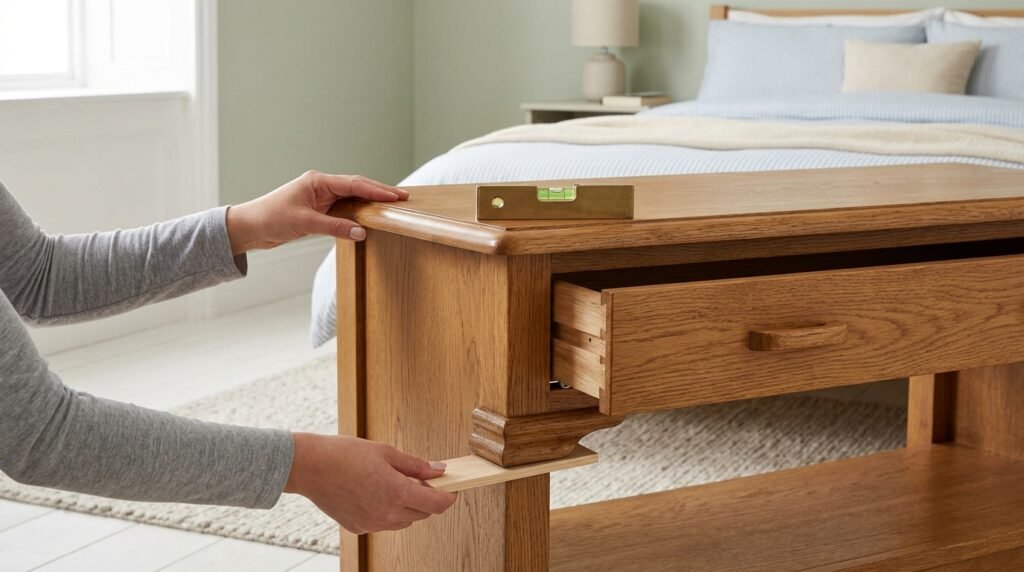
If the unit leans forward, everything else is a band-aid. Level it and half your drawer problems disappear.
- Kitchen base cabinets usually sit on adjustable plastic feet behind the kick board. Pop the kick panel off, and you’ll find threaded legs you can spin up or down. Raise the front feet slightly until the level reads flat.
- Freestanding dressers and IKEA-style units just need shims under the front edge. Proper wooden shims from the hardware store cost a couple of dollars, but folded cardboard works fine and nobody will ever see it. Slide shims under the front feet until the drawer stops drifting.
- Check the floor, not just the furniture. Older apartments often have floors that slope toward the middle of the room. The furniture is fine; the floor is the culprit. Shims fix this too, you just need slightly thicker ones.
This part takes a bit of trial and error. Nudge, close the drawer, watch, nudge again. Overcorrecting so the unit leans backward actually works in your favor here, since a one-degree backward lean keeps every drawer gently shut.
Fix 2: Clean and Lubricate the Slides
Worn or gunked-up slides lose the little “self-close” ramp built into most modern hardware. Ball-bearing slides in particular collect a paste of dust and old grease that stops the drawer from settling into its closed position.
Pull the drawer out completely. Most slides release with a small plastic lever or clip on each side; press both and pull. Wipe the rails with a dry cloth first, then a slightly damp one, and dry them well. Once clean, rub a little paraffin wax or a dry silicone lubricant along the rails. Skip cooking oil and WD-40, they attract dust and you’ll be back here in a month.
Kitchen drawers near the stove get greasy fast, and that same film usually coats the cabinet fronts too. If yours are sticky, this pairs well: How to Get Cooking Grease Off Painted Cabinets.
Fix 3: Add a Magnetic or Roller Catch
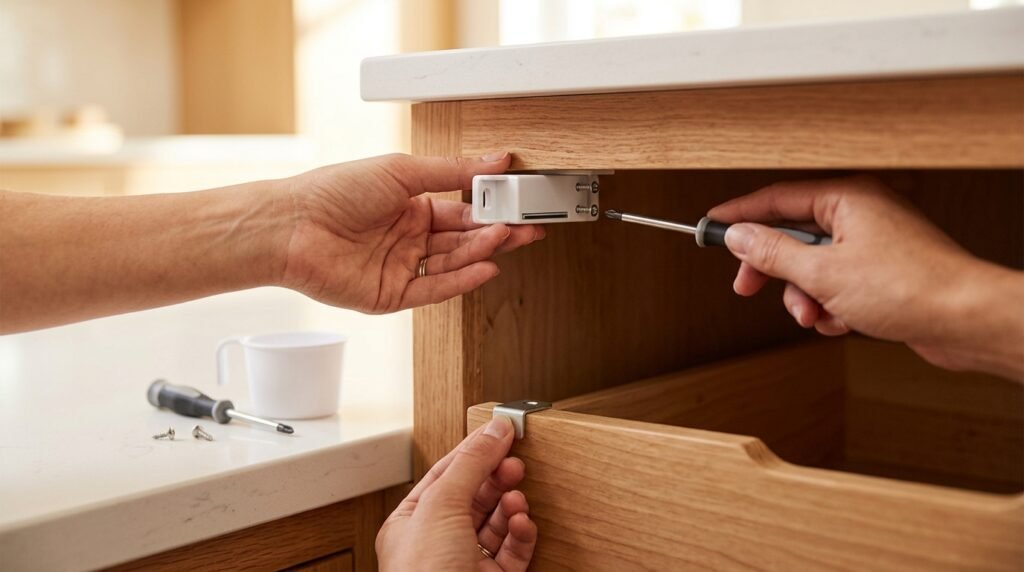
For a drawer that just won’t stay put, a small catch is the cheap, renter-friendly answer. Three good options:
- Magnetic catches. A small magnet mounts inside the cabinet, a metal plate mounts on the drawer back or side. They close with a satisfying click and hold a few pounds of pull. Most come with screws, but the adhesive-backed ones work fine on light drawers and leave no holes.
- Roller or friction catches. A sprung roller grips a little arrow-shaped strike. Slightly stronger than magnets, slightly fiddlier to align.
- Adhesive bumpers, the sneaky option. A thick clear rubber bumper stuck inside the drawer opening adds just enough friction to stop the drift. Costs pennies, takes ten seconds, removes cleanly. Honestly, try this one first on a lightly-drifting drawer.
Aligning a catch is the only fussy part. Stick the pieces on with a bit of tape first, test the drawer a few times, and only screw or peel-and-stick permanently once the click feels right.
Fix 4: Replace Worn Drawer Slides
If the slides are bent, rusty, or the drawer sags and rolls open at the same time, replacement is the honest fix. Measure the slide length (usually 12 to 22 inches, in 2-inch steps) and the mounting style, side-mount being the most common. A pair of basic ball-bearing slides runs five to fifteen dollars.
Unscrew the old ones, screw the new ones into the same holes, done. If the old screw holes are stripped and spinning, don’t just crank harder. Fix the holes first with the toothpick or dowel trick, which is the same repair used for saggy cabinet doors: How to Fix Loose Cabinet Hinge Screw Holes.
Renters: this one does involve screws, but you’re reusing existing holes, so there’s nothing for a landlord to notice or object to. Keep the old slides in a bag and swap them back when you move out if you’re being extra careful.
Fix 5: Childproof Latches (When You Need It Locked, Not Just Shut)
If the drawer holds knives or medicine and you’ve got kids or clever pets, skip friction fixes and go straight to a latch. Modern magnetic childproof locks mount with strong adhesive strips inside the drawer, no drilling at all, and open with a magnetic key you keep on the fridge. They’re about the most renter-safe option there is, and they double as a fix for self-opening drawers by definition.
What NOT to Do
- Don’t wedge folded paper in the drawer gap. It works for a day, falls out, and scratches painted frames.
- Don’t tape drawers shut. Tape residue on wood finishes is a genuine pain to remove later. If you’ve already been down this road, here’s the cleanup: How to Remove Sticker Residue from Wood.
- Don’t overload the drawer and expect any catch to cope. A drawer stuffed with cast iron will defeat a magnet every time. Heavy items belong in the bottom drawer, which also lowers the unit’s center of gravity and reduces forward lean.
- Don’t ignore a drawer that suddenly started doing this. A drawer that behaved for years and now drifts open usually means the furniture has shifted or a slide has failed. Something changed, find it.
FAQs
Why do my drawers open by themselves at night?
Almost always temperature and vibration. The house cools, wood contracts a hair, and a drawer that was barely holding lets go. Footsteps, the washing machine spin cycle, even heavy traffic outside can add the nudge. A leaning cabinet plus a tiny vibration is the classic combo, so start with the level test.
Will a magnetic catch damage my rental cabinets?
The adhesive-backed ones won’t, as long as you remove them properly. Warm the adhesive with a hairdryer for thirty seconds and peel slowly instead of ripping. Screw-mounted catches leave two small holes inside the cabinet where nobody looks, which most landlords wouldn’t blink at, but adhesive is the zero-risk route.
My IKEA drawer keeps rolling open. Is that normal?
Pretty common, actually. Most IKEA slides have a built-in self-close ramp at the end of the rail, and if the unit leans forward even slightly, the ramp can’t do its job. Level the unit first. Also check that the drawer is clipped onto the slides correctly on both sides, because one unclipped side changes the geometry enough to cause drifting.
Can I just tilt the whole dresser back against the wall?
You can, and a slight backward lean genuinely works. But if you tilt it, anchor it to the wall with an anti-tip strap. A backward-leaning dresser that isn’t anchored is a tip-over hazard, especially with kids around. Straps are a couple of dollars and most furniture now ships with them in the box.
How do soft-close drawers stop themselves from opening?
They have a spring-loaded damper that grabs the drawer for the last couple of inches and holds it closed with light tension. If a soft-close drawer starts drifting, the damper has usually failed or come unclipped. On most brands the damper is a small replaceable cartridge, so check the slide brand and order just that part instead of a whole new slide.