
Good under-sink organization in a small bathroom starts with accepting what that cabinet really is: an awkward, damp-ish box with a pipe running through the middle of it. Once you plan around the pipe instead of pretending it’s not there, the fixes are cheap and quick. Stacking drawers on one side, a bin or two shaped around the plumbing, a tension rod for spray bottles, and hooks on the door will turn the scariest cupboard in the apartment into the most useful one, usually for under $30.
Every step here is renter-safe. No drilling into the vanity, nothing your landlord will ever know about.
Empty It and Deal With the Expired Stuff
Pull everything out onto a towel on the floor. All of it, including the mystery bottles at the back you’ve been steering around for a year.
Now sort fast:
- Bin anything expired or dried up. Sunscreen and medicines have real expiry dates that matter. Most makeup and skincare is past it after 12 to 24 months open, and if it smells odd or has separated, it’s done.
- Rehome the things that shouldn’t live here. Spare towels absorb humidity under a sink and get musty. Medications actually keep worse in a warm damp bathroom than almost anywhere else in the home, so a bedroom drawer is better.
- Consolidate the half-empties. Three part-used bottles of the same shampoo become one.
Wipe the cabinet floor while it’s empty. If you find water marks or swollen board, check the pipe joints for slow drips before putting anything back, because a leak found now costs nothing and a leak found in six months costs a vanity.
Measure Before You Buy Anything
This is the step that separates a tidy cabinet from a pile of returns. Under-sink spaces are all different, and the pipe placement decides everything.
Grab a tape measure and note three numbers:
- Width of the cabinet opening (not the full inside width, since bins have to fit through the doors)
- Depth front to back
- Height from the cabinet floor to the underside of the sink basin, and separately, the height under the pipe’s lowest point
Write them in your phone. Organizers get returned constantly because the P-trap hangs lower than people remember. Two-tier organizers with adjustable or removable shelves are the safest buy, since you can build them around the plumbing.
The Core Setup: Drawers, Bins, and a Turntable
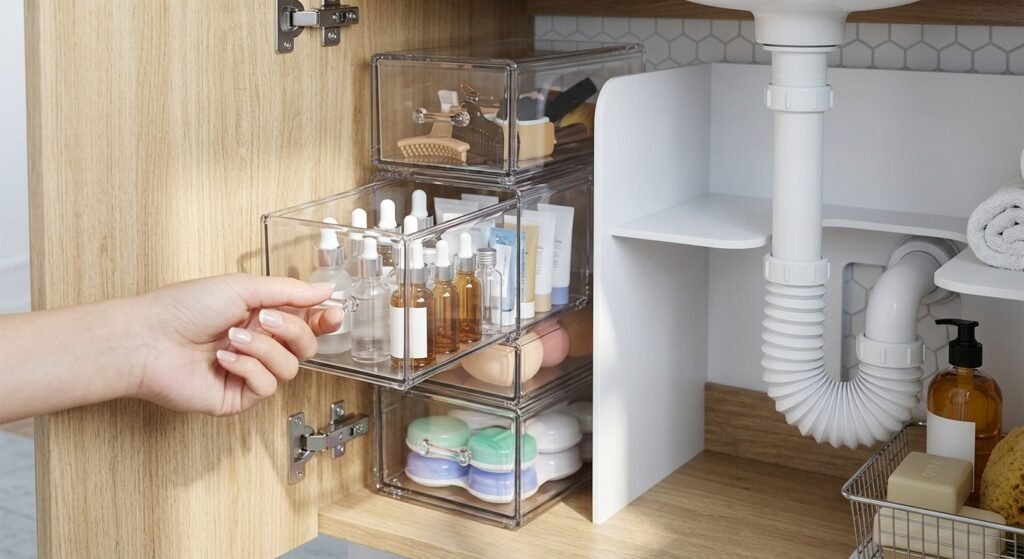
You only need a few pieces, and they each have a job.
Stacking drawers on one side
Clear plastic stacking drawers turn the tall, useless air on the pipe-free side of the cabinet into three levels of storage. Clear beats opaque here. In a dim cabinet, you want to see what’s where without pulling anything out. Fill them by category: one drawer for hair stuff, one for first aid, one for spare toiletries.
A pipe-shaped solution for the middle
U-shaped under-sink shelves are made to straddle the drain pipe, and they’re worth it if your pipe sits dead center. If it doesn’t, two separate small bins on either side of the pipe do the same job for less.
A turntable at the front
A small lazy Susan near the front of the cabinet holds the daily-use items: cleanser, contact lens solution, whatever you reach for every single morning. One spin replaces all the rummaging. Get one with a lip so bottles don’t slide off the edge.
One bin of backstock, and only one
Spare toothpaste, extra soap, refill packs. When the backstock bin is full, you stop buying, no matter how good the sale is. This single rule is what stops the cabinet refilling itself with clutter by spring.
Use the Height and the Doors
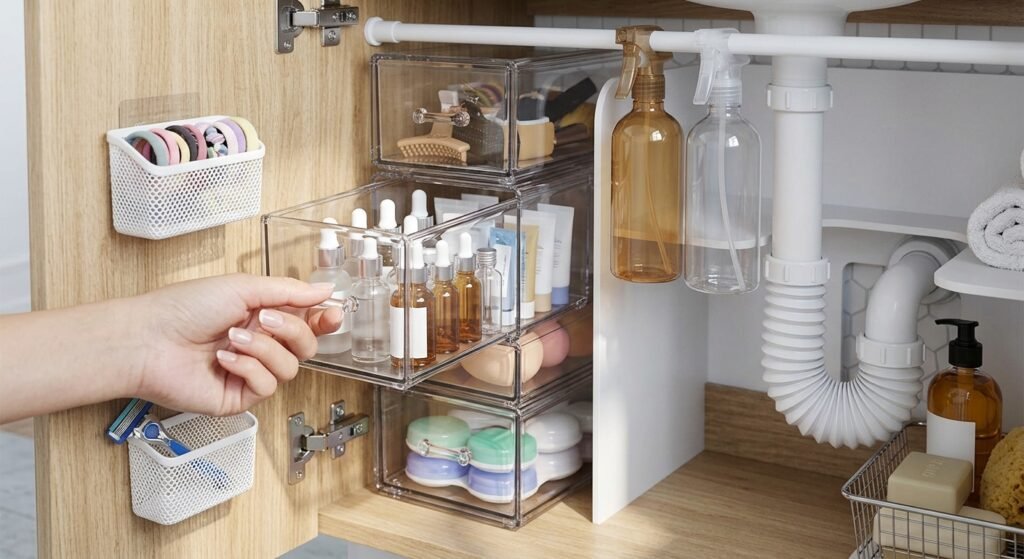
The cabinet floor fills up fast, but the vertical space and the doors almost never get used.
- A tension rod across the top of the cabinet, just under the basin, lets spray bottles hang by their trigger heads. It also makes a surprisingly good rail for hanging a small cloth or gloves. Give it a firm tug to check it’s seated, and don’t hang more than a few bottles on a cheap rod.
- Adhesive hooks inside the doors hold hair tools, a small dustpan, or a hanging basket. Wipe the door with rubbing alcohol first so the adhesive actually grips, and let it cure for an hour before loading.
- Small adhesive caddies or baskets on the inside of the doors are perfect for hair ties, razors, and the tiny stuff that otherwise silts up the drawers. Keep door-mounted weight light, because vanity doors are usually thin board and slam shut with a swing.
If your vanity doors themselves droop or don’t close square, that’s nearly always a loose hinge screw, and it’s a five-minute repair: How to Fix Loose Cabinet Hinge Screw Holes.
Plan for Damp
Under-sink cabinets run more humid than the rest of the bathroom, and that shapes what should live there.
- Plastic and metal-in-plastic organizers beat fabric bins, which absorb moisture and go faintly musty.
- Keep cardboard packaging out. Decant cotton pads and similar items into a jar or plastic tub, because cardboard under a sink turns soft and sad within months.
- A small moisture absorber tub in the back corner is a couple of dollars and helps a lot in bathrooms without great ventilation.
- Anything metal that rusts (spare razors, hair clips) does better in a lidded container.
Cleaning products can live under the bathroom sink too, and honestly they should, so a toilet clean doesn’t require a trip to the kitchen. Keep it to a mini kit: toilet cleaner, one spray, a couple of cloths. The full system for splitting cleaning supplies across a small apartment is here: How to Organize Cleaning Supplies in a Small Apartment (link works once that article is published). If kids or pets are around, anything harsh goes up high somewhere else or behind an adhesive-strap child lock, which fits rental vanities and peels off cleanly later.
FAQs
What should I not store under the bathroom sink?
Medications, anything cardboard, spare towels or linens, and electronics like clippers or trimmers you care about. It’s the dampest storage spot in most homes. Medicines degrade faster in humidity, cardboard goes soggy, and fabric picks up a musty smell. Toiletries, cleaning products, and plastic-packaged spares are all fine.
My pipe is right in the middle of the cabinet. What actually fits?
Look for expandable U-shaped under-sink shelves, which have movable panels you arrange around the plumbing. Or skip the shelf entirely: stacking drawers on each side of the pipe, and the turntable in front of it. The pipe area itself is a fine parking spot for one tall item like a toilet brush refill or a big bottle.
How do I organize under the sink without buying anything?
Shoeboxes, honestly. Two or three sturdy shoeboxes or small delivery boxes as category bins beat loose bottles by a mile, and they cost nothing while you figure out what sizes you need. Add a repurposed jar for hair ties and cotton buds. Upgrade to plastic later if the boxes start to soften.
Everything under my sink smells musty. What’s causing that?
Usually one of three things: a slow drip from the drain joints, a fabric or cardboard item that’s absorbed moisture, or zero airflow with the doors always shut. Empty the cabinet, run your hand around the pipe joints while the tap runs, and if it’s dry, toss the soft materials, wipe everything with a vinegar-water mix, and leave the doors open for a day.
Is it worth putting a mat or liner on the cabinet floor?
Yes, and make it a waterproof one. A cheap ribbed plastic liner (or even a cut-to-size silicone baking mat) catches drips and leaks before they soak into the board, and it wipes clean instead of staining. Skip the sticky shelf paper, which traps moisture underneath and peels anyway.