
So, are self watering planters worth it? For most balcony gardeners, yes, with two big exceptions: they’re a poor match for plants that like dry soil, and the cheapest ones can cause more problems than they solve. If you grow thirsty plants like tomatoes or herbs, forget to water, or travel a lot, a decent self watering planter is one of the few gardening products that genuinely earns its price. If your balcony is full of lavender and succulents, save your money.
Here’s how they actually work, where they shine, where they fail, and how to build a free version from a plastic bottle before you spend anything.
How Self Watering Planters Actually Work
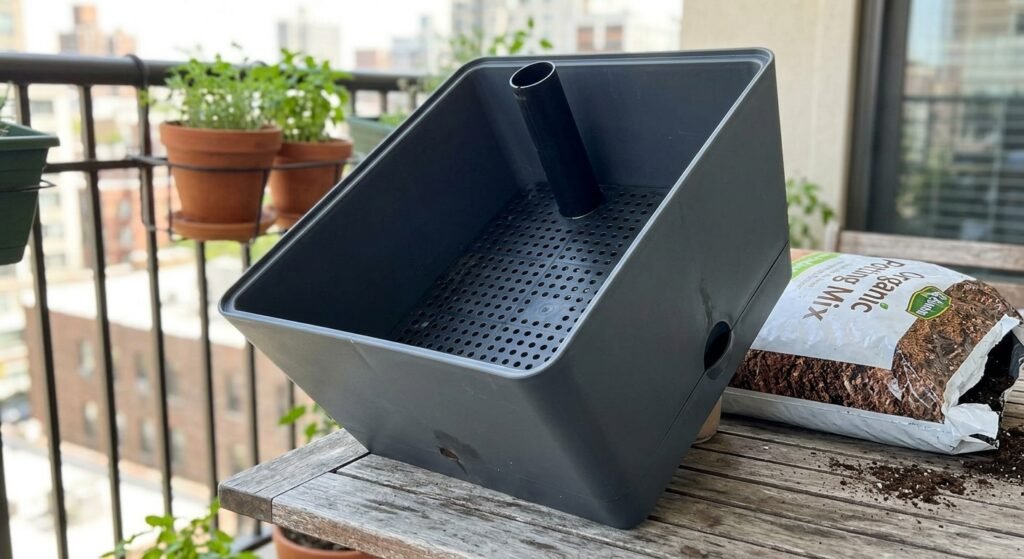
The name is slightly misleading. Nothing waters itself. A self watering planter is really a pot with a water tank in the bottom, separated from the soil by a platform. A wick, or a column of soil reaching down into the tank, pulls water upward as the soil dries. The plant drinks from below at its own pace.
Most designs share the same parts:
- A reservoir at the base, usually holding one to five liters
- A fill tube you pour water into from the top
- Some kind of wick or soil column connecting soil to water
- An overflow hole so rain can’t flood the roots
Instead of soaking the soil from above every day or two, you top up the tank every one or two weeks. The soil stays evenly moist rather than swinging between soaked and bone dry, and that steady moisture is the real magic. Plants hate the wet-dry rollercoaster more than they hate either extreme.
The Genuine Pros
You water far less often. In mild weather, a medium planter can go a week or two between refills. For anyone who travels, works long hours, or just forgets, this is the whole sales pitch, and it’s true.
Moisture stays consistent. Steady water means fewer split tomatoes, less blossom end rot, and less of that dramatic wilt-and-recover cycle that stresses plants. Leafy greens and herbs especially grow noticeably better with even moisture.
Less water is wasted. Water in a covered reservoir doesn’t evaporate off the soil surface or pour out the drainage hole. On a hot, windy balcony where open pots dry out in a day, that matters. It pairs well with the other tricks in our guide on how to protect balcony plants from wind, since wind is the main thing that turns watering into a daily chore.
Fewer stains and drips. Watering from below means less overflow running off your balcony onto the neighbor’s washing. Anyone who’s had that conversation knows it’s worth avoiding.
The Honest Cons
They’re wrong for dry-loving plants. Lavender, rosemary, succulents, and most Mediterranean herbs want their soil to dry out completely between drinks. Constant moisture from below rots them. This is the most common way people end up hating these planters.
Overwatering is still possible. If the wick is too aggressive or the overflow hole gets blocked, soil sits soggy and roots rot quietly out of sight. The planter hides the problem because the surface looks normal. Overwatering is already the number one killer of container plants, and we cover why in how often to water container plants.
Cold, wet winters don’t suit them. In a rainy climate, an outdoor reservoir can keep soil cold and wet all winter. Many people empty the tank in autumn and water normally until spring. Also, water left in the tank can freeze and crack cheap plastic.
Mosquitoes like standing water. In warm climates, an accessible reservoir can become a nursery. Look for designs with a sealed fill tube, or drop a bit of mosquito dunk in the tank.
Decent ones cost more. A good self watering planter costs two to four times the price of a plain pot the same size. The very cheap ones often have tiny reservoirs and bad overflow design, which is the worst of both worlds.
You still have to check them. “Self watering” becomes “never think about it again” in people’s heads. The tank still empties, faster than you’d expect in a heatwave. Treating them as fully automatic is one of the classic container gardening mistakes that catches beginners.
Which Plants Actually Benefit
Self watering planters suit plants that like steady moisture and drink a lot:
- Tomatoes, and it’s not close. They’re the best argument for buying one.
- Peppers and chillies
- Lettuce, spinach, and other leafy greens
- Basil, mint, parsley, and other soft herbs
- Cucumbers, if you have the space
- Thirsty flowers like fuchsias and impatiens
Skip them for lavender, rosemary, thyme, sage, succulents, and anything sold as drought-tolerant. Those plants are already easy, and a reservoir just ruins them. Most of our favorite low maintenance balcony plants fall in this second group, which is exactly why they don’t need the upgrade.
The DIY Option: A Bottle Reservoir for Free
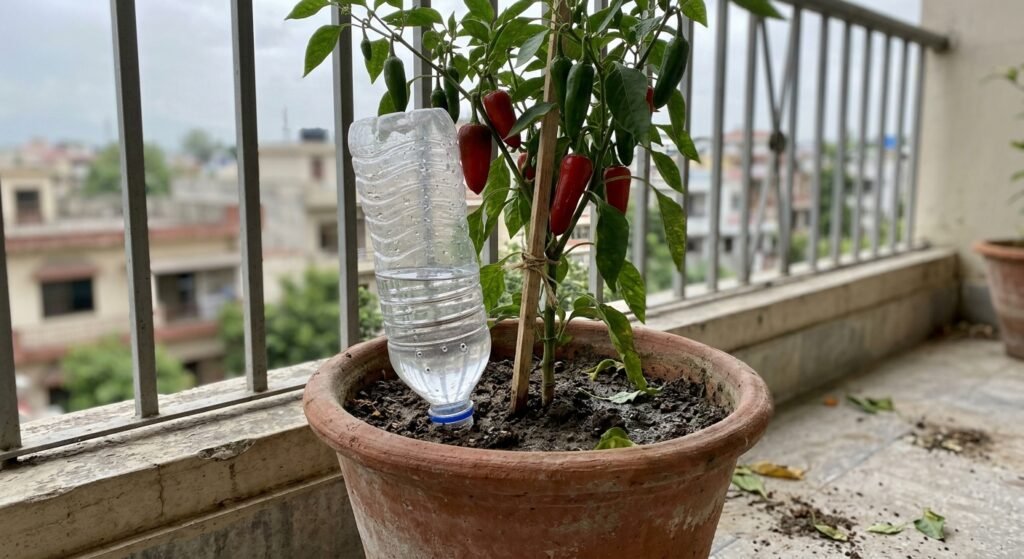
Before buying anything, try the plastic bottle version on one pot. It takes ten minutes and costs nothing.
- Take a clean plastic bottle, 500 ml for small pots or 2 liters for big ones, and poke four to six small holes in the cap with a heated nail or a drill bit. Small holes, not big ones. Water should seep, not pour.
- Cut the bottom off the bottle.
- Water the pot normally first, so the soil is already moist.
- Push the bottle cap-down into the soil a few centimeters, near the plant but not right against the stem.
- Fill the bottle from the open bottom end. It’ll slowly seep into the soil over a day or more as the soil dries.
The seep rate takes a bit of trial and error. If the bottle empties in an hour, the holes are too big; start again with a fresh cap. If it never empties, add another hole. Once it’s dialed in, a two-liter bottle can keep a large pot happy for several days, which covers a long weekend away.
There’s also an even simpler wick version: run a strip of cotton cloth or thick string from a jar of water into the soil. It’s slower, but it works for houseplants and small herb pots.
So, Should You Buy One?
Buy one or two if you grow tomatoes or leafy greens, if summer watering feels like a part-time job, or if your plants regularly die while you’re away. Start with one decent planter for your thirstiest crop rather than replacing every pot at once, and see how it behaves on your particular balcony through a hot spell.
Skip them if your balcony leans Mediterranean, if your climate is cool and rainy most of the year, or if you actually enjoy watering. Plenty of people find the watering can the most relaxing part of the day, and there’s no problem to solve there.
FAQs
How often do I refill a self watering planter?
In spring and mild weather, every one to two weeks. In a summer heatwave with a big tomato in it, expect every two to four days. The fill tube usually shows the water level, so a two-second glance while you’re out there tells you everything. When in doubt, top it up.
Can I convert my existing pots instead of buying new ones?
Sort of. The bottle method above works in any pot, and you can buy small conversion reservoirs and watering spikes that do a similar job. You won’t get the full sealed-reservoir effect of a purpose-built planter, but for keeping plants alive over a week away, the DIY versions honestly get you most of the benefit.
Do self watering planters cause root rot?
They can if the design is bad or the overflow hole gets blocked, because roots then sit in waterlogged soil. Pick a planter with a proper overflow, use a light, airy potting mix rather than heavy garden soil, and let the tank run empty now and then so air gets back into the soil. Do that and rot is rare.
What potting mix should I use in one?
A standard quality potting mix works, ideally lightened with a few handfuls of perlite or coco coir so it wicks well without going swampy. Don’t use garden soil or anything labeled as moisture-control with big water crystals, because the planter already handles moisture and you’ll end up with mud.
Are the cheap ones from discount stores any good?
Hit and miss, leaning miss. The common failures are a reservoir too small to be useful and no overflow hole, which turns the planter into a bathtub in rain. If a cheap one has a real overflow outlet and holds at least a liter or two of water, it’s probably fine for herbs. For a big tomato planter, it’s worth paying for a solid brand-name design.