
The fastest way to fix squeaky door hinges isn’t the blue can everyone reaches for. WD-40 will silence a hinge for a week or two, then the squeak comes back, because WD-40 is mostly a solvent and water displacer, not a proper lubricant. What actually works long term is a thicker lubricant that stays put: white lithium grease, silicone spray, plain petroleum jelly, or even a bar of soap in a pinch. The whole job takes about ten minutes and you probably won’t need to buy anything.
That squeak, by the way, is metal grinding on metal. The hinge pin rotates inside the hinge barrel every time the door moves, and once the factory lubricant dries out or dust works its way in, you get that horror-movie creak. Fix it properly once and it stays quiet for years.
Why WD-40 Isn’t the Answer (And What Is)
WD-40 feels like it works because it does, briefly. It flushes out grime and leaves a thin oily film. The problem is that the film evaporates and drips off within days, and because it’s great at dissolving old grease, it can actually strip out whatever lubricant was still hanging on in there. So the squeak returns, you spray again, and the cycle continues forever.
Here’s what holds up better, roughly in order of how long it lasts:
- White lithium grease. The gold standard for hinges. It’s thick, it clings to metal, and one application can last years. Comes in a spray can or a tube at any hardware store for a few dollars.
- Silicone spray. Nearly as good, dries cleaner, and it won’t stain if a little gets on the door. Nice for interior doors where drips would show.
- Petroleum jelly. The best zero-purchase option. It’s thick enough to stay in the hinge and it’s already in most bathroom cabinets.
- Bar soap or candle wax. Old-school and surprisingly decent. Rub it directly on the pin. It won’t last as long as grease, but it’s silent and mess-free.
Cooking oils are the one thing to skip. Olive oil or vegetable oil will quiet a hinge today and turn gummy and sticky within weeks, and the residue attracts dust. Then you’ve got a squeaky hinge that’s also grimy.
The Quick Fix: Lubricate Without Removing Anything
If you’re in a hurry, you don’t even have to take the door apart.
- Open the door halfway so the hinge is easy to reach and has a little play in it.
- Apply your lubricant along the top of each hinge, right where the pin enters the barrel. With spray, use the little straw and a short burst per hinge. With petroleum jelly, dab some on with a cotton swab and push it into the seam.
- Swing the door back and forth 10 to 15 times. This works the lubricant down through the barrel. You’ll usually hear the squeak fade with each swing, which is oddly satisfying.
- Wipe off any excess with a paper towel so it doesn’t collect dust.
Do all the hinges, not just the one you think is squeaking. Sound travels weirdly through a door, and the guilty hinge is often not the one you’d guess.
The Proper Fix: Pull the Pin and Grease It
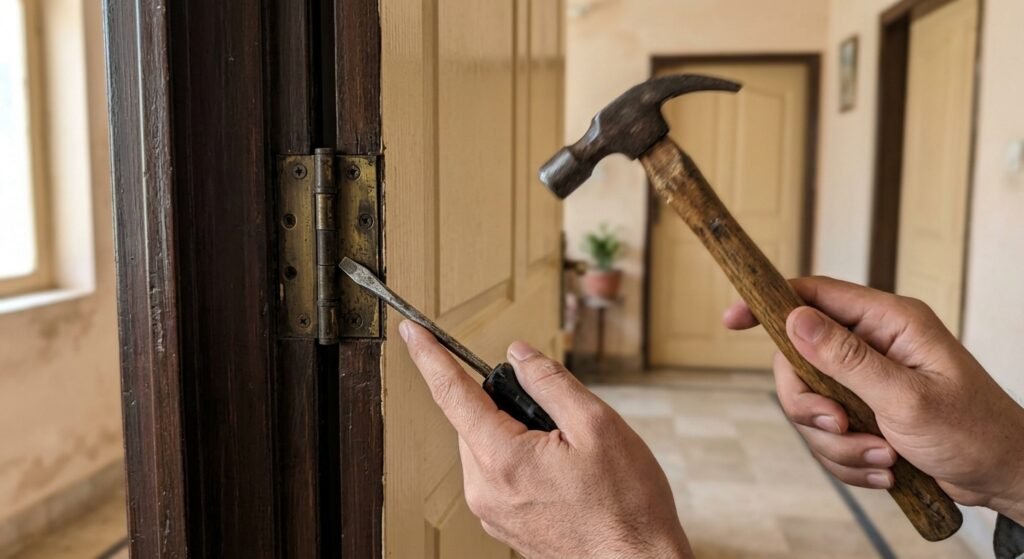
If the quick method doesn’t fully kill the squeak, or the squeak keeps coming back, the pin itself is probably dirty or lightly rusted. This version takes a few extra minutes and fixes it at the source.
- Close the door so it’s supported in the frame, or have someone hold it steady.
- Work on one hinge at a time. Never pull all the pins at once or you’ll be holding the whole door.
- Place a flathead screwdriver or a nail under the head of the hinge pin and tap upward with a hammer until the pin slides out. Stubborn pins sometimes need firm taps, so don’t be shy, just keep the screwdriver angled away from the door frame so you don’t gouge the paint.
- Wipe the pin clean with a rag. If there’s rust, scrub it with steel wool or a scouring pad until the metal is smooth again.
- Coat the pin with white lithium grease or petroleum jelly. A thin, even layer is all it needs. More than that just squeezes out the top and makes a mess.
- Slide the pin back in, tap it down, and move to the next hinge.
Swing the door a few times when you’re done. If it’s silent, you’re finished, and realistically you won’t touch those hinges again for years.
Still Squeaking? Check These Three Things
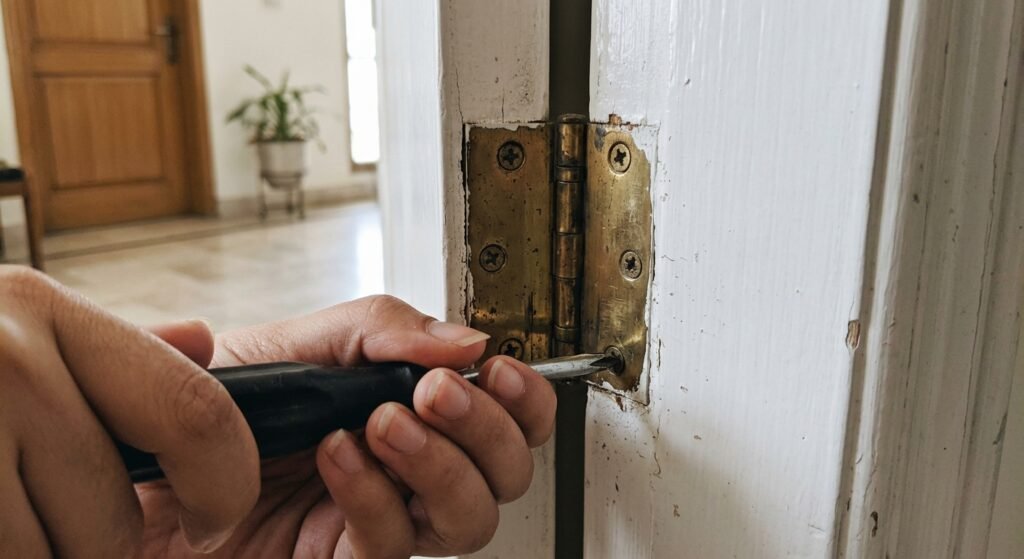
Sometimes the noise isn’t really a lubrication problem. If a freshly greased hinge still creaks or groans, look at these:
- Loose screws. Grab the door and lift it gently. If the hinge plate shifts, tighten every screw with a hand screwdriver. If a screw just spins without gripping, the hole is stripped, and the toothpick trick from our guide on fixing loose cabinet hinge screw holes works exactly the same way on door hinges.
- A sagging or rubbing door. If the door scrapes the frame or the noise sounds more like a groan than a squeak, the door may have shifted over time. That’s usually a hinge-tightening job too, and it’s related to the fixes in our post on doors that won’t stay open.
- Paint in the hinge. If the hinges have been painted over, the paint itself can bind and creak. Scrape the paint out of the moving joint with a utility knife before lubricating, otherwise nothing you spray will reach the metal.
Keeping Hinges Quiet Long Term
Once a year, give every hinge in the place a quick dab of lubricant. It takes five minutes for a whole apartment and you’ll never hear a squeak develop in the first place. Bathroom and exterior-facing doors need it most because humidity speeds up rust inside the barrel.
If you’re a renter, this is one of those tiny fixes that’s absolutely worth doing yourself instead of logging a maintenance ticket. It costs pennies, there’s no risk to your deposit, and it fits nicely alongside the other cheap wins in our roundup of easy home repairs for renters.
FAQs
Can I use olive oil to fix a squeaky hinge?
You can, but you’ll regret it in about a month. Cooking oils oxidize and turn into a sticky, gummy film that grabs dust. If you want a kitchen-cabinet solution, petroleum jelly or a rub of bar soap will both outlast any cooking oil by a mile.
Why does my hinge squeak again a week after I spray WD-40?
Because WD-40 is a penetrating solvent, not a true lubricant. It cleans the joint and leaves a very light film that evaporates quickly. It’s genuinely useful for freeing a rusted, stuck pin, but you need to follow it with real grease or the squeak will keep coming back.
The hinge pin won’t budge. How do I get it out?
Spray a little penetrating oil (this is where WD-40 actually shines) at the top and bottom of the barrel, wait ten minutes, then tap again. If it’s still stuck, put a nail against the bottom of the pin through the underside of the barrel and hammer upward. Painted-over pins may need the paint seam scored with a knife first.
Do I need to remove the door to fix squeaky door hinges?
No, and please don’t. Work on one hinge at a time with the door closed or supported, and the door never has to come off. Removing an entire door solo is a good way to scratch the floor, ding the frame, and pinch your fingers.
Is it okay to lubricate hinges in a rental without asking?
Yes. Lubricating hinges is basic upkeep, like changing a light bulb. There’s no permanent alteration involved, and any landlord would rather you dab some grease on a pin than listen to a complaint about a creaky door.