
The safest way to get cooking grease off painted cabinets is warm water with a few drops of dish soap: wipe with a barely damp microfiber cloth, work in small sections, rinse with a clean damp cloth, and dry immediately. For sticky, years-old buildup, step up to a paste of baking soda and water (2:1) dabbed only on the greasy spots, or a 1:1 vinegar-water spray applied to the cloth (never sprayed on the cabinet). Avoid degreasers with ammonia, magic erasers, and anything abrasive, these dull, streak, or strip painted finishes.
Grease on kitchen cabinets is sneaky. It doesn’t splash on all at once; it settles as airborne vapor every time you cook, then bonds with dust into that tacky yellow-brown film, worst above the stove, on upper door edges, and around handles. Because dish soap is literally engineered to break down cooking grease, it handles 90% of cabinet cleaning on its own. Here’s the full playbook, from light film to decade-old buildup.
First: Know What Finish You’re Working With
Painted cabinets vary a lot in toughness:
- Factory-finished / catalyzed paint (most modern manufactured cabinets): quite durable, tolerates all the methods below.
- DIY-painted cabinets (brushed or rolled latex/chalk paint): far more delicate, especially if unsealed chalk paint. Use only the dish soap method, minimal moisture, light pressure.
- Older cabinets with unknown paint: test everything in a hidden spot first, inside a door edge or a low corner panel.
The test: rub your chosen cleaner on the hidden spot with a white cloth for 15 seconds. If color transfers to the cloth or the sheen changes, downgrade to plain soapy water and a gentler touch.
What You’ll Need
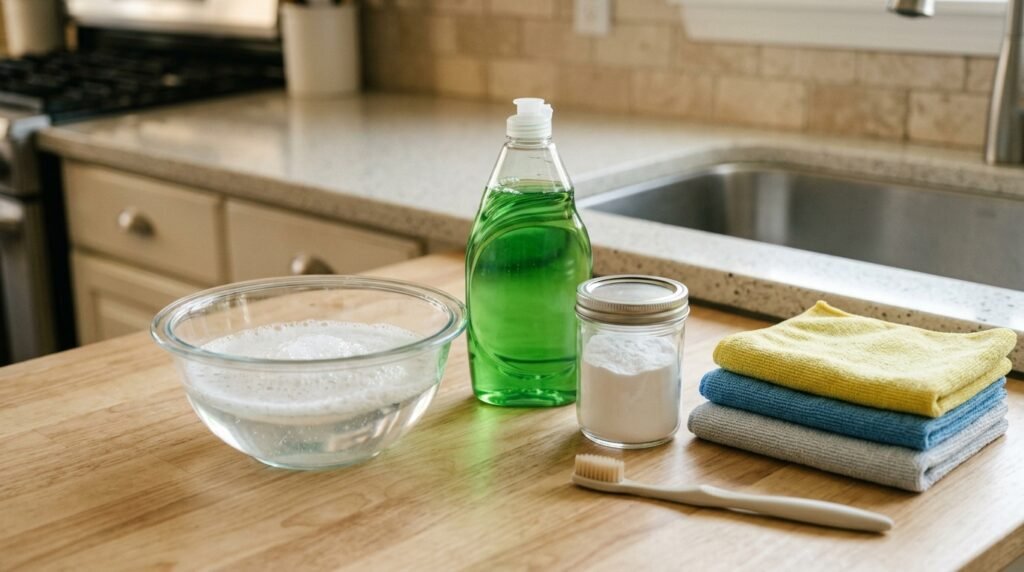
- Dish soap (a standard grease-cutting formula, plain, not “with bleach”)
- Warm water
- 2-3 microfiber cloths
- A soft sponge (smooth side only)
- Baking soda
- White vinegar (optional, for stubborn film)
- Old soft toothbrush (for corners, trim grooves, and around hardware)
- A dry towel for immediate drying
Notice what’s not on the list: spray degreasers, ammonia cleaners, melamine sponges. You rarely need them, and they’re where painted finishes go to die.
How to Get Cooking Grease Off Painted Cabinets: Step by Step
- Mix the solution. Add 3–4 drops of dish soap to about 2 cups of warm water. You want lightly soapy, not sudsy. Excess soap leaves its own film.
- Dampen, don’t soak, your cloth. Dip a microfiber cloth and wring it until it’s just damp. Water is paint’s enemy #2 (after abrasion): it seeps into seams and edges and can swell wood and blister paint.
- Work top to bottom, one door at a time. Wipe with light, overlapping strokes. On raised-panel doors, follow the grooves. Don’t scrub in circles with pressure. Repeated hard friction burnishes paint shiny in spots.
- Give sticky spots a soap-only pretreat. For tacky patches, put a single drop of dish soap directly on the damp cloth, hold it against the spot for 30 seconds, then wipe. The dwell time does the work, not muscle.
- Detail the trouble zones. Use the soft toothbrush with soapy water around handles, hinge edges, and molding grooves where grease collects thickest. Gentle strokes.
- Rinse. Go back over everything with a second cloth dampened in plain water. Skipping the rinse leaves soap residue that attracts new grease faster.
- Dry immediately. Buff each section with a dry towel as you finish it. Never let water sit on painted surfaces or in panel seams.
For Thick, Sticky, Old Grease Buildup
When the film is thick enough to scrape with a fingernail, soap alone is slow. Escalate carefully:
Baking soda paste (spot treatment): Mix 2 parts baking soda to 1 part water. Dab it onto the greasy patch with a cloth, let it sit 3–5 minutes, then wipe away with a damp cloth using very light pressure. Let the paste absorb and lift the grease rather than scrubbing with it. Baking soda is mildly abrasive, so this is a spot treatment, not an all-over scrub, and it needs a test spot first on DIY-painted finishes.
Vinegar-boosted wipe: Mix 1:1 white vinegar and warm water, spray it onto your cloth (never directly onto the cabinet, overspray gets into seams and hinges), and wipe the greasy area. Follow with a plain-water rinse wipe and dry. Vinegar cuts grease film well but can dull some paints with repeated use, so keep it occasional.
Repeat beats aggressive. Two or three gentle passes over a week will remove buildup that one brutal scrubbing session would remove along with your paint.
The greasy film that lands on your cabinets is also landing on your appliances. Here’s the streak-free way to handle those: cleaning grease off stainless steel without streaks.
What NOT To Do On Painted Cabinets
- No magic erasers. Melamine foam is micro-sandpaper. It removes grease by removing the top layer of your paint, leaving flat, dull patches.
- No ammonia or ammonia-based cleaners (including many glass sprays). Ammonia softens and dulls many paints.
- No undiluted vinegar, and no vinegar on chalk paint or milk paint.
- No abrasive powders, scrub pads, or steel wool. Obvious, but people reach for them when frustrated.
- No soaking. Never spray liquid directly on doors; never leave surfaces wet.
- No citrus/orange oil degreasers on flat or matte paint without testing. Solvents in them can leave permanent dark or glossy blotches.
- Don’t scrub the same spot for minutes. If a spot won’t yield to two gentle attempts, switch methods instead of adding force.
Keep Cabinets Grease-Free with 5 Minutes a Week
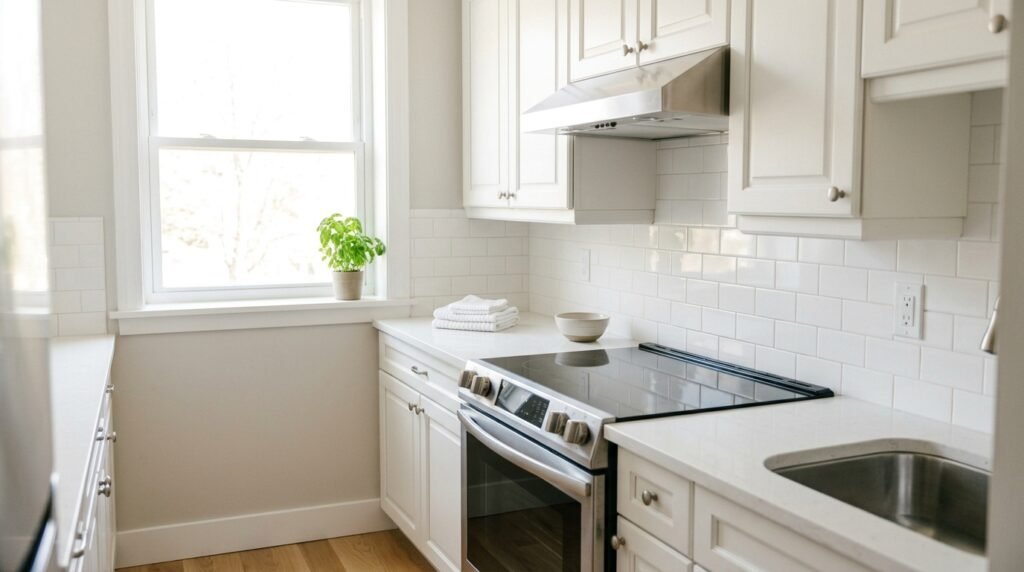
- Wipe the high-traffic zone weekly: the doors above and beside the stove, plus around handles. A quick pass with a damp soapy cloth prevents film from ever bonding hard.
- Run your range hood every time you cook. And if it vents into the kitchen (recirculating), clean or replace its grease filter every 1-3 months. A clogged filter is why grease coats everything.
- Degrease handles monthly. Hand oils plus cooking grease make handles the grimiest square inches in the kitchen.
- Full cabinet wipe-down every 2–3 months, top edges included, that’s where the airborne grease-dust felt layer forms.
- While you’re doing the deep clean, cabinet doors are also where kids’ stickers and price labels end up. If you’re dealing with sticky adhesive on wood surfaces too, use the right solvent for the finish: removing sticker residue from wood safely. And if your cabinet cleaning spree extends to the floors, avoid the classic mistake of leaving a dull film behind: streak-free laminate floor cleaning.
FAQs
What is the best degreaser for painted kitchen cabinets?
Plain dish soap in warm water is the best first-line degreaser for painted cabinets. It’s formulated to break down cooking grease and is gentle on paint. For stubborn buildup, a baking soda paste (2:1 with water) as a spot treatment or a 1:1 vinegar-water wipe works. Commercial degreasers are usually unnecessary and often too harsh for paint.
Will vinegar damage painted cabinets?
Diluted 1:1 with water and wiped off promptly, vinegar is safe for most factory-painted cabinets used occasionally. Repeated or undiluted use can dull the finish, and vinegar should be avoided entirely on chalk paint, milk paint, and unsealed DIY finishes. Always apply it to the cloth, not the cabinet.
How do you remove years of sticky grease from kitchen cabinets?
Work in stages: start with warm soapy water and 30-second dwell times on sticky spots, then escalate to a baking soda paste left for 3-5 minutes on the thickest patches. Do two or three gentle sessions over several days rather than one aggressive scrub. If grease has chemically bonded into a varnish-like layer that nothing safe removes, that section may need repainting.
Can I use a magic eraser on painted cabinets?
No. Melamine erasers are fine abrasives that strip the paint’s top layer along with the grease, leaving dull, lighter patches that are especially visible on satin and gloss finishes. Use dish soap and a microfiber cloth instead.
Why do my cabinets get greasy so fast?
Cooking, especially frying and sautéing, releases vaporized oil that settles on every nearby surface. The usual culprits are cooking without running the range hood, a recirculating hood with a saturated filter, or a filter that hasn’t been cleaned in months. Fix the airflow and the cabinets stay clean dramatically longer.
Pingback: How to Clean Grease Off Stainless Steel Appliances Without Streaks - The Home Perk
Pingback: How to Fix Loose Cabinet Hinge Screw Holes (3 Easy Ways) - The Home Perk
Pingback: How to Stop Drawers from Sliding Open by Themselves - The Home Perk
Pingback: Renter Friendly Backsplash Guide: Peel-and-Stick Tips (Including Around Outlets) - The Home Perk
Pingback: How to Remove Sticker Residue from Wood Without Damaging the Finish - The Home Perk